
Last updated November 15, 2026
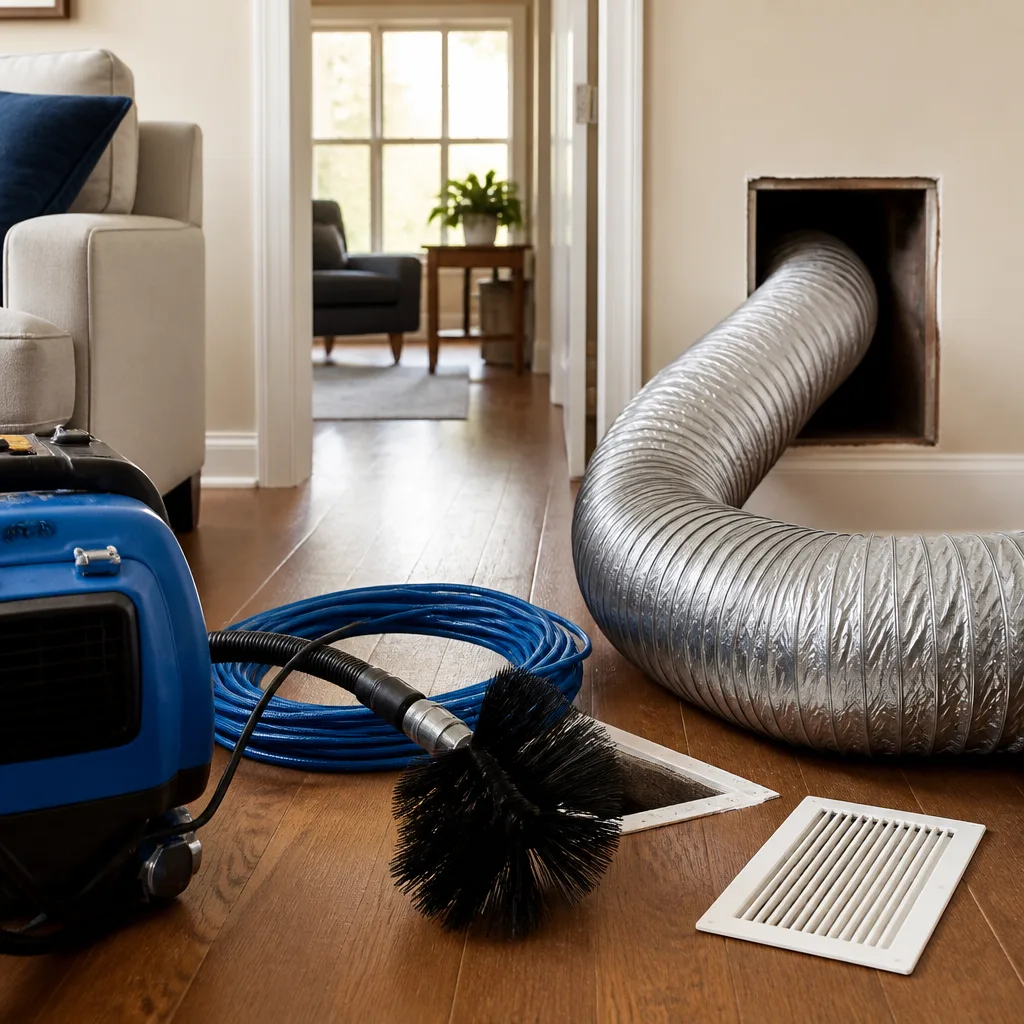 Whole-home duct cleaning
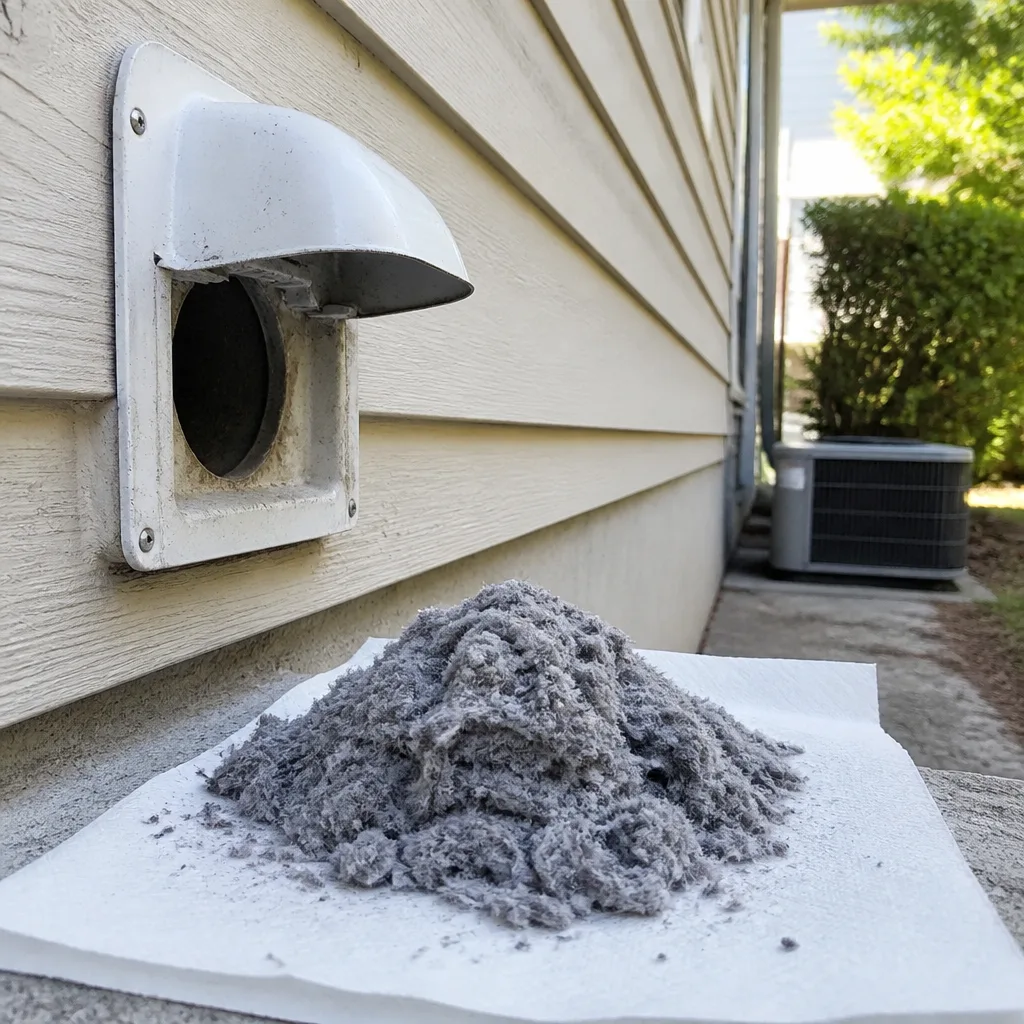 Dryer vent cleaning
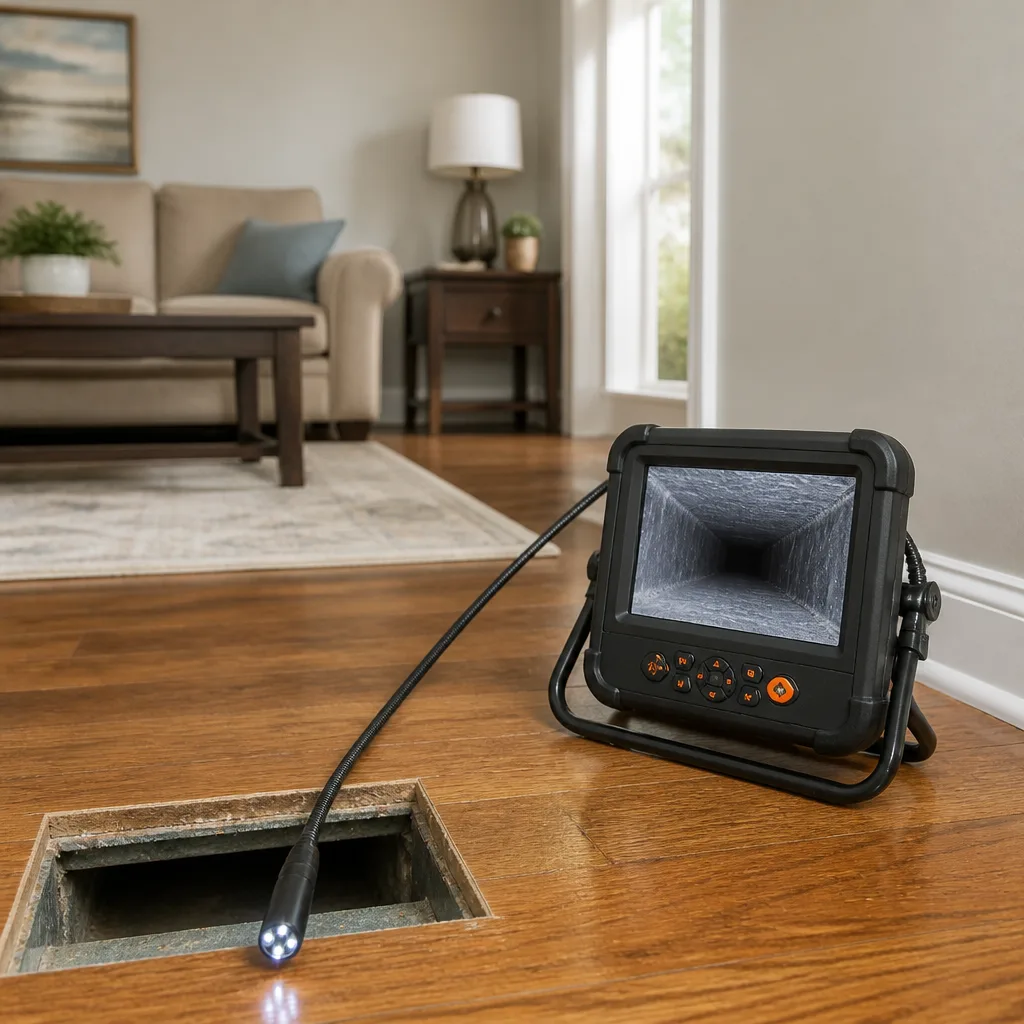 Camera inspection
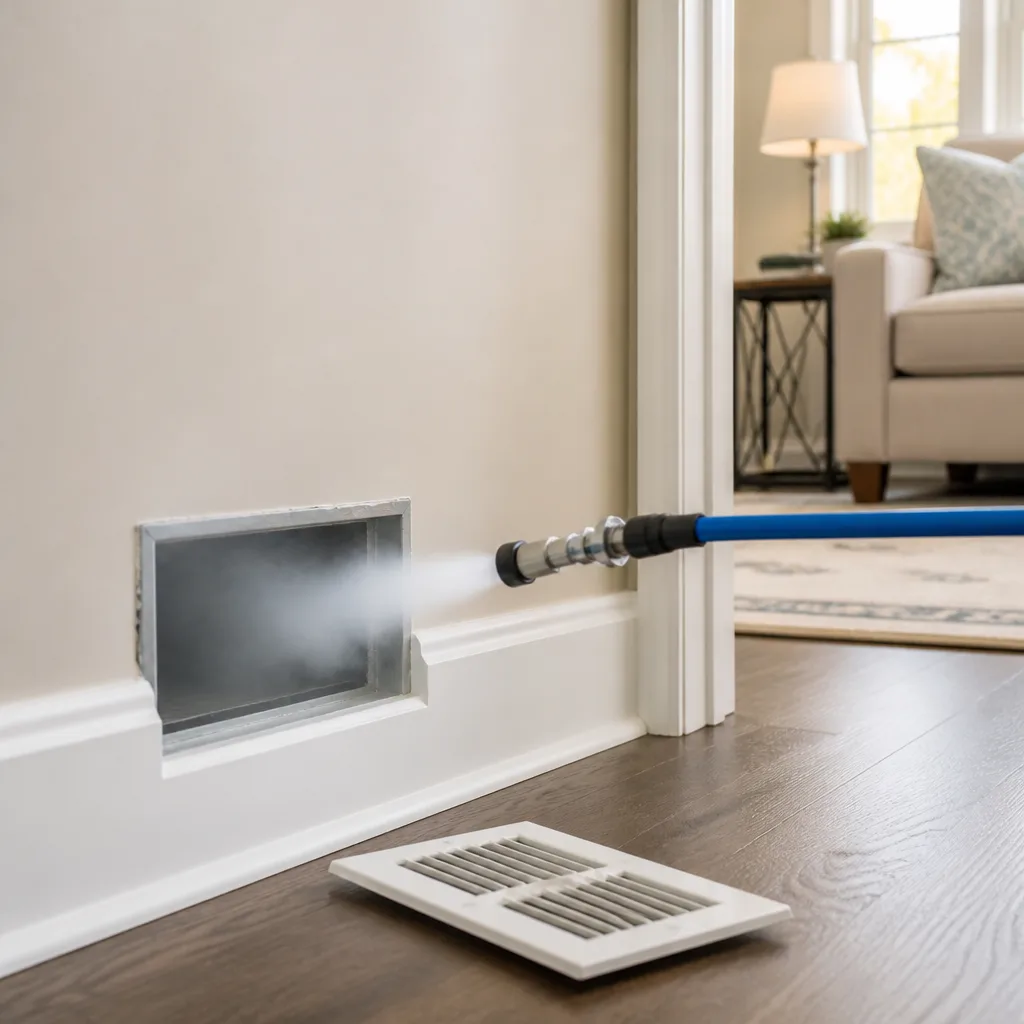 Sanitizing & deodorizing
Whole-system duct and dryer vent check with before-and-after photos - you see exactly what came out of your vents
That "$99 whole-house special" is a bait ad - the real number appears once they are in your hallway, or the "clean" is a shop-vac at the register. We photograph the inside of your ducts before and after instead.
Air Duct Cleaning Troubleshooting in Wichita Falls: Common Problems and How to Fix Them
If one room in your house stays 10°F hotter than the rest, your thermostat isn’t lying – your ductwork is. That temperature split is one of the most reliable field indicators of a duct system failure, and it has nothing to do with your AC unit. Most Wichita Falls homeowners we talk to assume the compressor is weak, the refrigerant is low, or the whole system needs replacing. Then the technician pulls a reading from a supply register in the hot room and finds the air velocity barely moving. That’s the moment the diagnosis flips from HVAC to ductwork. In this Wichita Falls guide, we’ll show you how to read those symptoms yourself: what a 5°F gap means versus a 15°F gap, how to tell a dirty duct from a broken one, why musty smells after cleaning point to three different problems, and the one-tissue test you can run at a return grille to catch a breach before paying for a full inspection.
Quick Answer
Most air duct problems in Wichita Falls trace to one of two categories: contamination (dust, debris, microbial growth inside the duct that cleaning removes) or structural failure (collapsed flex duct, disconnected joints, breached plenums that cleaning cannot fix). A room-to-room temperature split of 5°F to 8°F usually means airflow restriction or mild contamination; a 10°F to 15°F split almost always points to a physical breach or a crushed duct run. The fix depends entirely on which category you’re in, and cleaning a structurally broken system is money wasted.
Styles & brands we work with
- Whole-home duct cleaning
- Dryer vent cleaning
- Camera inspection
- Sanitizing & deodorizing
Table of Contents
- Using Room-to-Room Temperature Split as Your First Diagnostic
- Dirty Duct Problem vs. Structural Duct Problem: Telling Them Apart
- Why Wichita Falls Summers Crush Flex Duct (and How to Spot It)
- What Musty Odors After Cleaning Actually Mean
- The One Supply Register Test You Can Do Before Calling Anyone
- Why Equipment Grade Determines What Gets Fixed
- When Duct Repair Makes Sense vs. Full Replacement
- What to Ask Before You Book Any Duct Service
Using Room-to-Room Temperature Split as Your First Diagnostic
Before you call anyone, take an afternoon and measure the air temperature at every supply register in the house while the system runs steady. A simple digital probe thermometer works. Let the system run at least fifteen minutes, then read each register. Subtract the coolest reading from the warmest. That difference tells you more about your duct system than any inspection quote will.
Here’s how to read the number in a Wichita Falls home:
- 2°F to 4°F gap: Normal. Slight variance from duct run length, sun exposure on the room, and register position. Nothing to act on.
- 5°F to 8°F gap: Airflow restriction or early contamination. Could be a partially closed damper, a dirty filter, or debris buildup in a branch duct. Cleaning or a filter change often closes the gap.
- 10°F to 15°F gap: Structural problem. Flex duct crushed under insulation, a disconnected collar at a boot, or a torn trunk line. No amount of cleaning will change this number. You need visual inspection inside the chase or attic.
- 15°F or more: Serious failure. Supply duct leaking into unconditioned space, or the room’s branch is fully disconnected. This is a repair job, not a cleaning job.
One detail most people miss: check whether the hot room sits on the longest duct run from the air handler. A long run naturally loses some velocity, but it should not lose 10°F. If the farthest room is also the hottest, and the nearest room is the coolest, that pattern follows duct distance – which is normal at the 3-5°F level and suspect at the 10°F level.
Wichita Falls summers push the AC hard, which means these temperature gaps tend to show up in July and August, not January. If you’re reading a gap now, write it down. If the gap widens over the next month, it’s almost certainly a worsening breach rather than a stable restriction. For a broader overview of the cleaning side, see our air duct cleaning page, but diagnose first.
Dirty Duct Problem vs. Structural Duct Problem: Telling Them Apart
The single most expensive mistake in this trade is paying for a cleaning that fixes nothing because the real problem is structural. These two categories have different symptoms, different solutions, and different price structures. Learn the pattern and you’ll know what you’re dealing with before anyone arrives.
Signs of a dirty duct problem
- Visible dust streaks on the supply register vanes that return within days of wiping.
- A musty or dusty smell that appears when the system first starts and fades after a few minutes.
- Allergy-like symptoms (sneezing, throat irritation) that worsen when the AC runs.
- Filters loading up faster than usual, especially in older Wichita Falls homes with original framing and original return chases.
- Reduced airflow across the whole house, not just one room. Every register feels slightly weak.
These are contamination signs. Professional duct cleaning with a system like Rotobrush removes surface debris, agitates the duct wall, and vacuums it out through a sealed HEPA-rated setup. The result is measurable: airflow improves, the filter lasts longer, the smell goes.
Signs of a structural duct problem
- One or two rooms dramatically hotter while the rest of the house stays comfortable. That’s a localized failure, not a whole-system dirt problem.
- Whistling or roaring at a register. That means the duct behind it is pressurized against a restriction.
- Flexible duct visible in the attic that looks kinked, crushed, or separated from its collar.
- Air blowing directly into the attic space. You can feel it if you’re up there while the system runs.
- No airflow at one register while its neighbors are fine.
- Whistling at a return grille that stops when you open the filter door – a classic sign of a breached return.
These require duct repair: opening the chase, reconnecting, replacing the crushed run, and sealing the plenum and boots. Cleaning alone leaves these problems in place. That’s why Forge Duct Cleaning offers Forge Duct Cleaning duct repair as a core service alongside cleaning. We repair what we find – not just clean around it.
Why Wichita Falls Summers Crush Flex Duct (and How to Spot It)
Flexible duct is the most common duct material in Wichita Falls residential attic and crawlspace installs. It’s also the most vulnerable. A long stretch of flex suspended between two joists with nothing but nylon strapping holding it up will sag. Sagging becomes a dip. The dip collects condensation. The wet insulation inside the flex breaks down, the liner collapses under its own weight, and the run that used to deliver 400 CFM delivers 120.
The heat matters. Attic temperatures in a Wichita Falls summer routinely run well above the outside temperature, and a flex run that sags against a joist in that environment loses its rigidity faster than a run in a conditioned space. Insulation breaks down, the wire helix bends under load, and the run flattens. You won’t hear it or smell it – you’ll just notice the bedroom at the end of the house never gets cool enough.
How to check your attic or crawlspace without a camera
- Turn the system off at the thermostat before you climb anything. Never inspect while the blower is running.
- Bring a strong flashlight and take the attic or crawlspace access carefully. Wear long sleeves, gloves, and a mask rated for dust.
- Trace each flex run from the plenum to its boot. Look for a section where the outer jacket has flattened, creased, or dipped below the level of the two surrounding joists.
- Feel the outer jacket for soft spots. A healthy flex run feels firm. A collapsing one feels spongy and hollow.
- Check the boot connection at every register. The zip tie or mastic bead should be snug. A visible gap at the collar means conditioned air is dumping into the attic.
- Look for water staining on the outer jacket or the joists around it. Even mild condensation marks indicate a cold-air leak.
A crushed run is visible to the eye in almost every case. If you’re not comfortable in a Wichita Falls attic in July, don’t force it – call and have someone trained to work in that heat and space check it for you. Our technicians have up to 15 years of experience with exactly this kind of summer-driven duct failure. Cooling and dryer vent cleaning are separate services, but the same attic environment that crushes a flex run also clogs a dryer vent, so it’s worth checking both while you’re up there.
What Musty Odors After Cleaning Actually Mean
A musty smell that comes back after a duct cleaning is not a sign the cleaning failed. It’s a sign the cleaning was never the full answer. In our experience across Wichita Falls homes, that lingering smell points to one of three things, and each has a different fix.
1. Mold on the duct liner
Flexible duct and some rigid duct are lined with insulation on the inside. If that liner got wet and stayed wet, mold grows into the liner fibers. Cleaning agitates the surface but cannot remove mold that has colonized inside the material. The duct section has to be replaced, not cleaned. Look for dark staining, discolored liner visible at a register, or a smell that intensifies when the system starts.
2. Mold on the evaporator coil
The coil inside the air handler is wet by design. If the condensate drain is slow or partially blocked, moisture builds up on the coil, and mold follows. A duct cleaning will not touch this because it’s not in the duct – it’s inside the air handler cabinet. You’ll typically notice the smell strongest right at the supply registers nearest the air handler, or a musty burst when the system cycles on. Coil cleaning is a separate service from duct cleaning and is outside what Forge Duct Cleaning performs, so this is a case where we’d refer you to an HVAC technician.
3. Moisture intrusion at a duct joint
A disconnected or poorly sealed joint lets humid attic air leak into the duct stream. The joint stays wet, the surrounding materials grow musty, and the smell enters the home with every cycle. This is a repair problem: reseal the joint, re-support the run, and verify no standing water is anywhere near the duct path. Air-quality equipment like the Abatement Technologies gear we carry helps us confirm contamination levels before and after the fix.
The key point: cleaning fixes contamination, not moisture. If mustiness returns within a month of cleaning, the source is moisture or microbial growth in a place cleaning didn’t reach. That’s a diagnosis problem, not a repeat-cleaning problem.
The One Supply Register Test You Can Do Before Calling Anyone
Here’s a test that takes thirty seconds and tells you whether you likely have a breached return duct. You’ll need a single square of toilet paper or a light tissue.
- Hold the tissue flat against a return grille while the system is running normally. The tissue should pull tight and stay put.
- Move to a return grille in another part of the house. Repeat.
- Now go to a supply register in the room you’ve noticed is too warm. Hold the tissue at the edge of the register, not the center.
- If the tissue is strongly pulled into the supply, the run is pressurized and delivering air – restriction may be downstream, not in the duct.
- If the tissue barely moves, or even falls away, that run is starved. The breach is upstream, usually in the plenum, trunk, or at a return connection.
Why this works: a breached return duct pulls attic or crawlspace air instead of house air. The system circulates less return volume than it needs, so total supply airflow drops. The result is weak supply velocity across multiple registers, but the biggest drop happens where the run is already restricted. A tissue that won’t hold at a supply register while the system runs steady is a strong indicator of a return-side breach, and it means calling a professional for a proper inspection is the right move.
One caution: don’t block the return with your hand or body while testing. That changes the pressure balance and gives you a false reading. Just the tissue.
Why Equipment Grade Determines What Gets Fixed
Duct cleaning is often sold as a commodity, and that’s the root of most consumer confusion in the Wichita Falls market. Two companies quoting the same job at wildly different prices are usually not quoting the same job. The difference is usually the equipment and the diagnostic capability.
Consumer-grade vacuums and shop tools can pull surface dust out of an accessible register boot. They cannot agitate the duct wall, cannot reach deep into a long flex run, and cannot tell you whether a breach exists. Professional duct cleaning uses purpose-built systems – the Rotobrush and Nikro platforms are the industry standard – with rotary agitation, sealed negative pressure, and a HEPA-rated capture. The point is not just vacuuming. The point is verifying the result and diagnosing the structure while you’re inside the system.
The second difference is air-quality equipment. When contamination levels are unclear – say, a home with persistent musty smell after cleaning, or a property manager dealing with a tenant complaint – an air-quality specialist can carry Abatement Technologies gear to measure what’s actually in the airstream. That matters because you can’t fix what you can’t measure. We also work with established air-quality brands like Aprilaire on whole-home filtration upgrades when contamination keeps returning despite a proper cleaning.
Here’s a practical takeaway for homeowners: ask what equipment will be used and whether it’s sealed. If the answer is vague, the company is quoting a surface job, not a duct system job.
When Duct Repair Makes Sense vs. Full Replacement
Duct repair is almost always the right first move when the failure is localized. Duct replacement is appropriate only when the system as a whole is failing – not when one run has collapsed.
A single crushed flex run between two joists is a repair. A disconnected boot at one register is a repair. A torn section of trunk line is a repair. A slightly sagging run that still has full cross-section is a repair. In each case, the fix is a targeted replacement of the failed section, resealing the joint, re-supporting the run properly, and verifying airflow after the work.
Replacement becomes the right call in these situations:
- Multiple runs are collapsed across the same trunk, indicating the original install failed structurally rather than a single bad run.
- The duct material itself has degraded – liner is contaminated throughout, flex jacket is disintegrating.
- The system was sized wrong originally and airflow can’t be corrected by local repair.
- Mold is widespread in the liner, not confined to one section.
For Wichita Falls homes, we see repair-appropriate jobs far more often than replacement-appropriate jobs, especially in homes where the original system was correct and one hot summer cost one duct run its shape. Here’s the timeline most repairs follow: one visit diagnoses and quotes, the repair typically completes in a single follow-up visit, and a verification pass confirms the temperature gap has closed. Some jobs need a return trip for parts. Others don’t. The written estimate you receive sets the final price before any work begins – that’s the point of a per-job quote.
What to Ask Before You Book Any Duct Service
The duct-cleaning industry has earned its reputation for bait-and-switch pricing. A low coupon price that becomes a large invoice once the technician is on site is the norm in some markets, and the Wichita Falls area isn’t immune. The way to protect yourself is to ask specific questions before you book.
- Is the price per system or per vent? Per-vent pricing is a bait-and-switch setup. Cleaning a system is cleaning a system. Ask for a whole-system quote.
- What equipment do you use? Purpose-built duct cleaning systems, not shop vacuums. Ask for the brand if you want a real answer.
- Do you repair duct as well as clean it? If the company only cleans, a structural problem stays and the clean accomplishes nothing. You want a company that does both.
- Will I get before-and-after photos of my own ducts? Photos of your actual ducts, not a stock photo of someone else’s. This is the single best proof the work was done.
- Is the estimate free and written? A written estimate sets the final price. Verbal only doesn’t.
- Are you licensed and insured? Never work with anyone who hesitates on this one.
- Can you explain what the temperature split is before we start? Any technician doing this work seriously will know this immediately.
We operate with one flat price per system, agreed before work starts, with before-and-after photos of your own ducts delivered with the invoice. That’s the standard we hold ourselves to. It’s also the standard you should hold anyone in Wichita Falls to.
Common Mistakes to Avoid
- Booking a cleaning to fix a temperature split. If one room reads 10°F warmer than the rest, a cleaning won’t move the number. Diagnose first. A cleaning on a structurally broken system wastes money and can loosen more debris into the airstream than it removes.
- Assuming the AC unit is the problem. The compressor and refrigerant are the default suspects in a hot house, but the field evidence for structural duct failure – one hot room, reduced airflow at every register, whistling at a boot – doesn’t look like a refrigerant problem. Get a duct diagnosis before authorizing HVAC work.
- Skipping the attic or crawlspace inspection in summer. Wichita Falls heat crushes flex duct. If nobody looks at the attic, nobody knows if the run under that joist is still round. A cleaning without a visual check of the runs misses the most common failure mode.
- Accepting a per-vent quote. Per-vent pricing always rises once the technician counts the vents. It’s a way to arrive with a low number and leave with a high one. Whole-system pricing is the only honest structure.
- Re-cleaning to fix a lingering musty smell. If the smell returns within a month of cleaning, it’s moisture or microbial growth that the cleaning didn’t reach – likely coil or duct liner. Re-cleaning just repeats the invoice.
- Letting a homeowner-grade vacuum into the system. Shop vacuums and consumer tools pull surface dust but don’t agitate the wall or reach deep into flex. They can pressurize the duct and push contamination into the living space. Use professional equipment or don’t do it.
- Ignoring the dryer vent while ducts are being serviced. The same attic that crushes flex also clogs a dryer vent with lint. If duct service is already scheduled, having the dryer vent done in the same visit saves a second trip and catches a fire risk at the same time.
See the difference
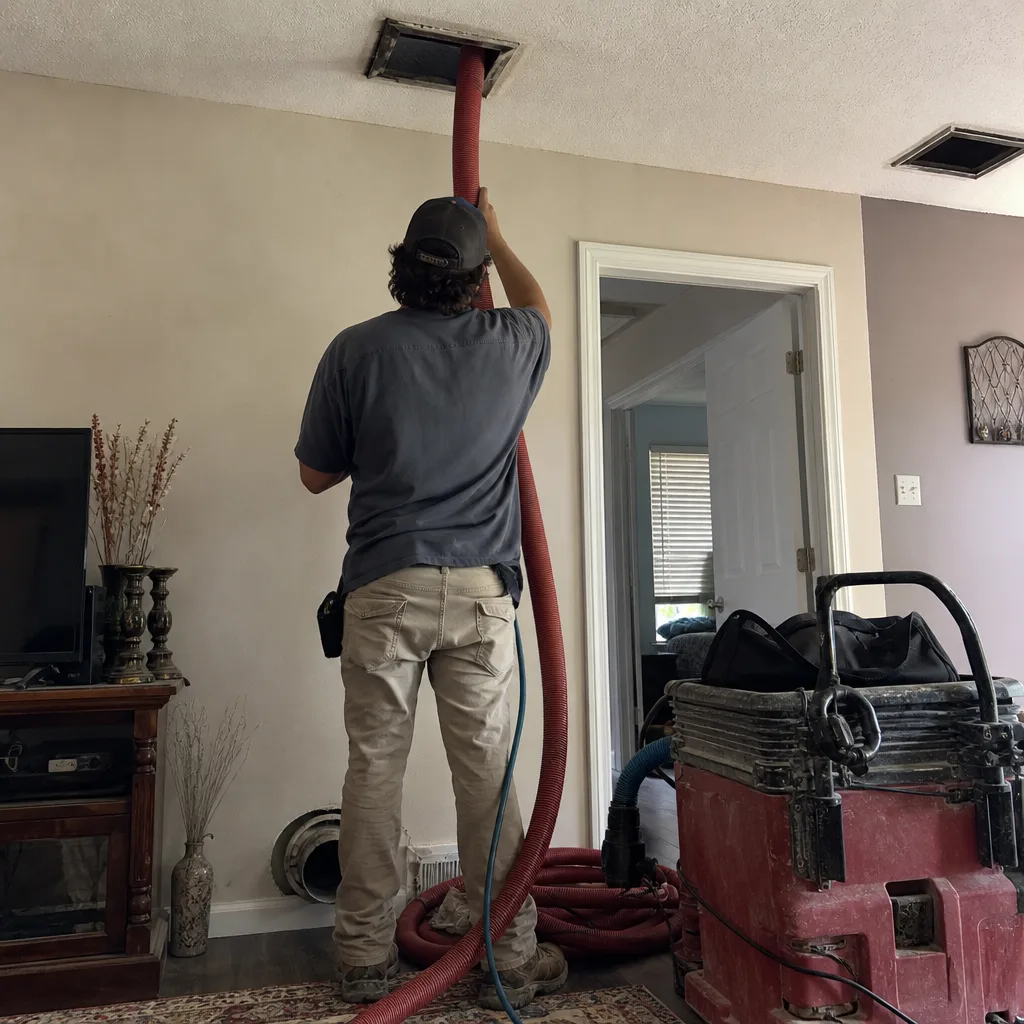 Before
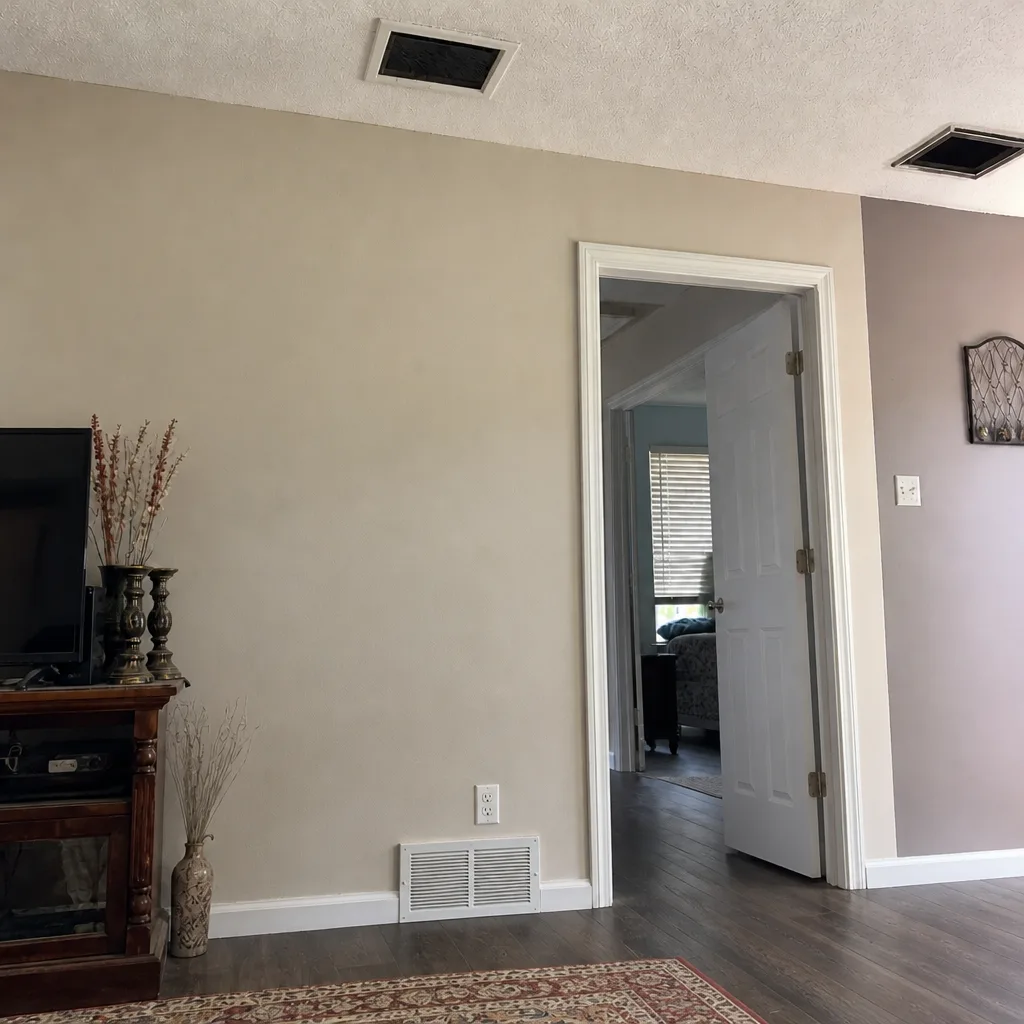 After
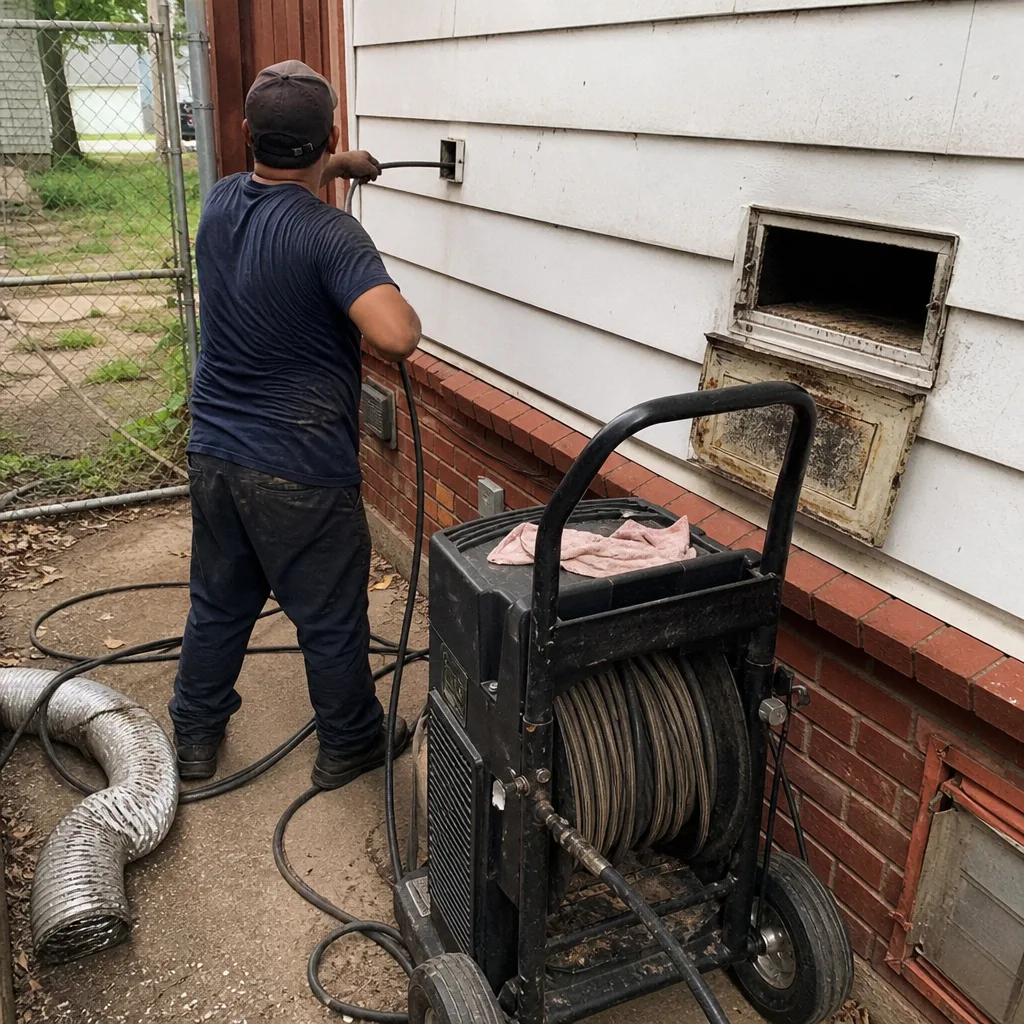 Before
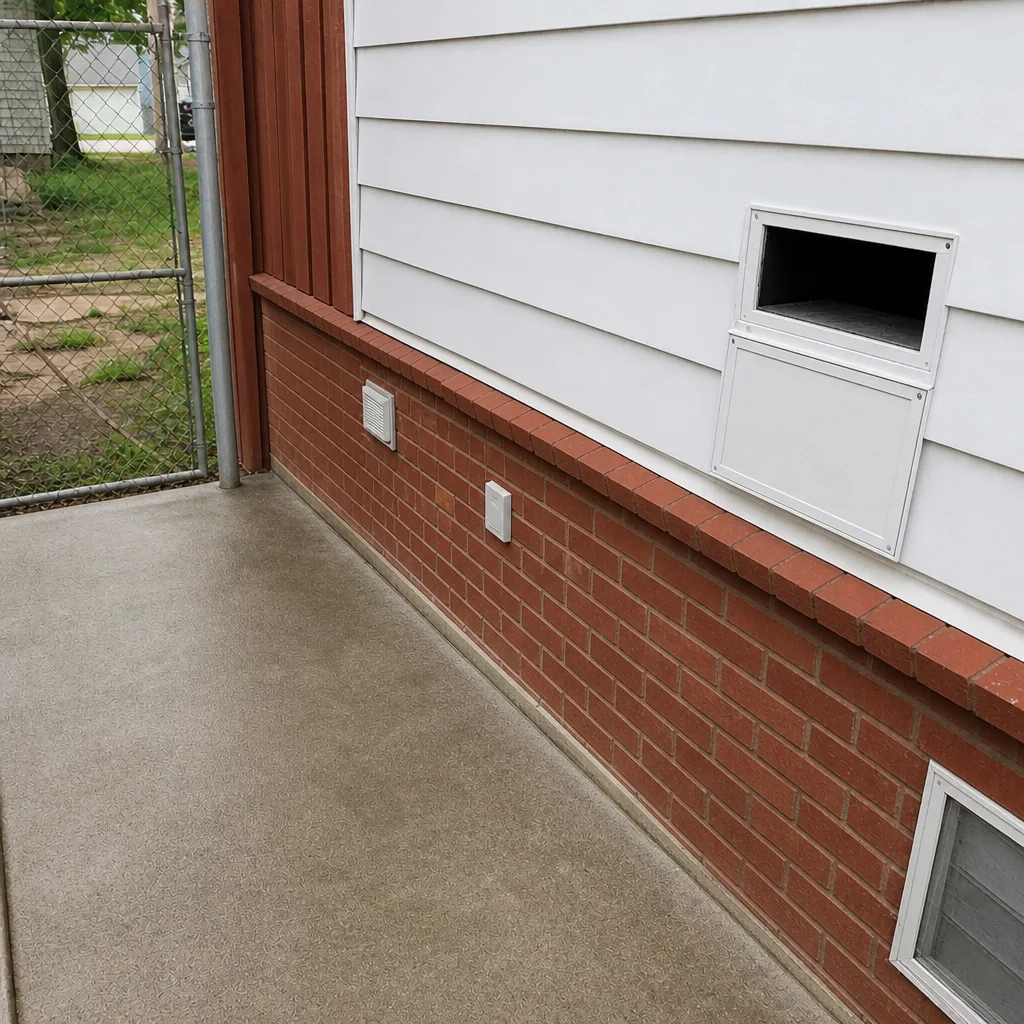 After
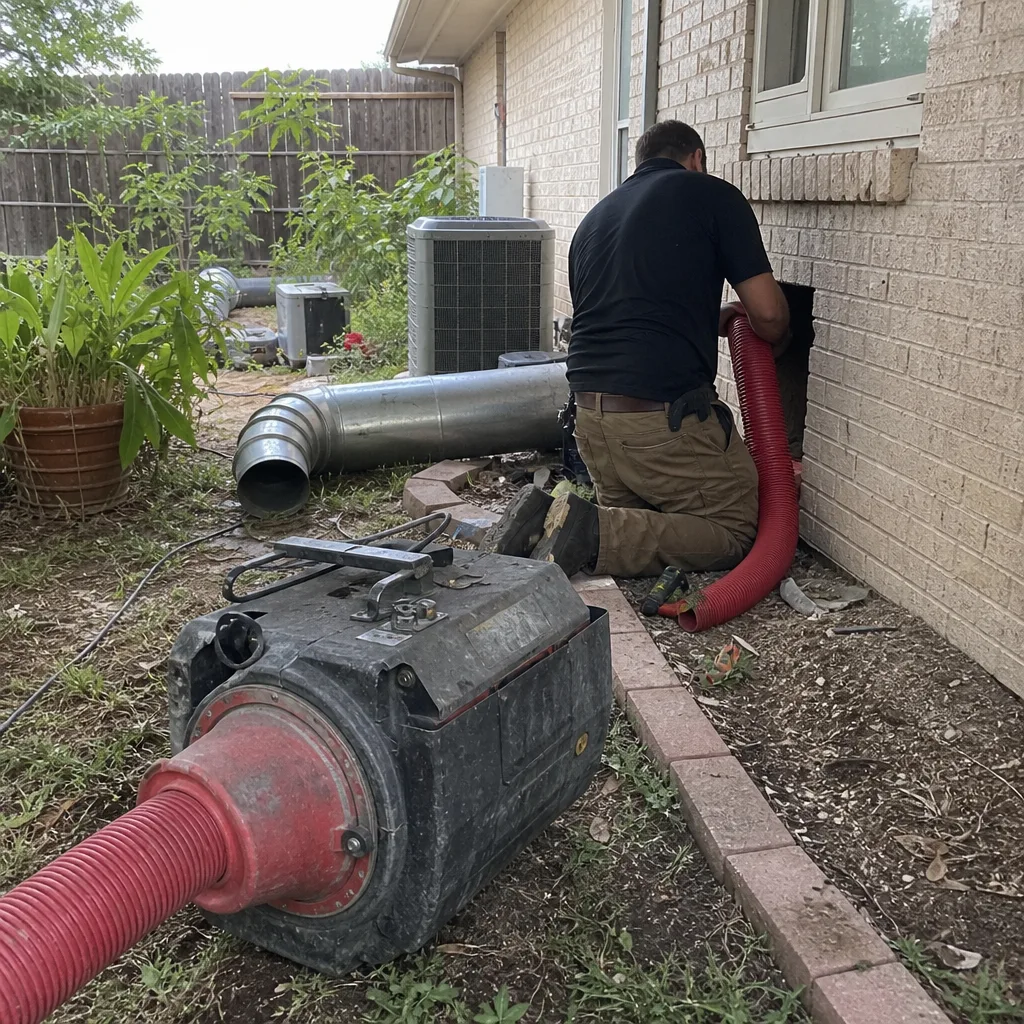 Before
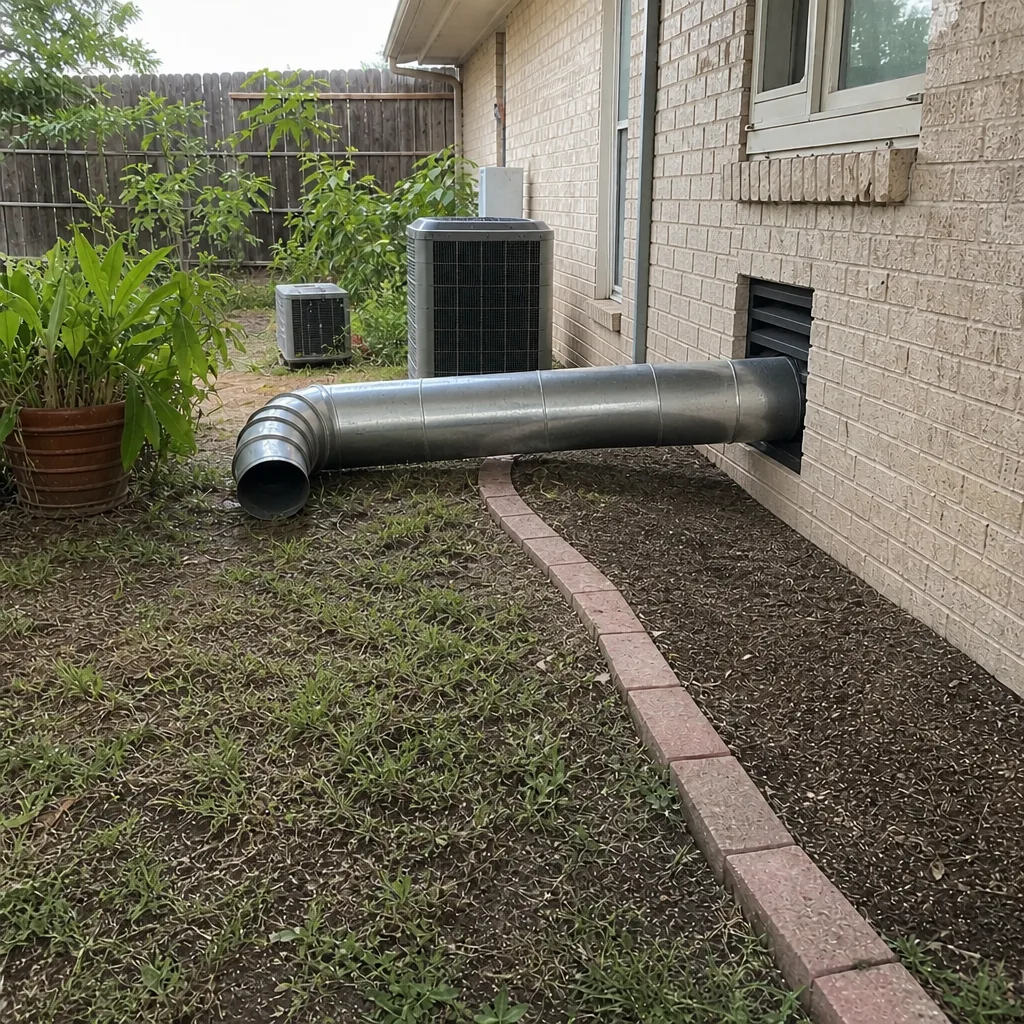 After
When to Call a Professional
Call a professional duct technician when any of these are true: one room reads 10°F or more hotter than the coolest room; a tissue test drops away from a supply register while the system runs; you smell mustiness that returns within a month of a cleaning; you see a crushed, kinked, or disconnected run in the attic or crawlspace; a register whistles or has no airflow while its neighbors are fine; or you’re buying a home in Wichita Falls and want to know what the ductwork actually looks like before you close. For any of those, the diagnosis should come from someone who works with duct systems every day and can repair what they find. Forge Duct Cleaning offers free estimates in Wichita Falls – call (844) 230-0769. We answer 24/7. Fast dispatch from 7am to 7pm, Sunday through Friday.
Frequently Asked Questions
Duct cleaning is priced per system, not per vent, and the range depends on the size of the system, how many rooms it serves, and whether structural access is straightforward or obstructed. Cleaning a typical single-family system runs a few hundred dollars. Duct repair, if needed, is a separate line item quoted before work begins. The written estimate you receive sets the final price. Call (844) 230-0769 for an exact quote – estimates are free.
Cheap quotes are usually priced per vent and usually exclude the parts of the job that actually fix a problem. A low number gets the technician in the door; the full invoice arrives once they’re on site and the vent count grows. The other difference is equipment – consumer-grade vacuums cost less to run than professional systems like Rotobrush and Nikro. Ask what equipment is used and whether the quote is per system or per vent before you book. Call (844) 230-0769 for a written estimate before work starts.
Before-and-after photos of your own ducts, delivered with the invoice. Not stock photos, not a schedule check. A reputable company documents what it found and what it left. That’s the standard we hold ourselves to at Forge Duct Cleaning, and it’s the single best protection against a technician who waves a wand and leaves. Call (844) 230-0769 to book an estimate.
Most homes here need it every few years, not every year. Homes with pets, older framing that leaks dust, recent renovation, or a heavy summer of AC use may need it more often. Homes with a clean filter schedule, sealed ductwork, and no contamination symptoms can stretch longer. The temperature split test tells you more than a calendar reminder does. Call (844) 230-0769 if you’re unsure where your system sits.
Sometimes, but not usually on its own. If the room is hot because of airflow restriction from contamination, cleaning improves it. If a flex run has collapsed or a joint has disconnected, cleaning doesn’t change the number – repair does. That’s why we diagnose the temperature split first before recommending cleaning or repair. Call (844) 230-0769 for a free estimate that starts with a diagnosis.
Cleaning removes contamination inside an intact system. Repair fixes the system itself: reconnecting duct, replacing crushed flex runs, sealing plenums and boots. Cleaning and repair solve different problems, which is why Forge Duct Cleaning offers both. If a company tells you cleaning alone will fix a broken system, get a second opinion. Call (844) 230-0769 to have your system evaluated.
The Bottom Line
Most duct problems in Wichita Falls are structural, not just dirty. A 10°F to 15°F room-to-room temperature split almost always means a breach, a crushed run, or a disconnected joint – not contamination. Cleaning fixes dirty ducts. Repair fixes broken ones. The two services solve different problems, and knowing which one you need before you call saves time, money, and a repeat invoice. Start with the temperature split. Then run the tissue test at a supply register. Then check the attic or crawlspace for a crushed run if you’re comfortable. The written estimate sets the final price, and a company that repairs what it finds is the one to call. If you’re not sure which category your home is in, that’s the moment to get a professional eyes-on diagnosis rather than guess.
Call (844) 230-0769 for a free estimate. We answer 24/7. Fast dispatch from 7am to 7pm, Sunday through Friday. Written estimate before any work begins, one flat price per system, and before-and-after photos of your own ducts when the job is done.
Written by the team at Forge Duct Cleaning.