
Last updated November 15, 2026
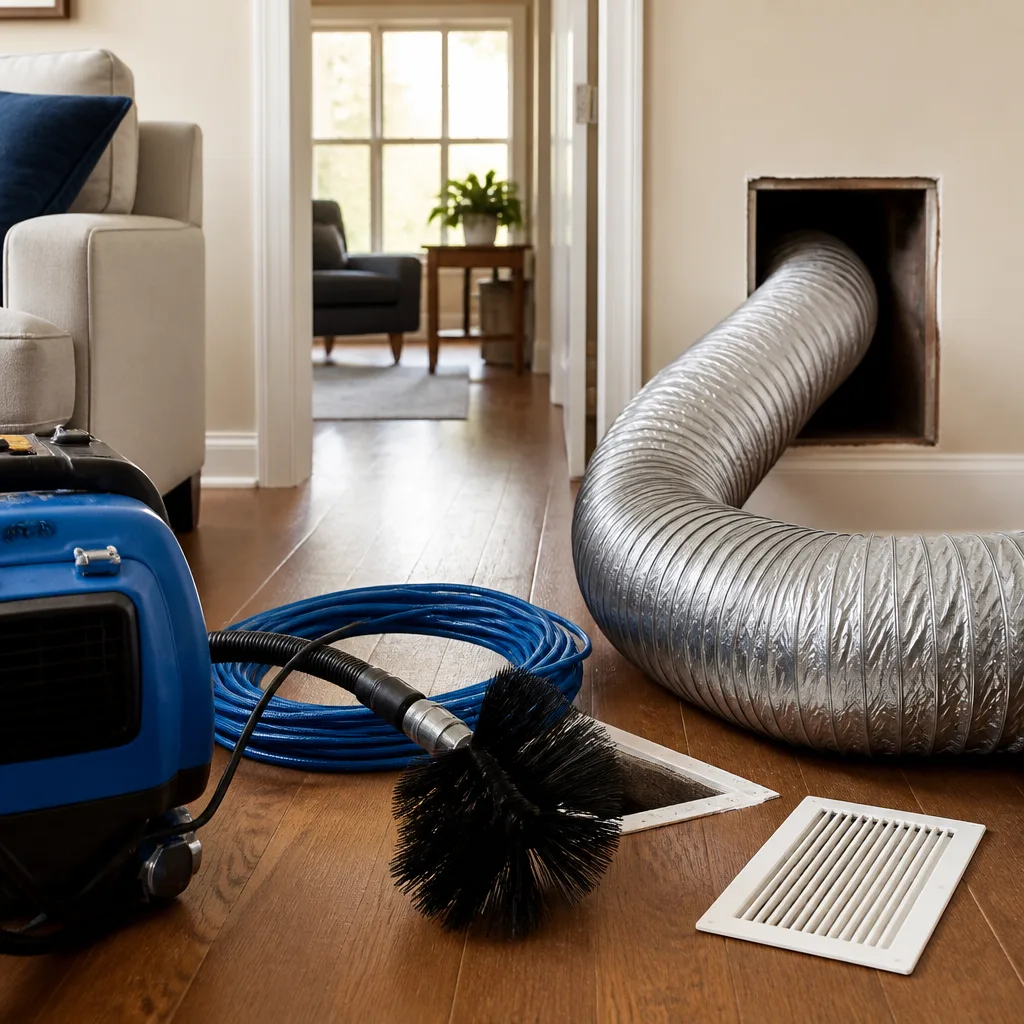 Whole-home duct cleaning
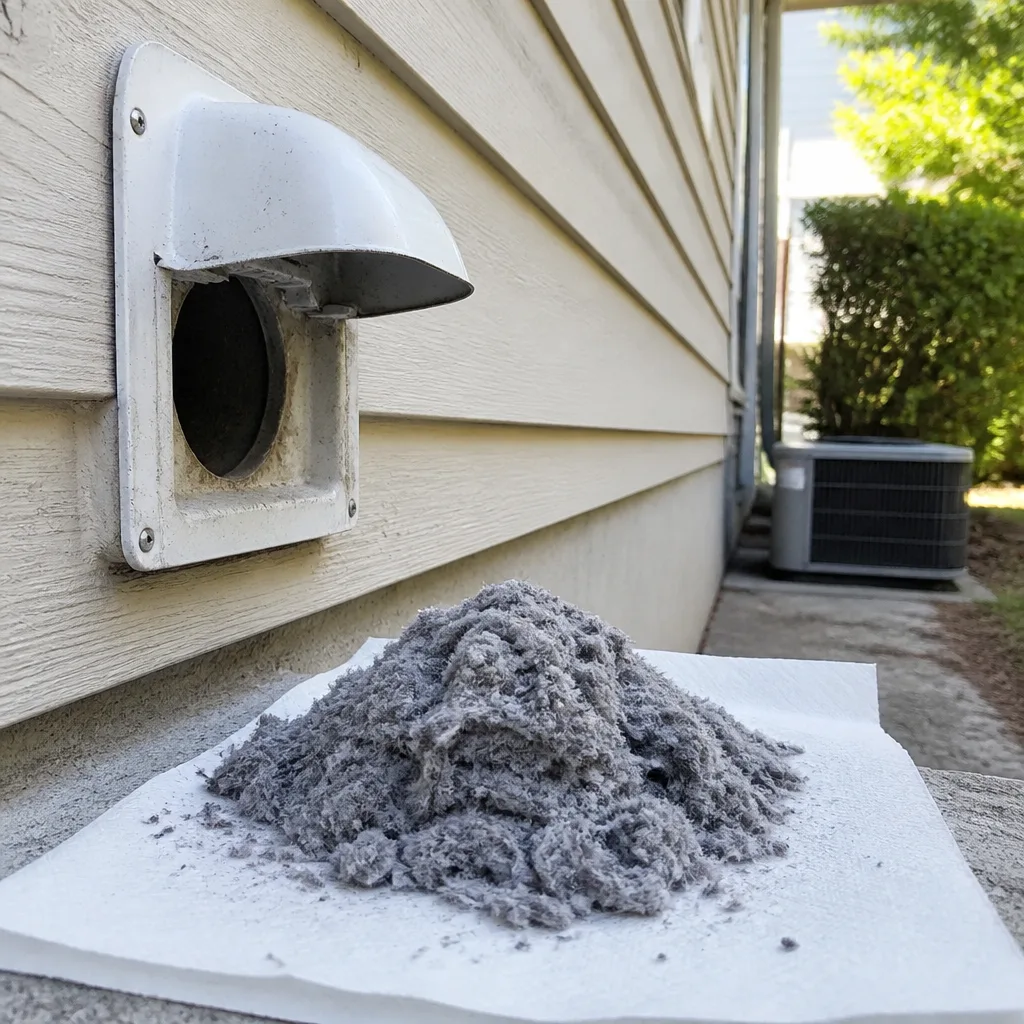 Dryer vent cleaning
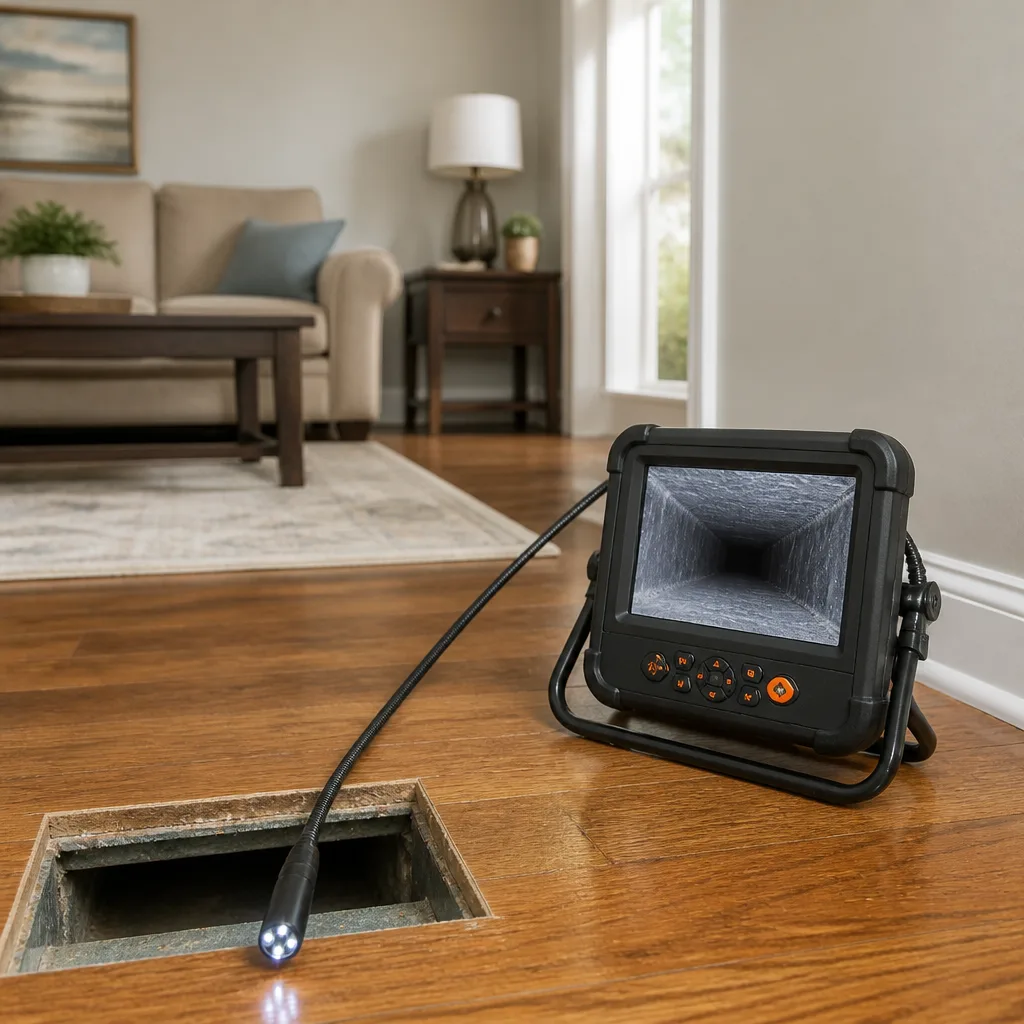 Camera inspection
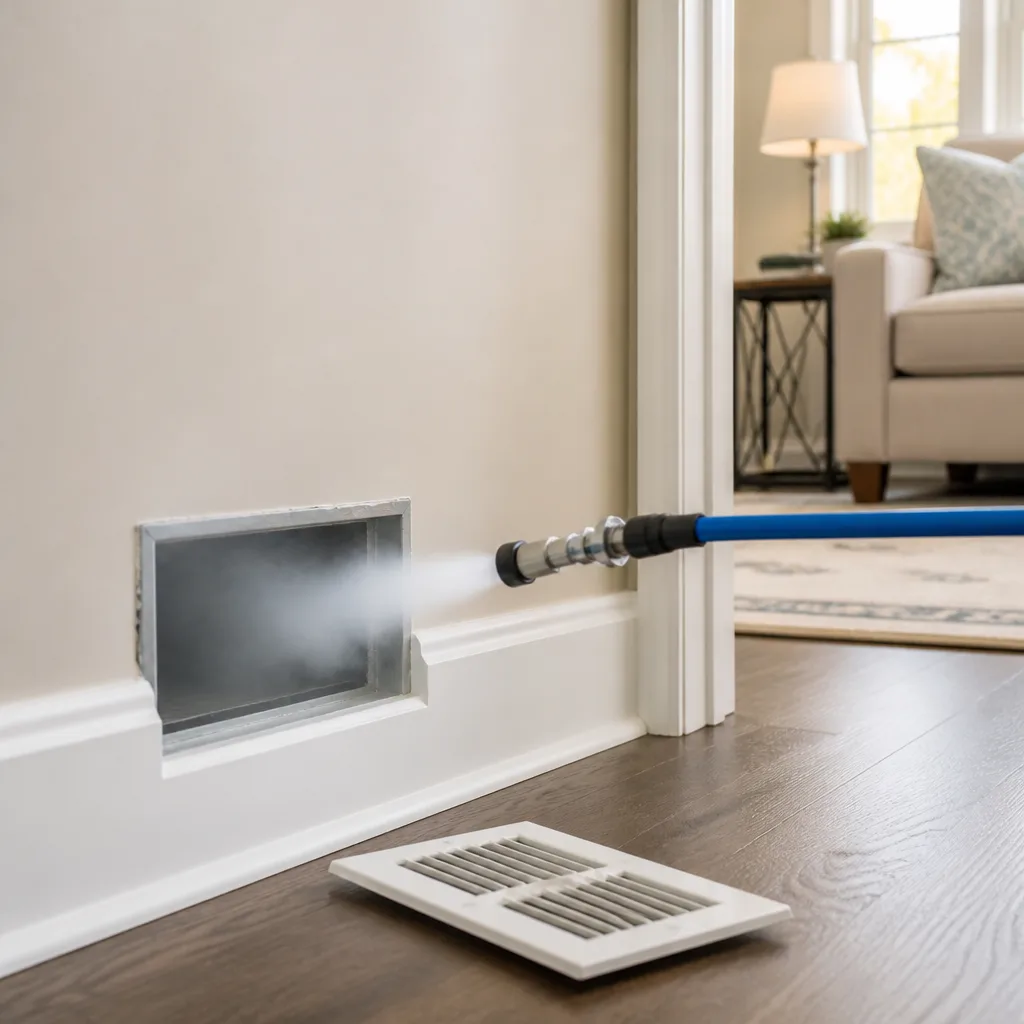 Sanitizing & deodorizing
Whole-system duct and dryer vent check with before-and-after photos - you see exactly what came out of your vents
That "$99 whole-house special" is a bait ad - the real number appears once they are in your hallway, or the "clean" is a shop-vac at the register. We photograph the inside of your ducts before and after instead.
The Complete Guide to Air Duct Cleaning in Wichita Falls
Most homeowners clean their ducts on a national schedule. Every five to seven years, somewhere in the back of their mind, they think about it. That schedule was written for a generic American house in a generic American climate, and it doesn’t fit Wichita Falls. The red clay soil, the airborne dust from surrounding farmland, the long stretches of triple-digit heat that keep your HVAC cycling harder than almost anywhere else in the country – these are regional pressures that fill a duct system faster than the national average suggests. This guide maps what’s actually inside a typical Wichita Falls duct system, why the cleaning process has to account for local conditions, and how to tell a real professional job from a coupon-company walkthrough.
Quick Answer
Air duct cleaning in Wichita Falls needs to happen more often than the national “every five to seven years” rule of thumb because regional dust, clay particulate, and heavy cooling-season HVAC cycling load ducts faster here. A professional job uses negative-pressure equipment and an inspection camera, produces before-and-after documentation, and includes repair of any compromised duct sections found during the work. Cleaning without inspection and repair capability is only half a job.
Styles & brands we work with
- Whole-home duct cleaning
- Dryer vent cleaning
- Camera inspection
- Sanitizing & deodorizing
Table of Contents
- Why Wichita Falls Ducts Get Dirty Faster Than the National Average
- What’s Actually Inside a Wichita Falls Duct System
- What an Inspection Camera Reveals in Local Homes
- The Equipment Standard That Separates Real Cleaning From Debris-Shuffling
- How Extreme Heat Cycling Deposits Debris at Specific Duct Junctions
- How to Read a Post-Cleaning Report
- Common Mistakes to Avoid
- When to Call a Professional
Why Wichita Falls Ducts Get Dirty Faster Than the National Average
Wichita Falls sits in a part of North Texas where three forces converge to load HVAC systems harder than a typical suburban location. The first is wind. This region sees an unusually high number of windy days through the year, and every one of them pushes particulate against your home’s envelope – window seals, door sweeps, attic penetrations, and the return-air paths that pull air in from inside the house. Your filter catches some of it. The gaps around it catch the rest.
The second force is soil. The red clay that defines much of the ground around Wichita Falls dries, cracks, and powders in the summer heat. Caliche dust from area roads and construction gets airborne and settles into every available surface, and once it’s inside the return-air stream it coats duct walls the way fine silt coats a riverbed.
The third force is agricultural. Cotton gins operate through the fall in the surrounding counties, and the fine lint and dust they release travels far beyond the fields. Homeowners in Wichita Falls who live downwind of gin operations or on the edges of town where farmland meets development notice a distinct seasonal film on their filters and return grilles. That film is a leading indicator of what’s accumulating inside the ducts.
Add the HVAC cycling load – a cooling system in Wichita Falls runs more hours per year than one in most of the country – and the math gets simple. More air moved through the ducts means more particulate deposited on duct walls. A national cleaning interval built around milder climates and heavier heating seasons doesn’t account for that. Local duct fouling is driven by cooling-season hours, dust loading, and infiltration, and all three push harder here.
What’s Actually Inside a Wichita Falls Duct System
When we open a return plenum or pull a supply boot in a Wichita Falls home, the material we find falls into a handful of predictable categories. Knowing what you’re looking at tells you what kind of cleaning the system actually needs.
- Clay and caliche dust. Fine, reddish-brown, and stubbornly adherent. It doesn’t blow loose easily – it has to be mechanically agitated off duct walls, which is why brush-and-vacuum systems outperform air-only tools in this region.
- Cotton lint and agricultural fiber. Common in homes on the west and north edges of Wichita Falls, where prevailing winds carry gin-season particulate. Lint mats together and reduces airflow more than its volume suggests.
- Construction debris in newer builds. Drywall dust, sawdust, and framing shavings left in the ductwork during construction. Homes built in the last decade often have more of this than homeowners expect.
- Pet hair and skin cell aggregate. Standard household load, but in Wichita Falls it bonds with the clay dust into a felt-like layer on duct walls that a shop vacuum can’t touch.
- Biological growth in high-humidity systems. A cooling system that runs long hours in a humid summer keeps the evaporator coil and the ducts downstream of it moist. That moisture supports microbial growth on duct surfaces, which is one of the reasons Abatement Technologies equipment has a place in serious duct work.
- Evidence of pest activity. Rodent droppings, insect casings, and nesting material show up in ducts that connect to attic spaces or crawl areas. This material requires care to remove safely.
The mix in any given Wichita Falls home depends on age, location, and system layout, but almost never is it “just dust.” The real question is whether your duct cleaning company has the equipment to remove what they find, not just the tools to move it around.
What an Inspection Camera Reveals in Local Homes
A professional duct inspection camera reveals things a flashlight and a mirror cannot. It shows the interior condition of the duct run – not just the first few feet near the register. In our experience, that camera view separates the actual condition of a Wichita Falls duct system from what the homeowner assumes.
Older construction (roughly 1970s through 1990s)
Homes built in this era across Wichita Falls typically have rigid galvanized sheet-metal trunks with flex duct branches added over the years. The camera often shows:
- Seam separation and disconnected joints, especially where rigid trunk transitions to flex branch. These leaks pull attic air – and everything in it – into the supply stream.
- Crushed or kinked flex runs where a branch was rerouted or where a sagging attic installation pinched the duct.
- Heavy interior dust loading on the galvanized trunk, often thick enough to obscure the metal surface.
- Older duct tape that has dried and failed, leaving gaps at every taped joint.
Newer construction (roughly 2000s forward)
Newer homes in Wichita Falls tend to use more flex duct and engineered truss layouts. The camera often shows construction debris the installer never cleared, collapsed or undersized flex runs, and supply boots that aren’t sealed to the drywall – which means conditioned air is being pushed into the attic instead of into the room.
Both cases point to the same conclusion: cleaning alone fixes the surface, but repair fixes the system. That’s why we treat air duct repair as a core service, not an upsell. When the camera finds a disconnected joint or a crushed branch, sealing it during the cleaning is the only way the job delivers what it promised.
The Equipment Standard That Separates Real Cleaning From Debris-Shuffling
The duct cleaning industry has a credibility problem, and the equipment standard is the reason. A contractor with a shop vacuum and a rotating brush can make your registers look cleaner while blowing the worst of the debris deeper into the trunk line. That’s not cleaning. That’s relocating the problem.
Real duct cleaning relies on a contact vacuum and negative-pressure containment system that pulls debris out of the system while mechanical agitation loosens it from duct walls. The two have to work together. Agitation without negative pressure just lifts dust into the air inside the duct, which settles back down as soon as you leave. Negative pressure without agitation pulls the loose surface dust but leaves the bonded layer behind.
The professional standard is a truck- or van-mounted vacuum with enough airflow to maintain negative pressure through the entire system while a technician works each branch. The agitation tools are purpose-built for the job:
- Rotary brush and whip lines for the supply and return runs, sized to the duct diameter so the brush contacts every wall surface.
- Compressed-air ski and forward-air tools for reaching boxed-in or inaccessible sections without drilling.
- HEPA-rated vacuums for the collection end, so what comes out of the ducts doesn’t end up on your carpet or into your HVAC equipment.
- Inspection camera before and after, so the technician can confirm the result and show you.
The equipment brands matter. Rotobrush and Nikro build professional-grade duct cleaning systems used across the industry. Abatement Technologies equipment is built for air-quality and contamination concerns – the kind of capability required when the camera finds microbial growth or pest contamination rather than ordinary dust. When you see those systems on the job, you’re looking at a specialist. When you see a shop vacuum and a promise, you’re looking at a generalist with a coupon.
We follow the NADCA (National Air Duct Cleaners Association) assessment and cleaning process standards on every job because that’s the only way to make the result verifiable.
How Extreme Heat Cycling Deposits Debris at Specific Duct Junctions
The Wichita Falls cooling season lasts longer and runs the system harder than in most of Texas. That matters for duct cleaning because the volume and velocity of air moving through the ducts determines where debris accumulates. Debris doesn’t distribute evenly. It collects at the places where airflow slows down.
Where fouling concentrates
- Takeoff transitions where a branch comes off the main trunk. Airflow velocity drops, and suspended particulate drops out of the airstream onto the duct floor.
- Elbows and turns. Every 90-degree change in direction creates a low-velocity pocket on the inside of the turn. That pocket fills first.
- Return plenum and filter housing. The return path sees unfiltered household air first. Debris coating here is typically heavier than in the supply side.
- Cold-evaporator downstream runs. The first two or three supply branches downstream of the indoor coil often show higher dust and microbial loading because the air leaving the coil is at its most humid and the duct walls the most likely to condense moisture.
- Attic supply runs. In Wichita Falls, attic temperatures push well over 130°F in summer. Flex duct in that environment degrades faster and sags, which creates a low pocket that fills with fine particulate.
Why zones matter
In a typical two-story Wichita Falls home, the upstairs system runs less often than the downstairs unit. But when it runs, it runs long cycles and the ductwork in the attic takes a bigger thermal hit. Upstairs zones typically have more particulate on the walls and more failed duct connections in the attic than the downstairs system, even though they process less total air. That’s why a professional job pays attention to zones individually rather than treating the whole house as one cleaning unit.
It’s also the reason we plan cleaning to follow the actual air path, system by system, so the return plenum – the dirtiest zone in almost every Wichita Falls home – is cleaned before the branch runs, not after. Cleaning out of order re-contaminates what was already cleaned.
How to Read a Post-Cleaning Report (And What Documentation Proves the Job Was Done)
A post-cleaning report is what separates a professional duct cleaning from a promise. Any company can tell you the work was done. A documented job shows you what was found, what was cleaned, what was repaired, and what the duct interior looks like afterward.
What a professional report should include
- Pre-clean inspection photos or video of each major duct zone – return plenum, main trunk, supply branches, and the air handler interior.
- A written summary of findings, zone by zone. If the report just says “cleaned all ducts,” that’s not documentation. It should name what was found – heavy clay dust, cotton lint, disconnected joint, rodent evidence, microbial staining – with the zone.
- List of repairs performed. If any joints were sealed, flex runs replaced, or boots reattached, the report should name them, not just claim “repairs as needed.”
- Post-clean photos or video of the same zones from the same camera position. A side-by-side comparison is the honest version of “before-and-after.”
- System diagram or schematic. A simple sketch of the duct layout with cleaned and repaired zones marked tells you exactly what the technician did.
- Equipment notes. The manufacturer of the vacuum, the agitation tools used, and the technician’s name or work order ID. This isn’t ceremony – it’s the record you’d want if the system develops a problem in the months after the cleaning.
Before-and-after photos
We hand the homeowner before-and-after photos of their own ducts on every job. Not stock photography. Not generic “before/after” from someone else’s house. Photos of the actual duct runs in the actual home, and the customer can keep them. That’s the difference between a job you can verify and a job you have to take on faith.
How Much Does Air Duct Cleaning Cost in Wichita Falls?
Air duct cleaning in Wichita Falls typically runs into the mid-hundreds to over a thousand dollars for a whole-home system, depending on the size of the home, the number of systems, the amount of repair work needed, and how heavy the fouling is. A single-system home in reasonable condition sits on the lower end; a two-system home with heavy clay and lint fouling and several repairs to seal may run higher. We set one flat price per system, agreed in writing before any work begins.
Our process is simple. A free estimate begins with an inspection. We see what’s in the ducts, we note what needs repair, and we quote the whole system as one number. If the camera finds a disconnected joint the original estimate didn’t account for, you hear about it before we touch it, and you approve the change in writing. No per-vent pricing. No coupon price that becomes a larger invoice once the truck pulls up.
Why some quotes are so much cheaper than others
The bait-and-switch is real in this industry. A company advertising a low teaser price may be planning to run a shop vacuum for twenty minutes, present an inflating “finding” list on-site, and then charge for work that was never part of the original scope. The price you see isn’t the price you pay, and the work you paid for isn’t what you thought you bought. The safeguard is a flat price in writing and photographic documentation on both ends. Call (844) 230-0769 for an exact quote – the estimate is free.
How Often Does Air Duct Cleaning Really Need to Happen in Wichita Falls?
In most of the country, the guideline is every five to seven years. For a typical Wichita Falls home, cleaning every three to five years is closer to the local reality. Dust and clay loading is heavier, HVAC cycling hours are higher, and the cooling season runs longer. Homes on the west and northwest sides of town, or near any agricultural activity, often need service sooner. Homes with pets, allergy sufferers, or recent renovation work should consider more frequent cleaning as well. The honest version is that frequency depends on what’s actually in the ducts, not on a schedule. An inspection camera answers that question better than any calendar. Call (844) 230-0769 for a free inspection and estimate.
Air Duct Cleaning vs. Air Duct Repair: What’s the Difference and Which Do You Need?
Air duct cleaning removes accumulated debris from duct walls. Air duct repair restores the physical integrity of the duct system – sealing leaks, replacing crushed flex runs, reconnecting failed joints, and re-sealing supply boots to the drywall. They solve different problems, and a system can need both. A cleaning that skips repair leaves a system that leaks filtered air into the attic or pulls unconditioned air back into the return. A repair that skips cleaning leaves bonded dust that will re-contaminate the repaired system. We handle both as one job because that’s how the work delivers a real result. If your HVAC contractor has quoted duct cleaning but not repair, ask whether the plan accounts for disconnected joints, crushed flex, or supply boot leaks – the camera will tell you fast.
See the difference
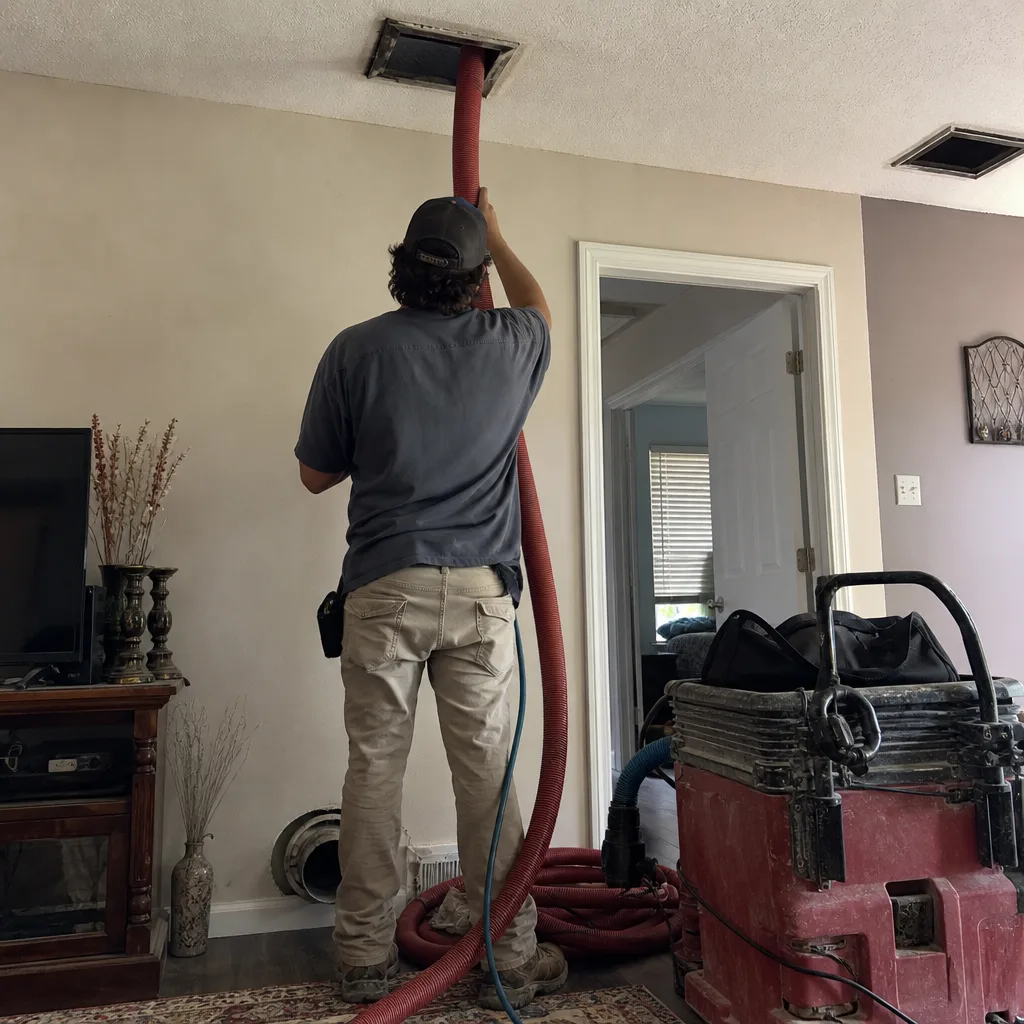 Before
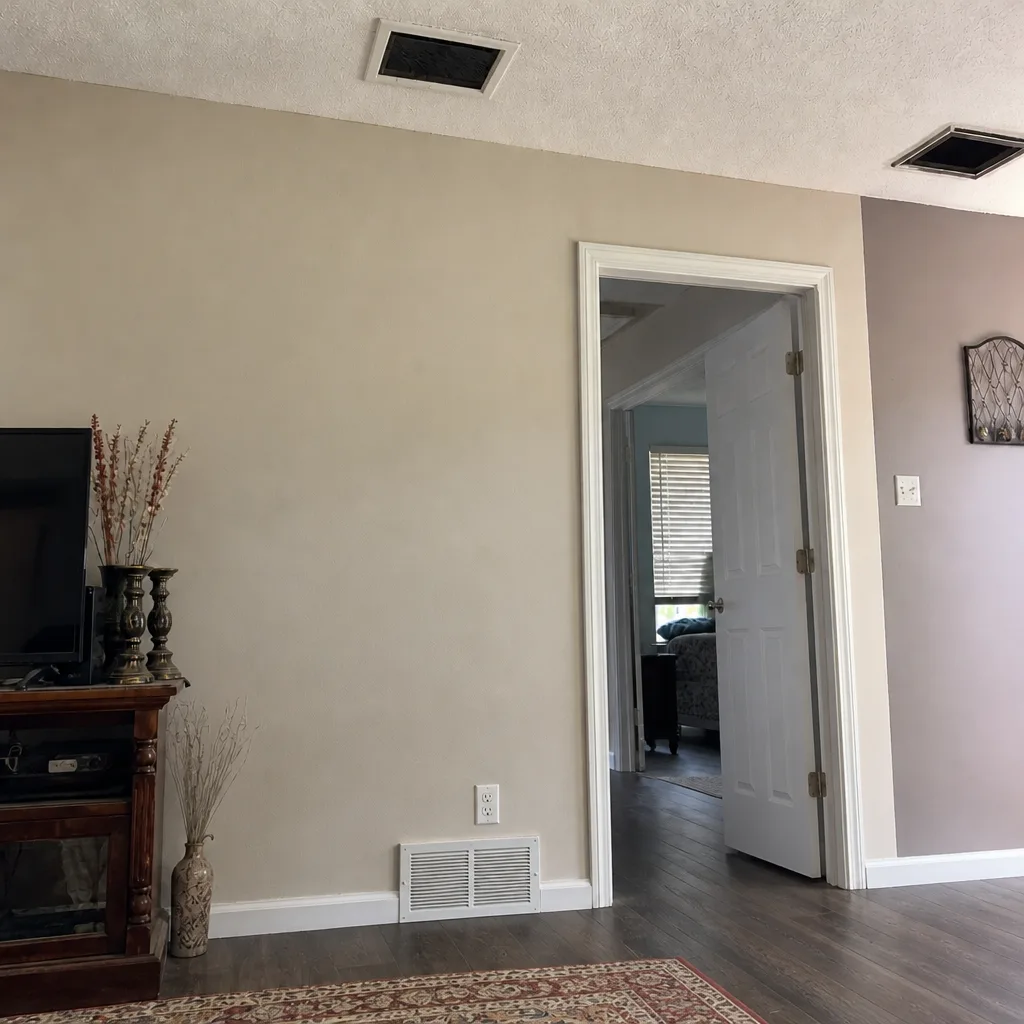 After
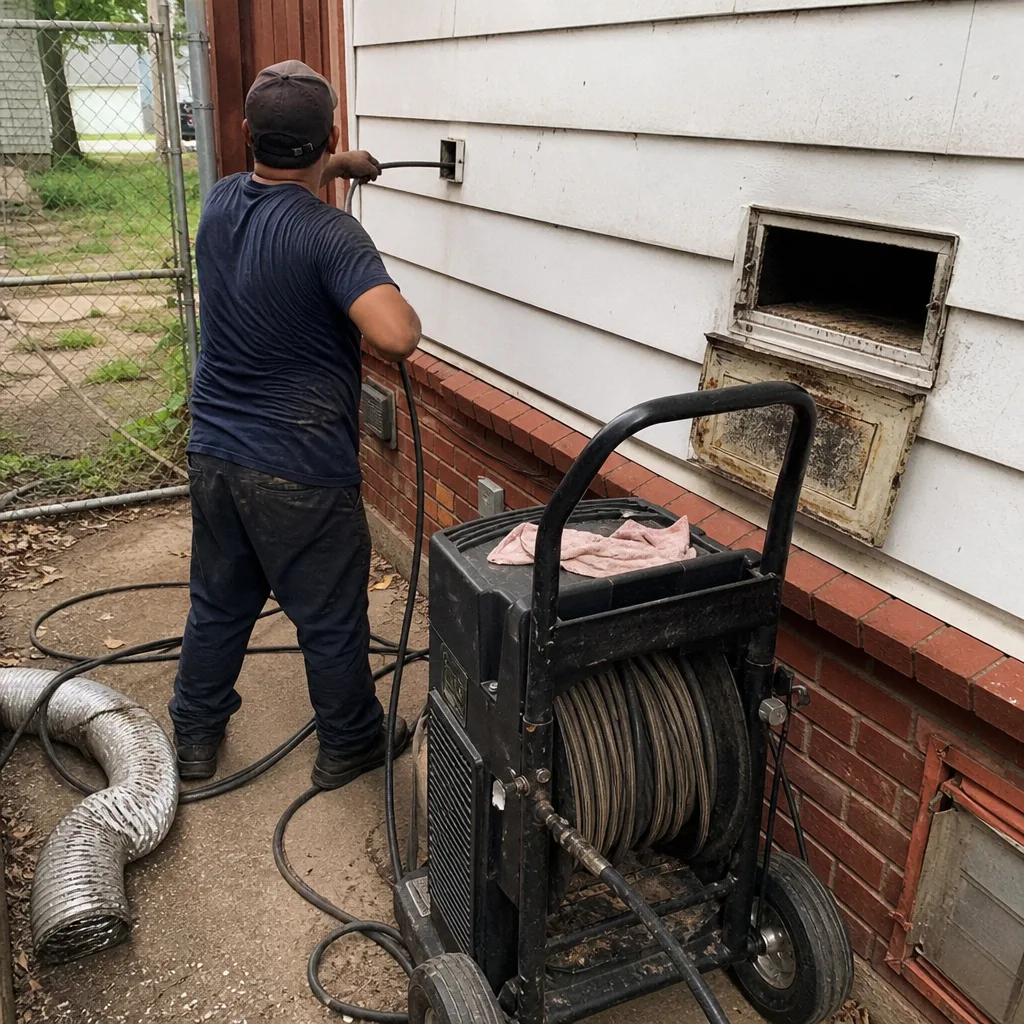 Before
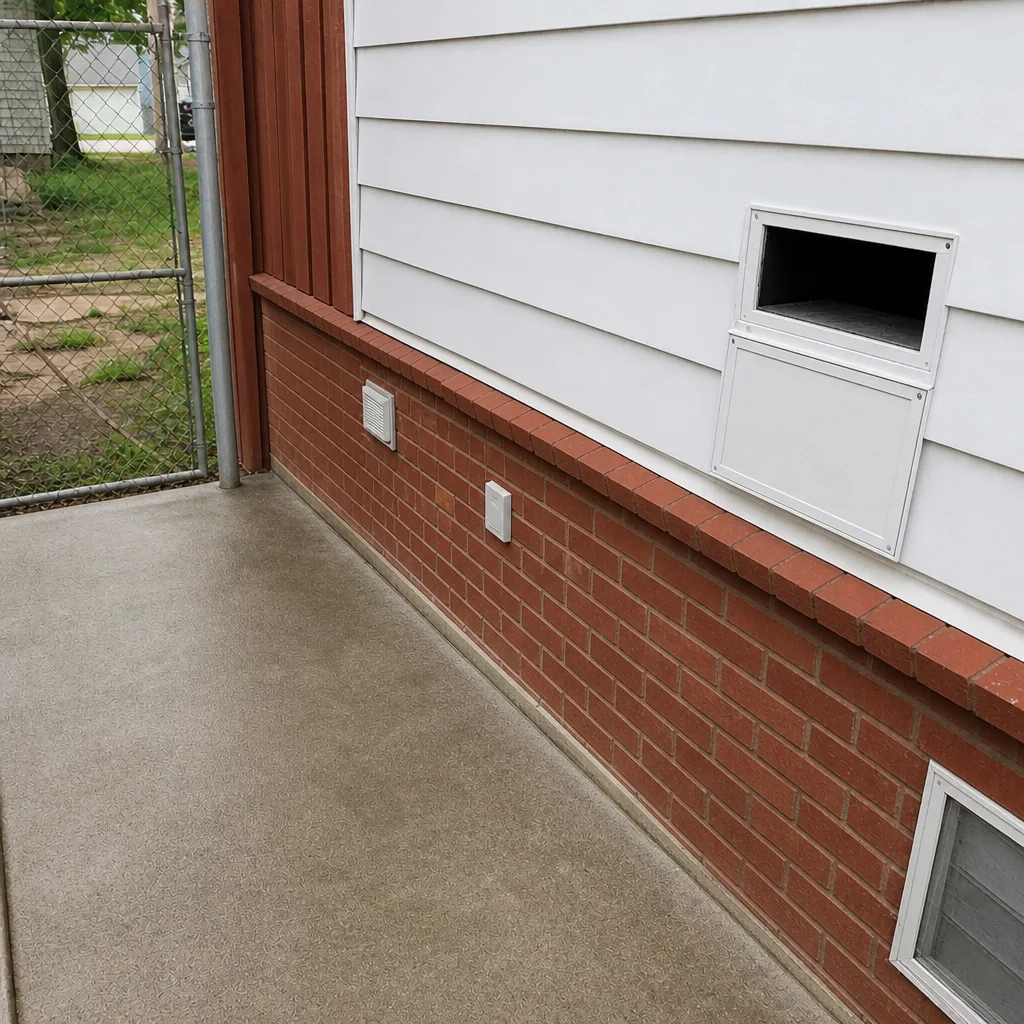 After
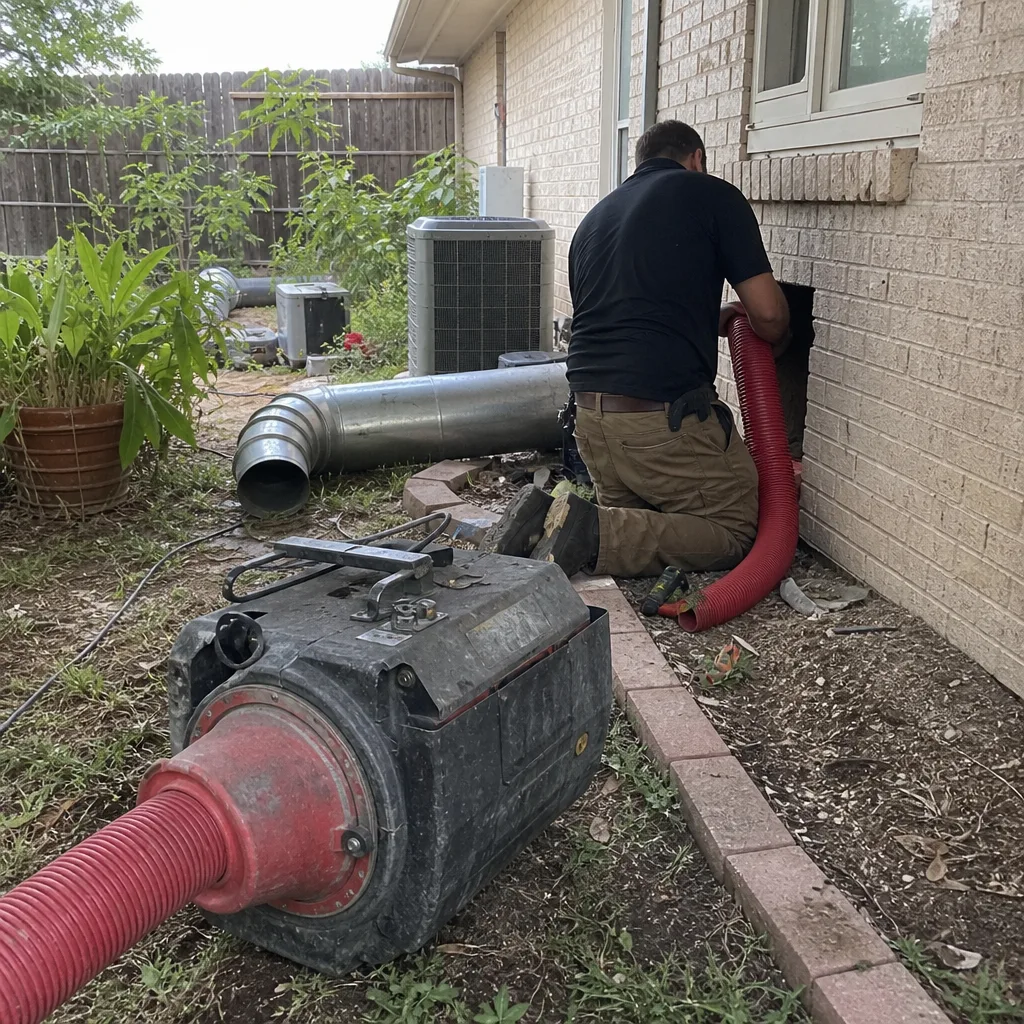 Before
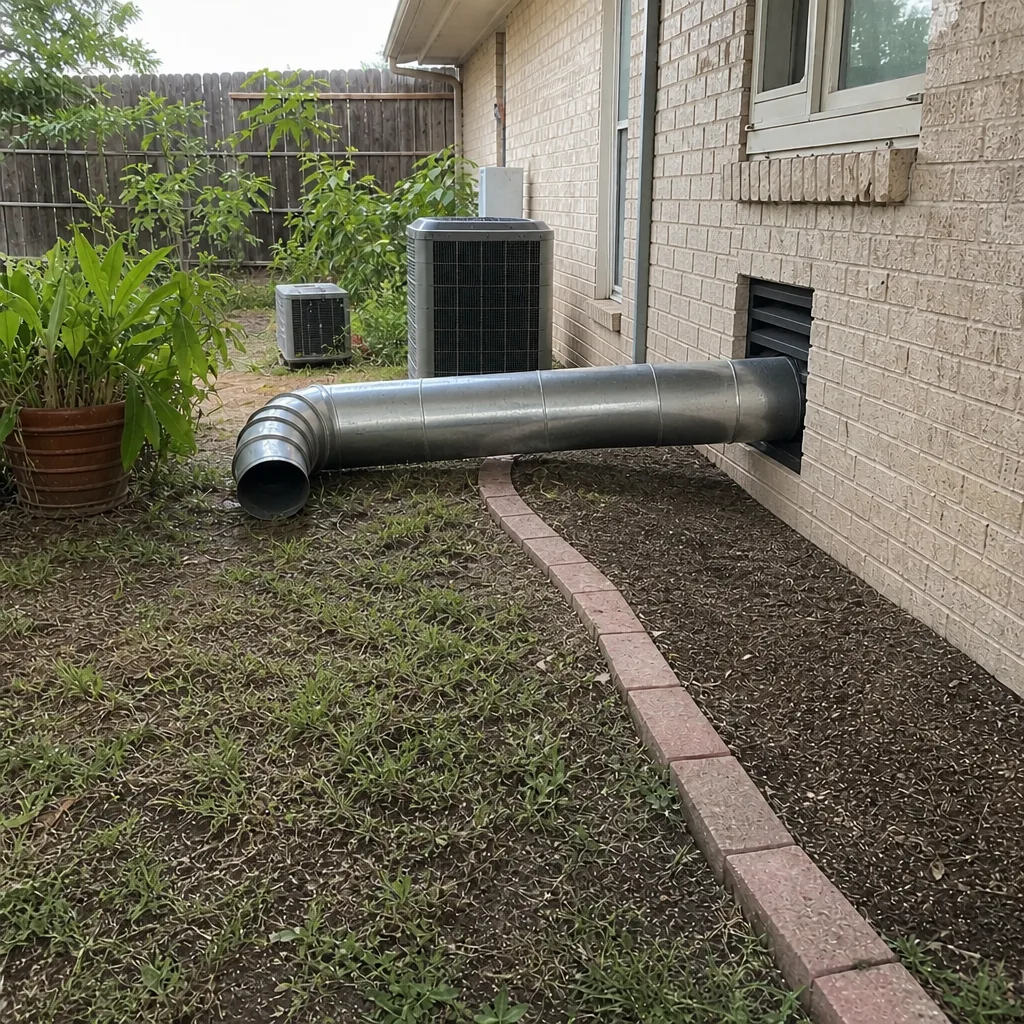 After
Common Mistakes to Avoid
- Booking on price alone. The lowest quote in the Wichita Falls market usually reflects the shortest equipment list, not the best deal. A shop vacuum running through a register isn’t duct cleaning – it’s a surface wipe that can actually drive debris deeper into the trunk.
- Accepting a coupon price as the final price. Any company advertising a low teaser figure is planning to find something on-site. Ask for a flat price per system in writing before you book. If the answer is “we’ll see when we get there,” that’s the whole answer.
- Cleaning before repairing. Cleaning a system with disconnected joints or crushed flex is wasted work. The leaks pull the dust straight back in. Inspect first, repair what needs repair, then clean the system the repairs delivered.
- Skipping the inspection camera. A company that doesn’t use a camera can’t tell you what’s actually inside your ducts, and can’t show you afterward that the cleaning worked. The camera is not optional on a real job.
- Skipping documentation. A report that says “cleaned all ducts” proves nothing. Demand before-and-after photos of your own ducts and a zone-by-zone summary of what was found and what was repaired.
- Ignoring dryer vents. The dryer exhaust isn’t part of the HVAC ductwork, but it’s the same category of airway – a lint-clogged dryer vent is a fire hazard and a load on the appliance. Local homes with heavier laundry loads should have the dryer vent checked on the same visit as the ductwork.
- Cleaning on a national schedule. The five-to-seven-year rule is written for a milder climate. Wichita Falls dust loading and HVAC cycling hours argue for a shorter interval and an inspection camera that answers the question with evidence.
When to Call a Professional
Call a professional duct service when you notice visible dust streaking from registers, a persistent musty odor that returns soon after cleaning the evaporator coil, a measurable airflow drop between rooms, or a recent HVAC replacement where the ducts hadn’t been touched in years. Homes with a new baby, family allergy concerns, or a recent renovation that ran the HVAC system uncovered during work are good candidates for an inspection. Rodent activity anywhere in the home is a call-now signal, because duct contamination requires careful removal, not a shop vacuum. If you’re unsure, an inspection camera answers the question in about twenty minutes. Forge Duct Cleaning offers free estimates in Wichita Falls – call (844) 230-0769. We answer 24/7.
Frequently Asked Questions
Typical whole-home air duct cleaning in Wichita Falls runs into the mid-hundreds to over a thousand dollars, depending on system size, number of HVAC units, fouling level, and repairs needed. The price is set per system in writing before work begins. Call (844) 230-0769 for an exact free estimate.
Every three to five years is closer to the local reality than the national five-to-seven-year guideline, because Wichita Falls dust loading and cooling-season HVAC hours are both higher than the national average. Homes on the west side or near agricultural activity often need sooner. Call (844) 230-0769 to schedule a free inspection – the camera tells us more than any calendar.
Real duct cleaning with negative-pressure equipment, mechanical agitation, and before-and-after documentation delivers measurable results. The “scam” version is a shop vacuum and a promise. The way to tell the difference is three questions: What equipment do you use, can you show me the camera view, and is the price flat per system in writing? Any honest company answers all three. Call (844) 230-0769 and we’ll walk you through exactly what our process looks like.
A professional job uses a negative-pressure truck- or van-mounted vacuum, mechanical agitation tools including rotary brush lines sized to the duct, an inspection camera before and after, and HEPA-equipped collection. Rotobrush and Nikro build the professional systems used across the industry. If a quote doesn’t mention any of this, ask why.
Because the low price isn’t the actual price. A cheap teaser quote usually plans to find something on-site and invoice for it. The fix is to insist on a flat price per system in writing and before-and-after photos of your own ducts when the work is done. Call (844) 230-0769 for a flat quote with no surprises.
Ask for before-and-after photos of your own duct runs from the same camera positions, plus a zone-by-zone written summary naming what was found and repaired. A company that can’t produce both when the work is finished didn’t do a professional job. We document every system we clean and hand the customer the photos. Call (844) 230-0769 for a free estimate.
The Bottom Line
Air duct cleaning in Wichita Falls isn’t a generic service on a generic schedule. Red clay dust, cotton-gin season, and a cooling system that cycles harder than most of the country all load the ducts here faster than the national average. The right cleaning process accounts for that: negative-pressure equipment, mechanical agitation, an inspection camera, and repair capability under one roof so leaks and disconnects are sealed before the system is cleaned. The right company quotes a flat price per system in writing and documents the job with before-and-after photos of your own ducts. If those four things are missing, the coupon price wasn’t the deal it looked like. If they’re present, the job delivers a measurably cleaner system, better airflow, and a duct network that stays repaired.
Ready to Get Your Ducts Cleaned Right?
Forge Duct Cleaning is the industrial-grade specialist for air duct cleaning in Wichita Falls. We bring Rotobrush and Nikro professional systems, Abatement Technologies equipment for contamination concerns, inspection cameras on every job, and full air duct repair capability so we fix what we find rather than clean around it. We partner with dryer vent cleaning as part of the same visit when the lint load calls for it, and we work with air-quality brands like Honeywell and Aprilaire when a home needs a whole-system air-quality solution after cleaning. Our technicians have up to 15 years of experience, and we treat every Wichita Falls home with the same industrial-grade standard. Call (844) 230-0769 for a free estimate. We answer 24/7. Fast dispatch from 7am to 7pm, Sunday through Friday, closed Saturday. One flat price per system, agreed in writing before work starts, and before-and-after photos of your own ducts when we’re done. That’s the whole promise – and it’s the reason to call Forge Duct Cleaning.
Written by the team at Forge Duct Cleaning.