
Last updated November 15, 2026
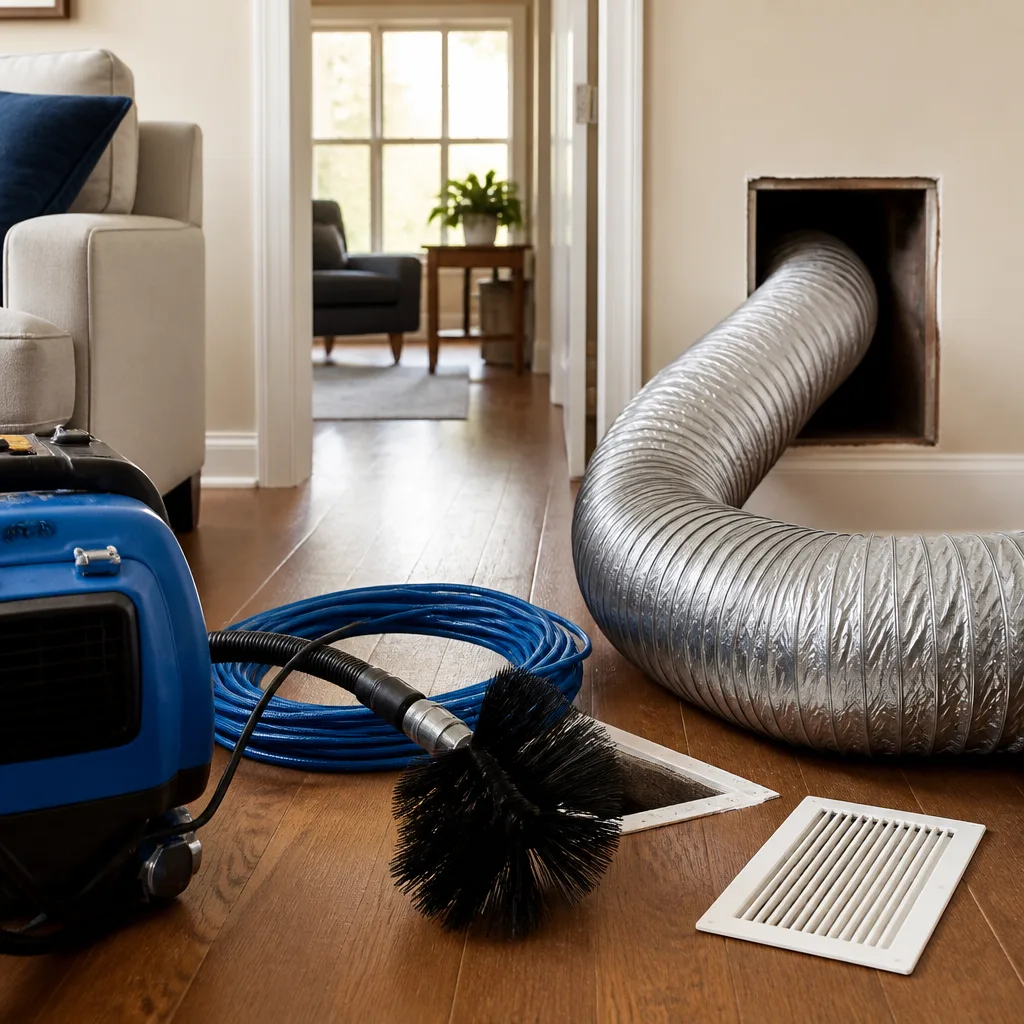 Whole-home duct cleaning
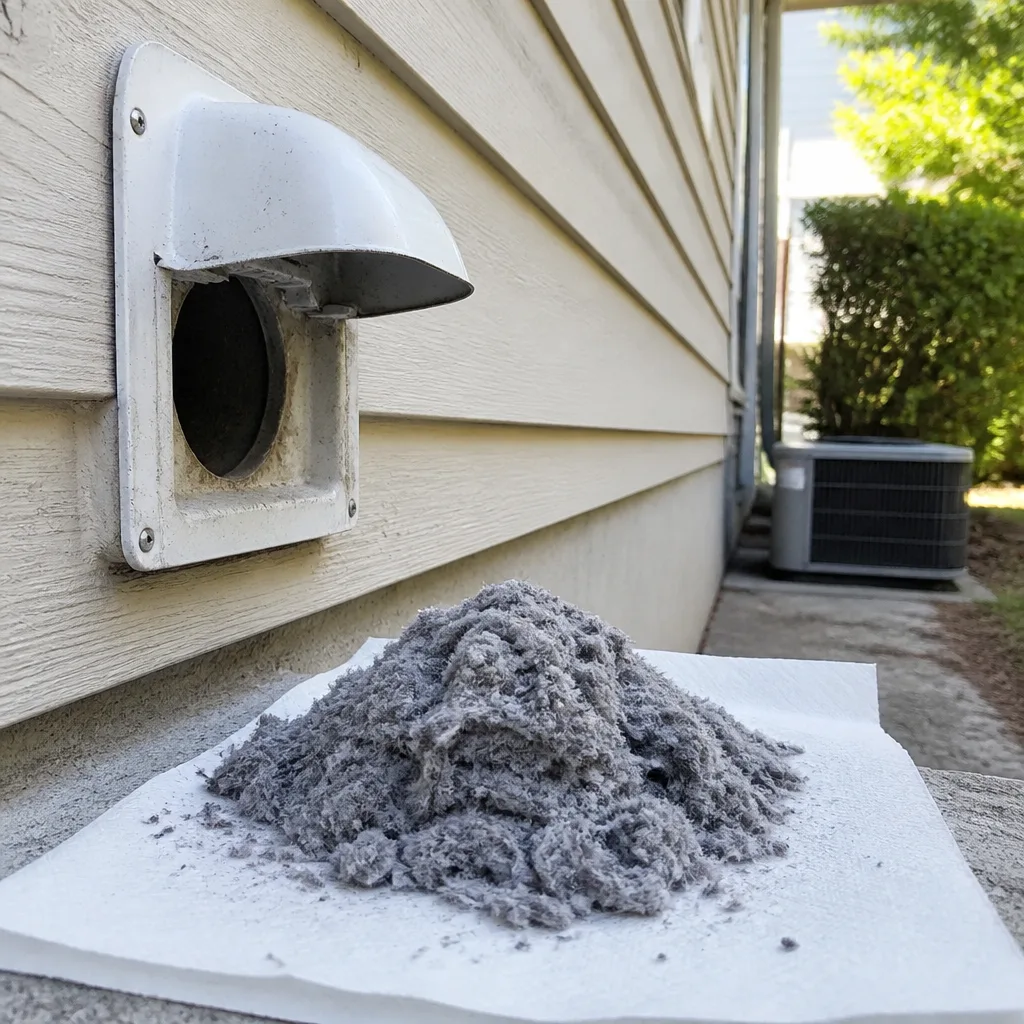 Dryer vent cleaning
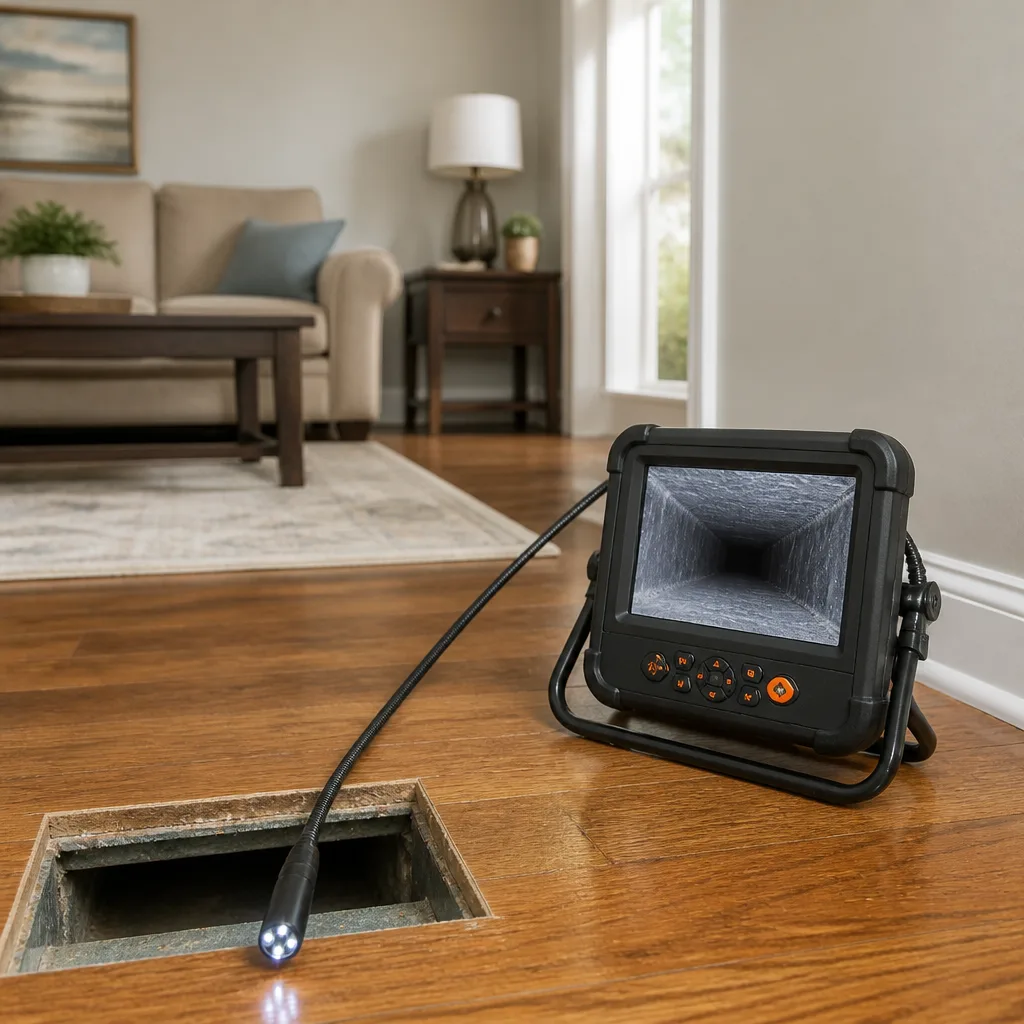 Camera inspection
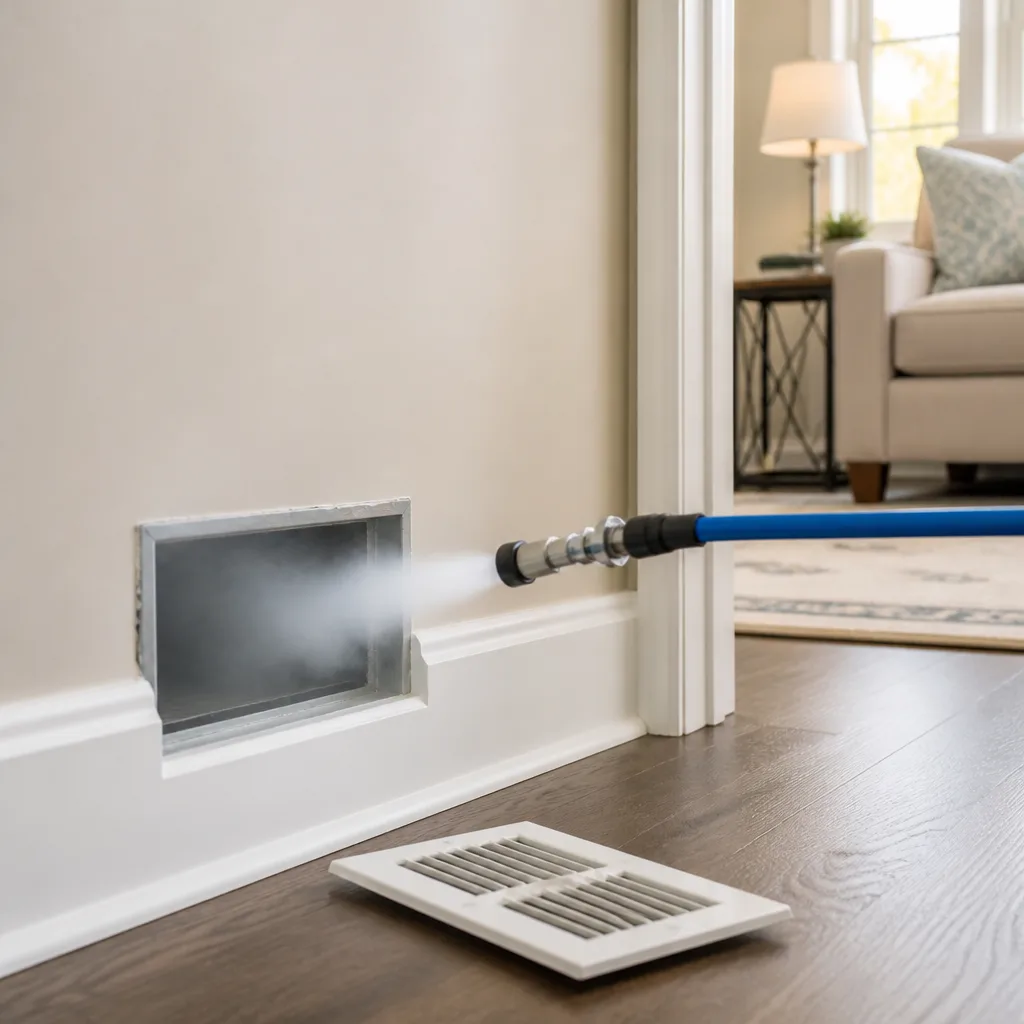 Sanitizing & deodorizing
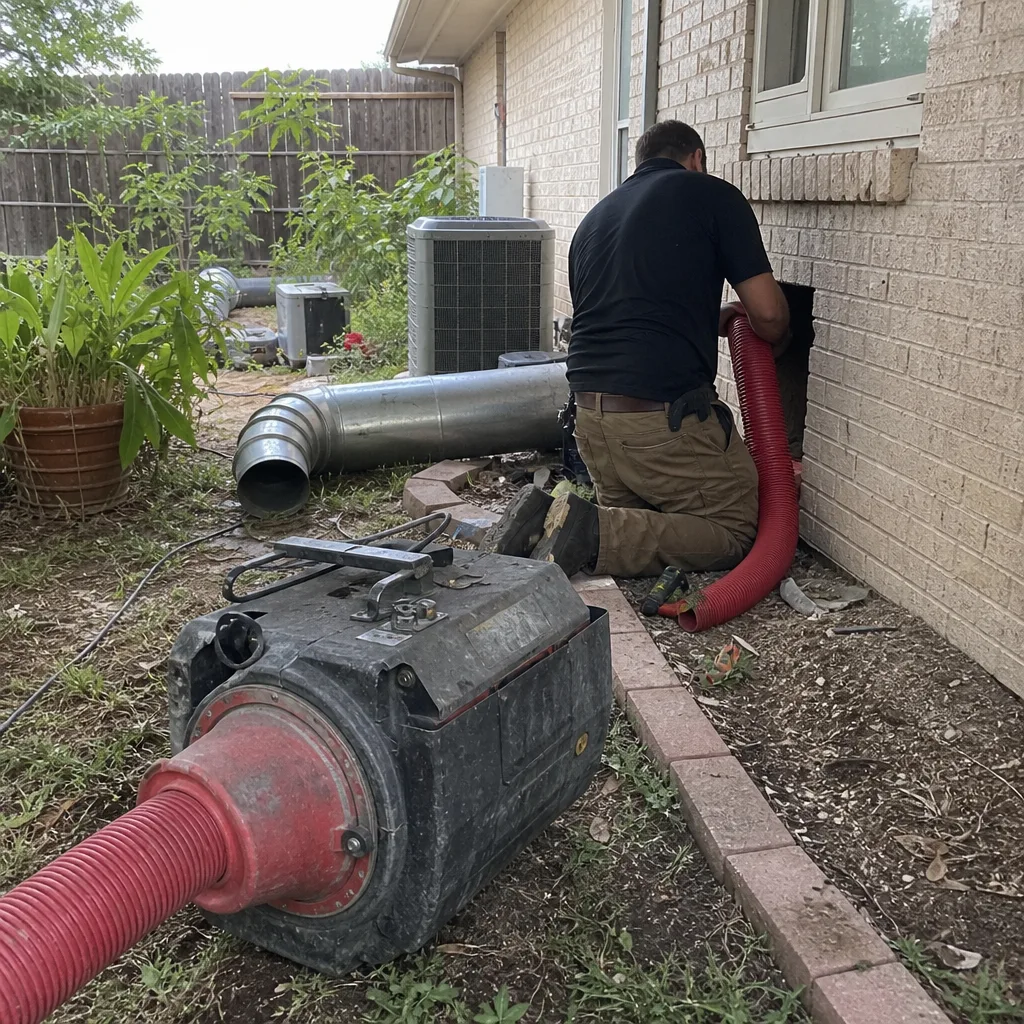
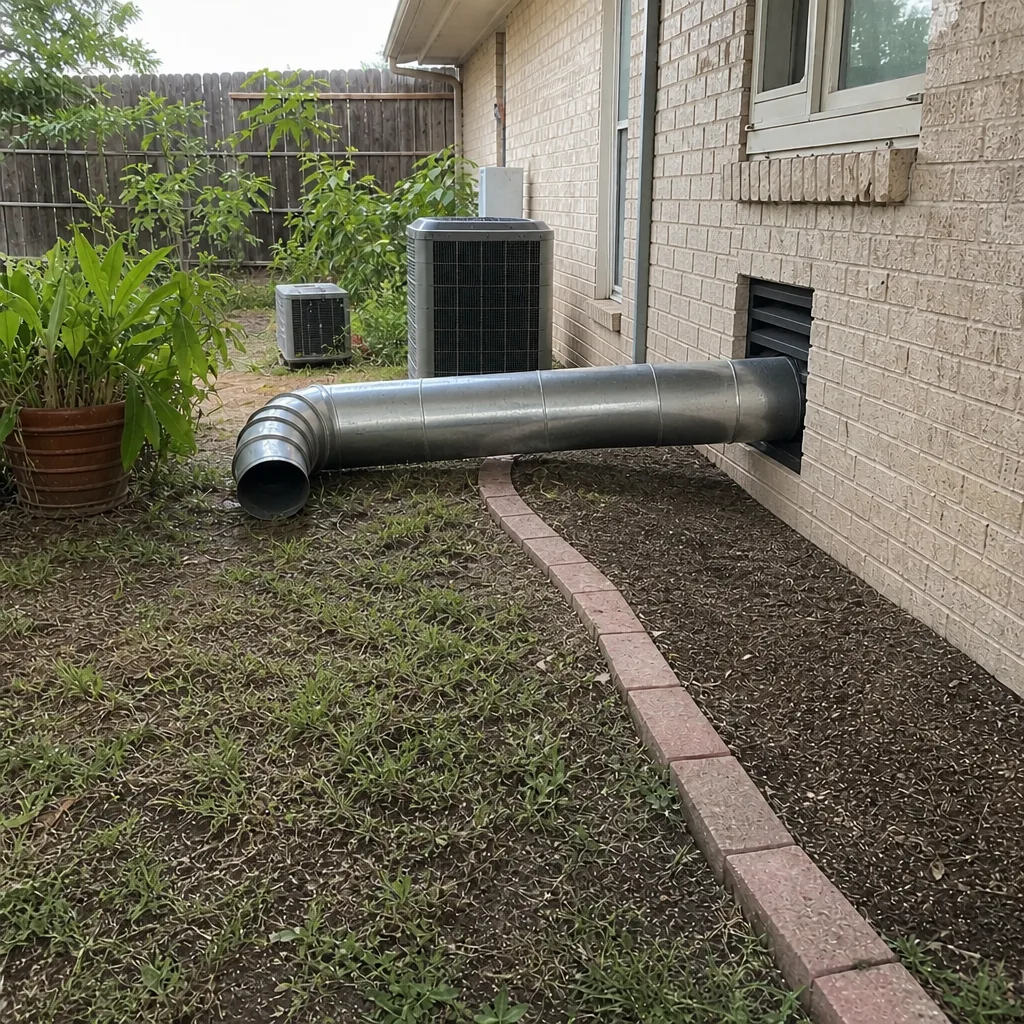
Whole-system duct and dryer vent check with before-and-after photos - you see exactly what came out of your vents
That "$99 whole-house special" is a bait ad - the real number appears once they are in your hallway, or the "clean" is a shop-vac at the register. We photograph the inside of your ducts before and after instead.
Air Duct Cleaning Warning Signs: A Wichita Falls Homeowner’s Reference Guide
If you’re running your HVAC system normally but specific rooms stay consistently hotter or colder than the thermostat setting, your duct system is talking to you, and it’s not saying “replace the unit.” Most homeowners in Wichita Falls read duct symptoms as HVAC problems, allergy problems, or house-settling problems. The thermostat gets blamed. The filter gets changed. A new unit gets quoted. Meanwhile the actual source sits quietly inside the ductwork, getting worse. This guide maps each symptom to its real cause so you stop treating the wrong thing, and it tells you which signals mean call now, not later.
Quick Answer
The core warning signs of a dirty or failing air duct system are uneven room temperatures, indoor-only allergy symptoms, visible register staining, musty or chemical odors that appear only when the blower runs, and energy bills that climb without a matching change in weather or usage. In Wichita Falls, where summer heat pushes systems hard and spring dust and pollen ride in on every return, these symptoms show up faster than in cooler climates. Any one of them is worth an inspection; two or more together usually means a real duct problem, not a filter problem.
Styles & brands we work with
- Whole-home duct cleaning
- Dryer vent cleaning
- Camera inspection
- Sanitizing & deodorizing
Table of Contents
- Odor Signals: Reading Dirty Ducts vs. Mold in the Ductwork
- Airflow Imbalance: Blockage, Collapsed Flex Run, or Duct Separation
- Indoor-Only Allergy Symptoms and Duct Contamination
- Register Staining Patterns and What Each One Means
- The Energy Bill Anomaly That Reveals Duct Leakage
- Dust Reappearing Fast After Cleaning
- What a Visual Inspection Can and Cannot Show
- Common Mistakes to Avoid
- When to Call a Professional
- Frequently Asked Questions
Odor Signals: Reading Dirty Ducts vs. Mold in the Ductwork
Smell is the fastest diagnostic you have, and most homeowners dismiss it as “just how the house smells.” The key is timing. An odor that exists in a closed room regardless of the HVAC is a room problem. An odor that appears within a minute or two of the blower kicking on, then fades when it stops, is coming through the ducts. That distinction alone tells you where to spend money.
Once you’ve confirmed the odor is airflow-dependent, the character of the smell narrows the cause:
- Musty, wet-cardboard, or damp-basement smell: This points toward moisture in the ductwork or on the coil, with biological growth a real possibility. In our experience it’s the descriptor most often tied to a genuine contamination issue rather than ordinary dust.
- Sharp, sour, or dirty-sock smell: Commonly dust, pet dander, and skin cells that have accumulated on duct walls and are being stirred up. Unpleasant, but usually a cleaning problem rather than a growth problem.
- Chemical or solvent-like smell: Can indicate a refrigerant leak near the coil or an off-gassing material. This one deserves a prompt callback from a technician.
- Construction-dust or drywall smell: Normal briefly after renovation, but a sign your ducts have taken on debris that a standard filter can’t handle.
The damp, musty smell is the one that most often gets misread. Homeowners in Wichita Falls will spray air fresheners, run a deodorizing filter, and assume it’s the humidity. Humidity does contribute to duct moisture, but an odor that only appears with airflow suggests the growth is already established on a surface the filter never reaches. That’s a case where cleaning alone may not solve it. Our Abatement Technologies equipment is brought in for exactly this scenario, because contamination and air-quality concerns need a different level of tooling than a routine job. If you want to understand the cleaning process itself, our page on air duct cleaning walks through what a professional job involves from start to finish.
Airflow Imbalance: Blockage, Collapsed Flex Run, or Duct Separation
Weak airflow from one or two registers means the duct serving those registers is compromised, and the type of compromise decides how urgent it is. Three causes account for most of what we find:
- Blockage: Debris, a closed damper, or a foreign object in the run. Airflow is reduced but the duct is intact. Cleaning or damper adjustment solves it.
- Collapsed flex run: Flexible duct that has pinched or crushed, often where it makes a sharp bend or runs through a tight attic space. Airflow is choked at that point. The run needs to be replaced, not cleaned.
- Duct separation: A joint has come apart at a boot, a trunk connection, or a transition. Air is dumping into an attic, wall cavity, or crawlspace instead of the room. This is the urgent one.
Why is separation the urgent case? Because a disconnected supply duct in a vented attic pulls hot attic air into the system and pushes conditioned air out of it, and a separated return can draw in whatever is in the cavity it’s passing through. In a Wichita Falls summer, an attic can run far hotter than the living space below, so a separated run both wastes cooling and drags air you’d never want to breathe into the return. In winter it’s the reverse but the same principle applies.
Here’s a simple test you can run before calling anyone: hold your hand over each register while the system runs and compare the flow. If one register is weak but the others are strong, the problem is that run, not the equipment. If every register is weak, the issue is upstream at the air handler or the main trunk. If one room is hot and the register feels weak, that’s a single-run problem. If a register feels strong but the room is still wrong, the duct is delivering air but not to where it should go, or the room is short on returns.
What we find in older Wichita Falls housing stock is a lot of flex duct in hot attics. Heat and age make connections brittle. A separated boot or a crushed elbow is common, and no amount of cleaning fixes a duct that’s disconnected. That’s exactly why Forge treats duct repair as a core service, not a side note. We repair what we find rather than clean around it.
Indoor-Only Allergy Symptoms and Duct Contamination
When your allergy or asthma symptoms are worse inside than outside, duct contamination is the more likely source than a filter that needs changing. That’s a strong statement, so here’s the reasoning. Outdoor allergens get into the house through doors, windows, and the fresh-air intake. A quality filter catches most of them. But allergens produced inside, like dust mite debris, pet dander, and settled pollen that has been trapped in the duct walls, get recirculated every time the blower runs. A filter changes the air passing through, but it doesn’t clean what’s already stuck to the duct interior. So the symptoms persist even after new filters, and they cluster indoors.
Look for this pattern:
- Symptoms are worse when the HVAC is actively running.
- Symptoms ease when you’re away from home for a stretch and return when you come back.
- One or two rooms are noticeably worse than the rest of the house.
- New filters don’t help for more than a few days.
- Household members without a history of allergies start sneezing or waking up congested.
Two or more of those together is worth an inspection. That doesn’t mean your ducts are the culprit, but it moves them to the top of the list to rule out. For a property manager, the pattern matters even more, since recurring “the AC is making me sick” complaints from a Wichita Falls tenant usually resolve once the actual air source has been addressed. That’s the practical value of a documented inspection.
Register Staining Patterns and What Each One Means
Pull the grille off a supply register and look at the inside surface. The stain pattern is one of the most informative signals in the whole guide, because it tells you what kind of contamination is being delivered to that room. Three patterns cover most cases:
Oily black streaks
A smear or streak of dark, slightly tacky residue usually points to carbon and fine combustion or smoke byproducts, or to air that has passed over an oily surface (a fan motor, an old blower assembly, cooking grease in a return serving a kitchen). It cleans off differently from dust. If you see it in one room only, suspect that room’s run. If you see it everywhere, look upstream at the air handler.
Gray dust trails
Uniform gray streaks radiating from the grille slots are the standard signature of dry airborne dust settling at a high-flow point. This is the least alarming pattern, since it’s ordinary debris that can be cleaned and prevented with proper filter management. If it returns within weeks of cleaning, it’s a sign something is generating dust faster than the filter can remove it, and it’s worth checking both the filter housing and the return duct.
Rust-colored deposits
Rust, brown or orange flecks, or a reddish halo around the register is a sign of moisture. It can mean condensation on a cold duct surface, water intrusion along the attic run, or a metal duct with a compromised coating. Moisture plus dust is the combination that supports biological growth, so this pattern deserves a full inspection rather than a cleaning. Guard against assuming it’s an old paint color. Pop the grille and look at the duct metal behind it.
One additional pattern worth noting: a fine white powder residue can point to drywall dust or efflorescence pulled from a damp cavity. That’s a sign of a source outside the duct itself, and a repair concern rather than a cleaning one.
The Energy Bill Anomaly That Reveals Duct Leakage
A duct system that’s leaking conditioned air shows up in your utility bill as a pattern, not a single surprise month. The pattern looks like this: the same weather, the same thermostat settings, the same occupancy, and a bill that’s climbed a steady 8 to 15 percent and stayed there. A weather-related spike comes and goes. A leak doesn’t. It bleeds air every hour the system runs, so the cost ratchets up and stays up.
You can estimate the magnitude of the problem yourself before calling anyone. Here’s a rough way to think about it:
- Pull twelve months of electric or gas bills (whichever runs the HVAC).
- Note the summer cooling months and the winter heating months separately.
- Compare each month this year to the same month last year. If they’re mostly even, the bill increase is probably rate changes. If the last several months are all elevated compared to the same months a year ago, and weather is the same, you have an anomaly.
- Estimate the extra spend from the elevated months. In a typical Wichita Falls year, that can be hundreds of dollars once a leak has been running for several months.
- Compare that cost to the cost of a professional inspection. An inspection is far cheaper. That’s the point at which it makes sense to call.
The reason leaks go unnoticed is they’re usually hidden in an attic or behind interior walls, where the homeowner never sees the escaping air. In our experience, a disconnected boot or a poorly sealed trunk is the culprit more often than a single dramatic failure. And the more leaks are pooled together, the worse the effect: leaky ducts in a vented attic effectively pull attic air into the house and push conditioned air out, which is exactly the wrong direction. The fix isn’t more equipment. It’s a repair and seal. That’s a job for a duct specialist, not a generalist.
Dust Reappearing Fast After Cleaning
A house that’s clean on Sunday and dusty again by Wednesday is delivering dust through the ducts. That’s the symptom. The issue behind it comes in a few common shapes: a filter that’s too cheap or improperly seated, a return that’s pulling from a dirty crawlspace or attic, a duct that’s never actually been cleaned despite the “cleaning” that was paid for, or a system with so much accumulated debris that a single job didn’t touch it. We hear from Wichita Falls homeowners who felt they’d paid for a cleaning and were still seeing dust on the furniture within a week. The most common reason is a superficial job done with consumer-grade equipment, or a cleaning that skipped the returns entirely.
Professional equipment matters here. Rotobrush and Nikro systems are purpose-built to reach and agitate the full length of a duct run, including the returns that carry most of the dust. Guardsman-grade protection standards on materials and workmanship mean the cleaning doesn’t damage the duct or leave loose debris behind. If you’re evaluating a duct clean, ask what equipment is being used and whether returns are included. A straight answer usually confirms the job quality. A vague answer tells you all you need to know.
If you’re dealing with a dryer that takes two cycles to dry a load, that’s a separate issue with its own warning signs. It’s a genuine safety problem when lint builds up, and it’s covered in depth on our page about dryer vent cleaning.
What a Visual Inspection Can and Cannot Show
You can learn a lot by peering into a register with a flashlight. You can also get misled by what you can’t see. Here’s the honest breakdown for a Wichita Falls homeowner who wants to check before calling.
What you can check yourself
- Remove a supply register grille and look at the duct metal behind it. Any visible dust buildup, discoloration, or debris is a clear sign.
- Check the air filter slot. A filter that’s the wrong size or that’s sitting loose lets debris past it.
- Inspect the attic run through the access hatch if it’s visible. Look for disconnected flex, crushed runs, or condensation on duct surfaces.
- Compare airflow across all registers with the system running.
- Note any odor that correlates with the blower cycling.
What a visual check will not reveal
- Contamination on the interior walls of long runs, where dust tends to accumulate most heavily.
- Biological growth that hasn’t reached a visible register.
- A separation at a joint that’s sealed tightly enough to feel closed but has failed at the boot.
- Leakage rates. You can’t estimate a leak rate by looking at a duct in an attic.
That’s why professional inspection uses cameras and pressure testing rather than eyeballs. It’s also why the brands on the equipment matter. Our technicians have up to 15 years of experience, and we use Rotobrush and Nikro equipment to reach what a flashlight can’t. If we find a problem that needs more than cleaning, we address it as part of the same visit. That’s been the core of our approach as a focused duct specialist at Forge Duct Cleaning.
Common Mistakes to Avoid
The mistakes we hear about most often fall into predictable categories. Each one costs a homeowner time or money they didn’t need to spend.
- Assuming a new filter fixes a duct problem. A filter cleans the air passing through it. It does nothing for what’s already on the duct walls. If symptoms persist past a filter change, you’re treating the wrong thing.
- Reading every uneven room as an HVAC failure. A weak register is a duct signal, not an equipment failure. Get the duct diagnosed before you accept a unit-replacement quote.
- Hiring a generalist who adds duct cleaning as a side job. The equipment is the difference. Purpose-built systems from Rotobrush and Nikro reach what consumer-grade tools can’t, and generalists usually don’t carry them.
- Cleaning without repairing. If a run is separated or crushed, cleaning it is wasted effort, because it will go right back to how it was. The repair has to happen.
- Ignoring the musty smell because air fresheners mask it. A damp smell that correlates with the blower is a moisture or growth issue. Covering it doesn’t fix it, and it usually gets worse.
- Skipping the returns. Most of the dust load in a Wichita Falls home lives in the return side of the system. A clean that skips the returns gives you the impression of clean air for about a week.
- Ignoring a dryer that takes two cycles to dry a load. That’s a lint buildup signal, and it’s a fire concern, not a duct-appearance concern. It deserves its own inspection.
When to Call a Professional
Call a professional for an inspection if you have any of these: an odor that appears only when the blower runs; a room that’s consistently hotter or colder than the rest; visible dark or rusty staining behind a register; allergy symptoms worse inside than out that have persisted past a filter change; or a utility bill climbing with no weather or usage change. Each of those is a signal that something inside the ductwork is delivering worse air than you’re paying for. A duct specialist can inspect with the right equipment, identify the specific cause, and tell you whether cleaning, repair, or both are needed. Forge Duct Cleaning offers free estimates in Wichita Falls. Call (844) 230-0769. We answer 24/7. Fast dispatch from 7am to 7pm, Sunday through Friday.
Frequently Asked Questions
Pricing depends on the size of the system and the condition it’s in, so we set one flat price per system after an inspection rather than pricing per vent. The written estimate you receive is the final price, and the estimate is free. If you want to know how a specialist prices a job and what a professional-grade clean actually involves, call (844) 230-0769 for an exact quote.
Cheap quotes usually leave out the returns, use consumer-grade vacuums rather than purpose-built Rotobrush or Nikro equipment, or clean superficially and count the job as done. The bait-and-switch pattern in this industry is a low teaser price that grows once the technician is on site. We quote one flat price per system and confirm it in writing before work starts. Call (844) 230-0769 to get a straight quote.
Ask for before-and-after photos of your own ducts. A specialist should be able to show you the condition of the system before and after the cleaning, and explain what was found and what was repaired. It’s the single most reliable check you have. If you’ve had a suspicious cleaning and want a second look, call (844) 230-0769.
For most Wichita Falls homes, a professional duct cleaning every three to five years is reasonable, faster if you have pets, if you’ve done a major renovation, or if you’re seeing the warning signs described above. If a warning sign is present, timing matters more than the calendar. Call (844) 230-0769 for an estimate.
It can, if the contamination is in the ductwork itself. Filters clean air passing through them; cleaning removes what’s already on the duct surfaces and is recirculated on every blower cycle. If symptoms are worse indoors than outdoors and a filter change hasn’t helped, an inspection is the next step. Call (844) 230-0769 to book one.
A weak single register usually means a blockage, a crushed flex run, or a separated boot on that run, and the fix varies from cleaning to replacement. It’s worth a professional inspection because the wrong call (cleaning a separated duct) solves nothing. If you want a specific answer for your house, call (844) 230-0769. Estimates are free, and we serve the Wichita Falls area with same-day visits where the schedule allows. We answer 24/7. A call outside dispatch hours is booked into the next opening, Sunday through Friday, 7am to 7pm.
The Bottom Line
Duct warning signs are quieter than HVAC failures and easier to misread as something else. The odor that correlates with the blower, the one room that never gets comfortable, the musty smell you’ve stopped noticing, the bill that’s crept up without a matching weather change, the dust that comes back within a week of cleaning: those all point to the ductwork, not the equipment and not the filter. Each symptom tells you something specific if you read it right, and a professional inspection with cameras and pressure testing answers what a flashlight can’t. When you’re ready for that look, call (844) 230-0769 for a free estimate. One flat price per system, agreed before work starts. Your ducts. Cleaned right. Sealed tight.
Written by the team at Forge Duct Cleaning.
See the difference
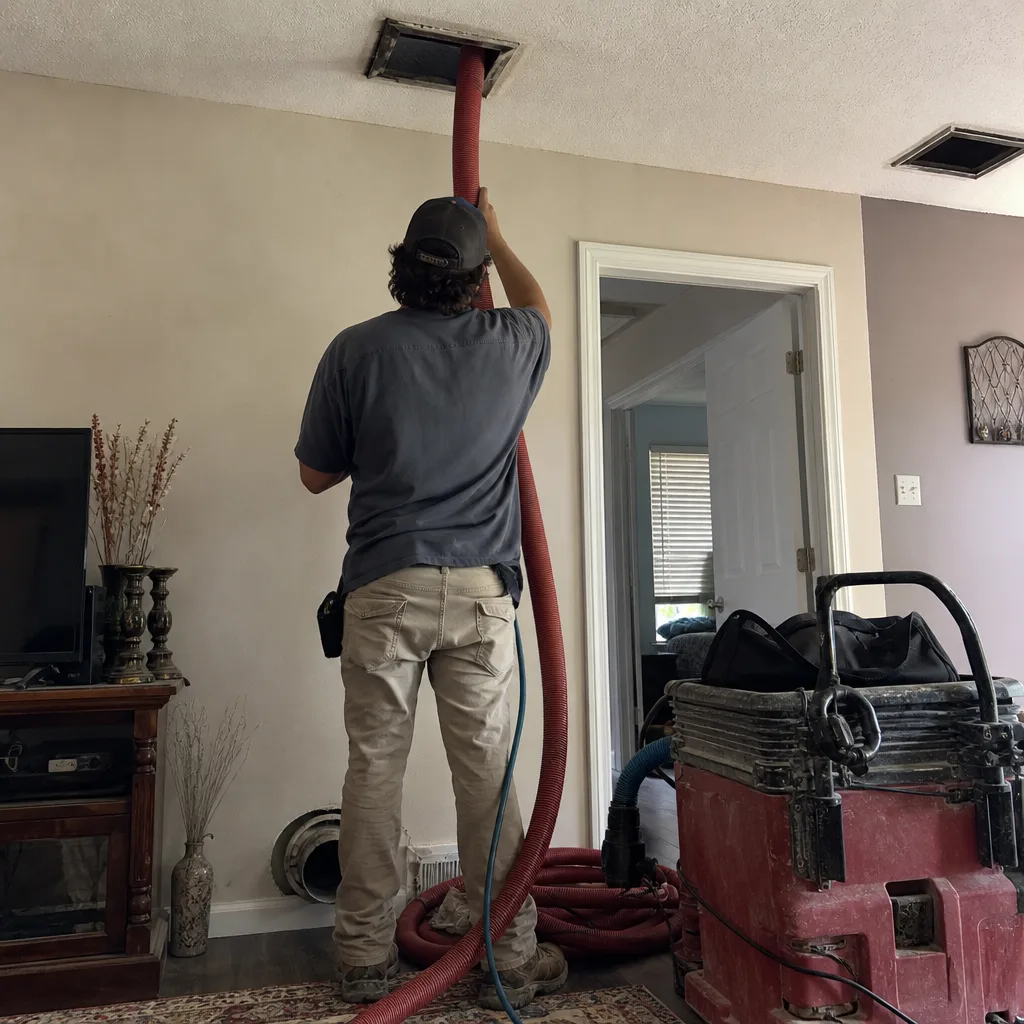 Before
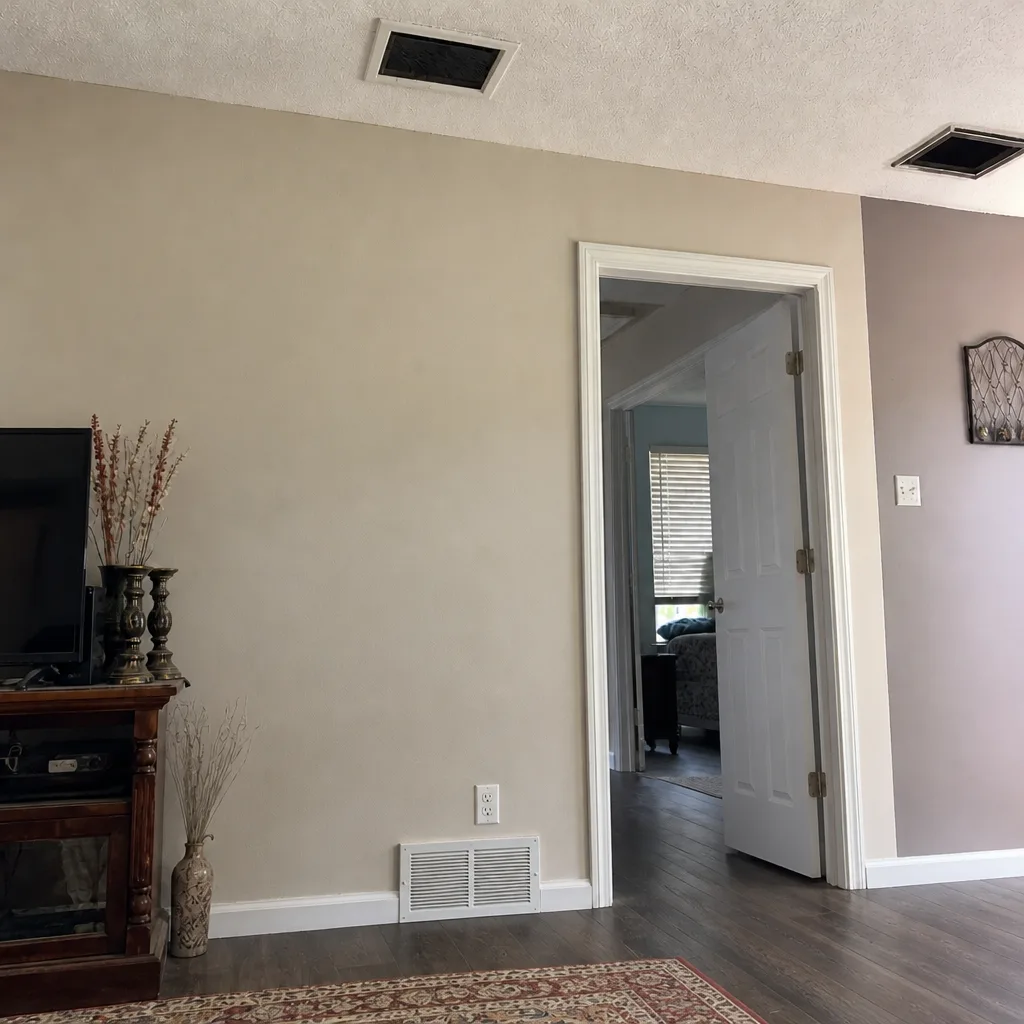 After
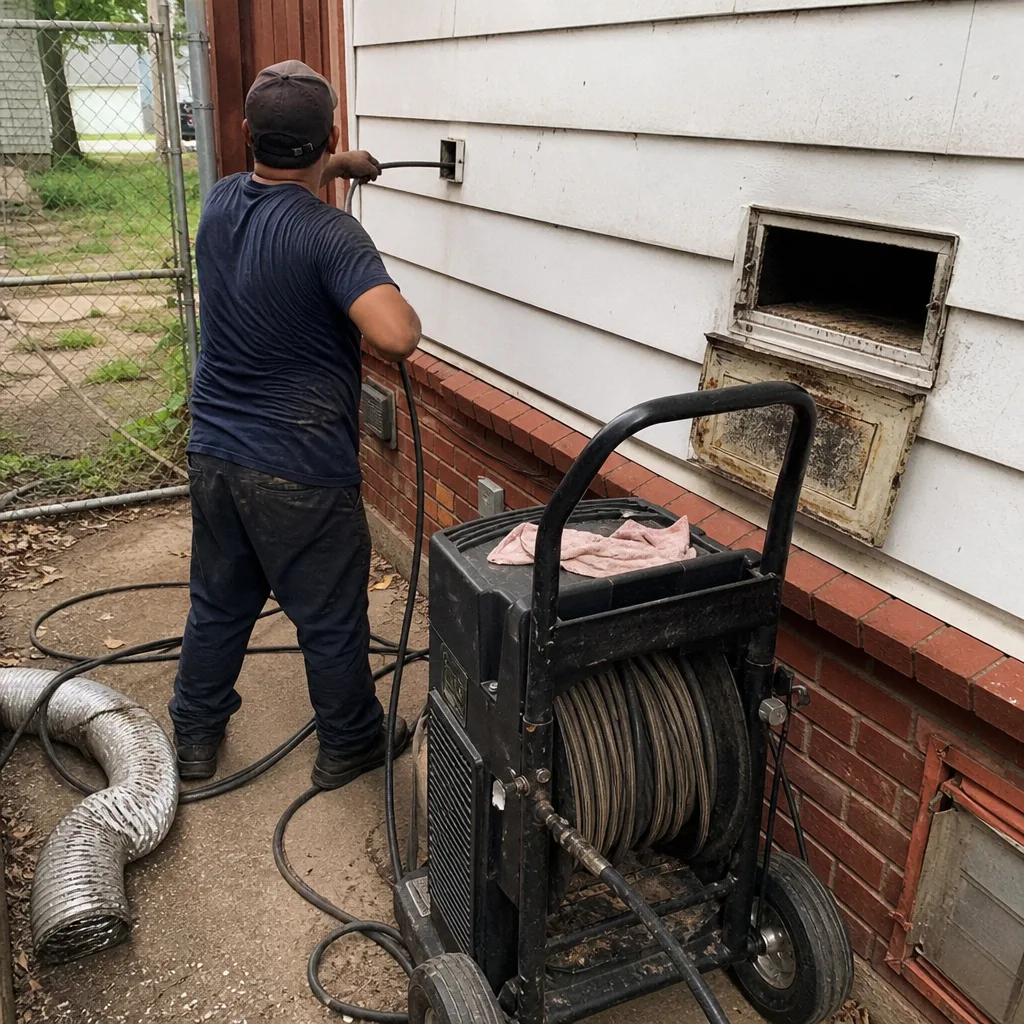 Before
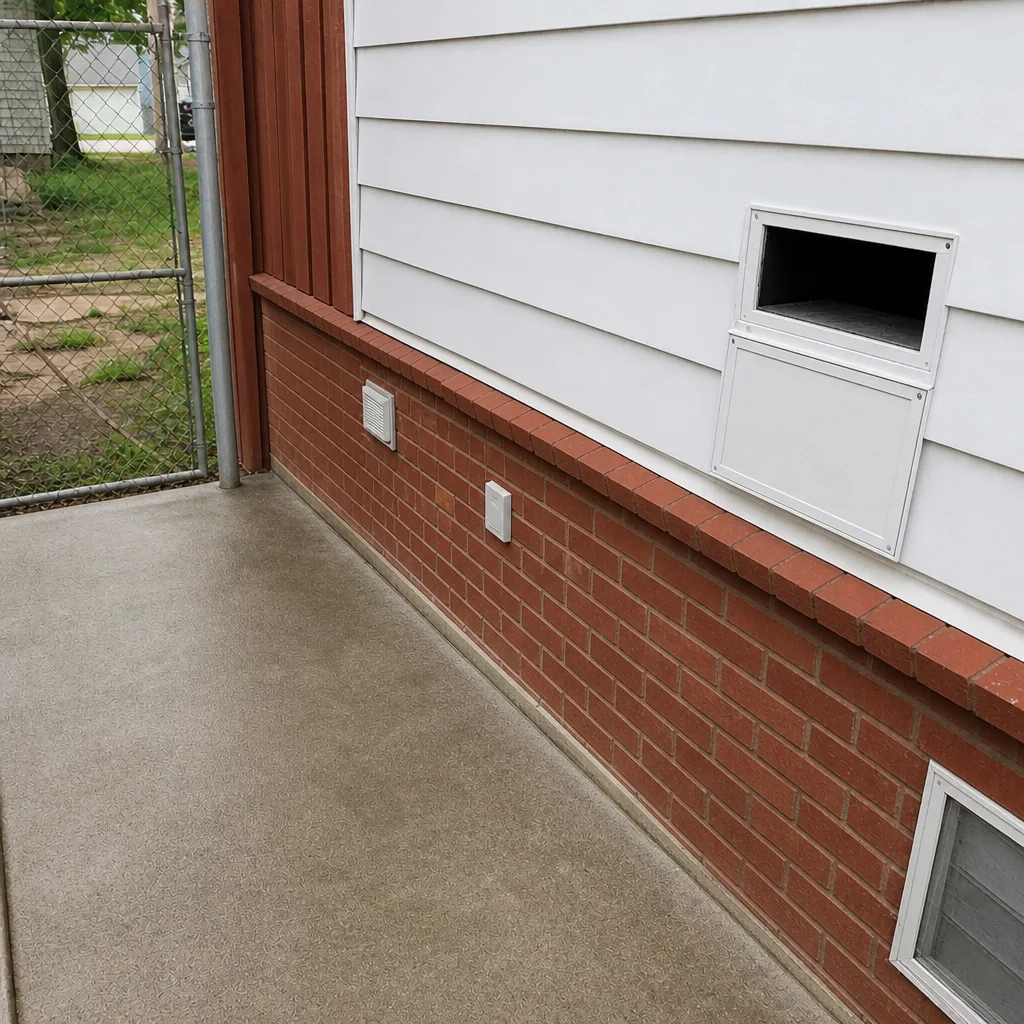 After
 Before
 After