
Last updated November 15, 2026
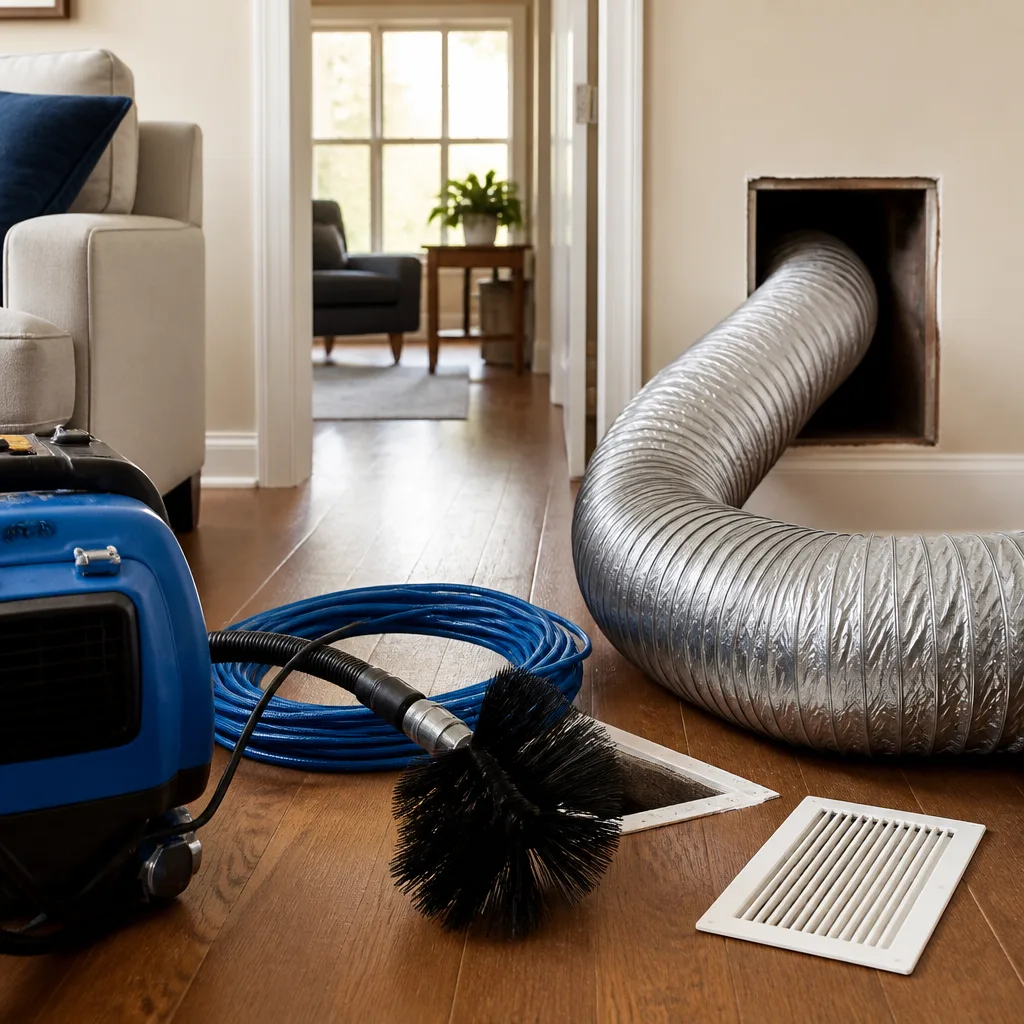 Whole-home duct cleaning
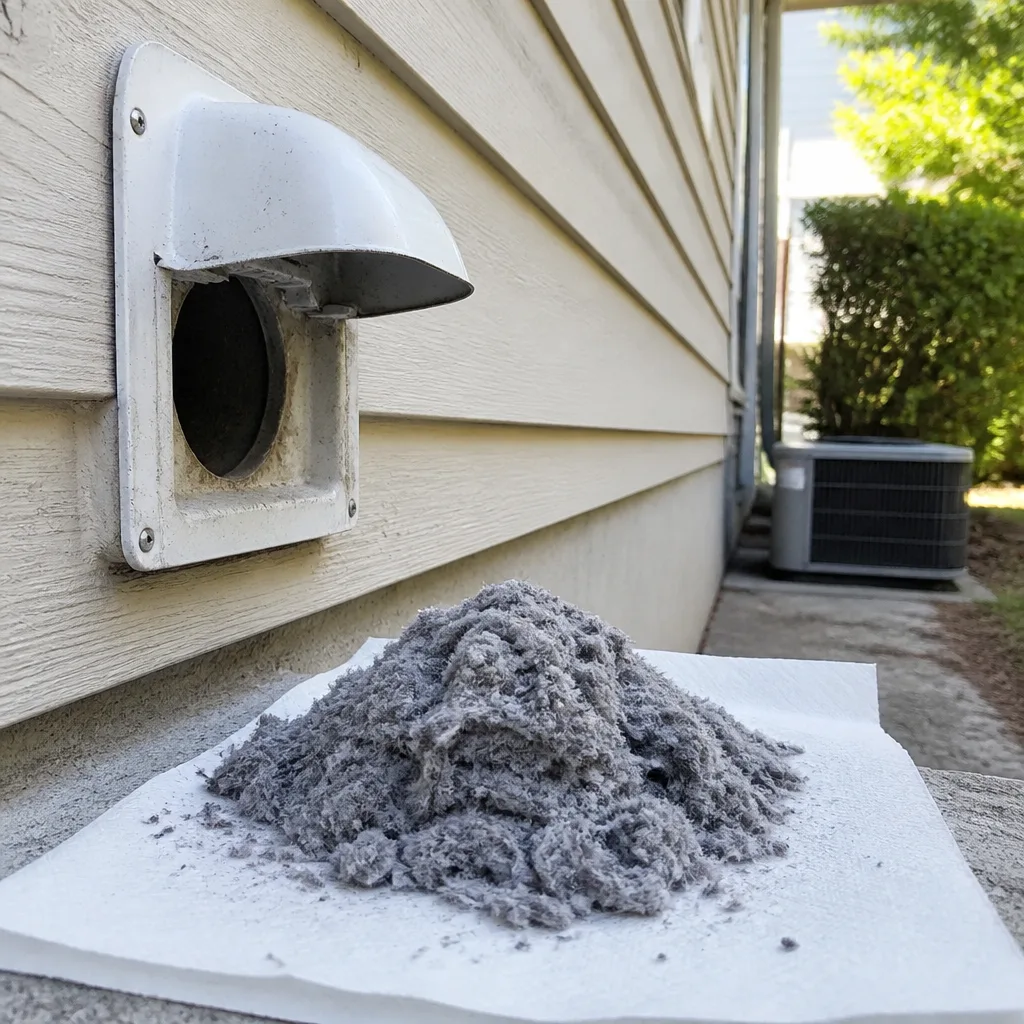 Dryer vent cleaning
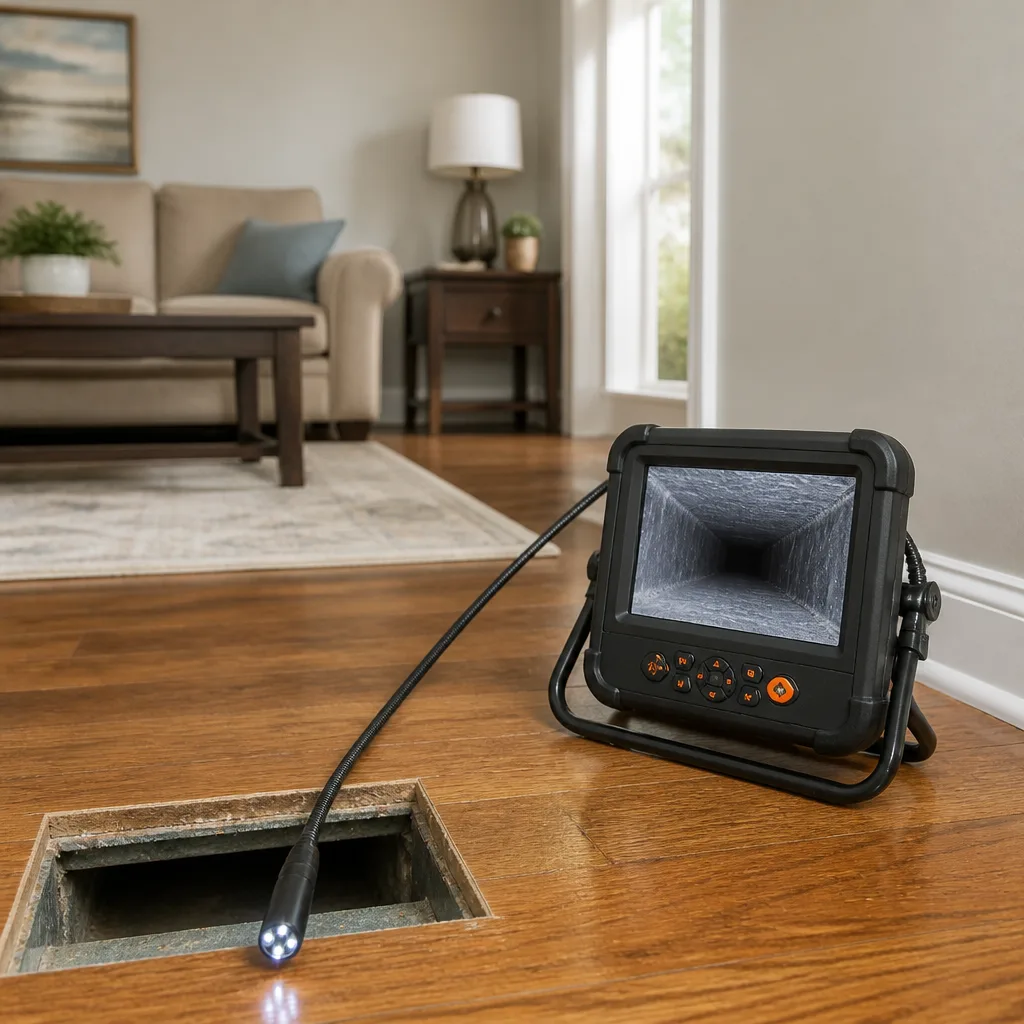 Camera inspection
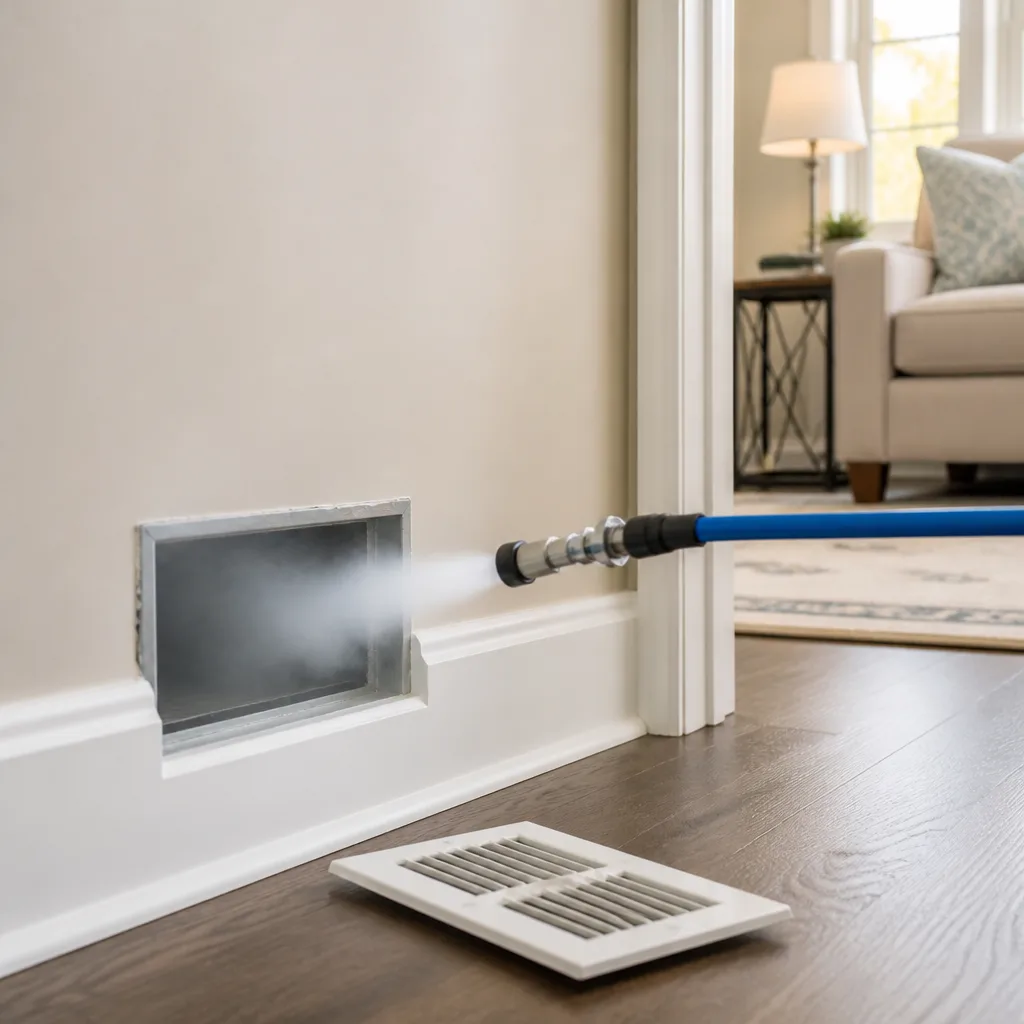 Sanitizing & deodorizing
Whole-system duct and dryer vent check with before-and-after photos - you see exactly what came out of your vents
That "$99 whole-house special" is a bait ad - the real number appears once they are in your hallway, or the "clean" is a shop-vac at the register. We photograph the inside of your ducts before and after instead.
Air Duct Cleaning Maintenance Checklist for Wichita Falls Homeowners
The flex duct joints in most Wichita Falls homes were never designed to survive 115°F attic temperatures over and over. That’s the part of duct maintenance nobody puts on a refrigerator magnet: the heat itself is a slow structural stress, and it loosens tape and separates joints long before anything looks dirty from inside the house. Most homeowners only find out when the electric bill climbs or a room stops cooling. What follows is a maintenance checklist built around what actually degrades in this climate. You’ll learn which parts fail fastest here, what you can check yourself, and what genuinely needs a technician.
Quick Answer
A practical duct maintenance checklist for Wichita Falls homeowners runs on three tracks: a filter routine adjusted for North Texas pollen and regional agricultural burning, a visual inspection of registers and accessible flex duct after every high-heat summer and wind-driven dust storm, and a professional air duct cleaning and duct inspection every three to five years for most homes, sooner if you have pets, allergies, recent remodeling, or visible buildup. The worst of the work happens before summer, not after.
Styles & brands we work with
- Whole-home duct cleaning
- Dryer vent cleaning
- Camera inspection
- Sanitizing & deodorizing
Table of Contents
- Why Wichita Falls Ducts Fail Differently
- Month-by-Month Checklist for Wichita Falls
- The Visual Indicators You Can Check Yourself
- Filter Intervals for North Texas Pollen and Burn Seasons
- How to Log Duct Performance Over Time
- What You Can Do and What Needs a Technician
- Repair What You Find, Not Just Clean Around It
- How Often Does Duct Cleaning Really Need Doing?
Why Wichita Falls Ducts Fail Differently
Duct problems in Wichita Falls start with the thermal cycle, not with dirt. An attic here climbs into the triple digits through summer, then drops sharply overnight. Flexible duct is built to tolerate that swing, but the adhesive-backed tape and mastic at every joint and boot take the beating first. When a joint separates, the system starts pulling attic air into the supply stream instead of pushing conditioned air into the house. That’s a pressure problem disguised as a cleaning problem, and it’s the single most common thing we find in Wichita Falls homes that “just need a cleaning”.
Dust is the second layer. The region’s wind and the agricultural activity surrounding the city mean fine particulate is always in the air, and it settles on return grilles faster than in greener parts of the country. Combine that with the area’s pollen load in spring and the regional practice of agricultural burning, and you get a filter that loads unevenly. The middle of the filter clogs first because that’s where the airflow concentrates.
Then there’s construction. Wichita Falls has a steady stock of older homes with original sheet-metal trunks plus newer builds with long flex runs in the attic. Those two housing types fail in completely different ways, which is why a generic checklist misses half the problems. Older metal trunks develop seam leaks and loose insulation; newer flex systems sag, kink, and separate at the collar. If you know which category your home falls into, you know what to watch.
The three failure modes to know
- Mechanical separation. Tape fails, joints slip, boots pull away from drywall. Airflow escapes into the attic or wall cavity.
- Particulate loading. Returns and the air handler cabinet collect fine dust, pollen, and construction debris, cutting static pressure.
- Contamination buildup. In homes with moisture intrusion, pets, or long intervals between cleanings, biological and particulate buildup takes hold inside the duct interior.
Each one has a different fix, and only the second and third are cleaning jobs. The first is a repair job, which is exactly why air duct repair belongs in any honest maintenance plan.
Month-by-Month Checklist for Wichita Falls
This is the working list. It’s calibrated to the local year, not to a factory manual written for a mild climate. Adjust the exact dates to your own schedule, but keep the order: the pre-summer work matters most because that’s when the system runs hardest.
January through February: the quiet window
- Replace the filter if it’s loaded. Heating season is short here, but it still moves dust.
- Pop a register cover and look at the duct interior with a flashlight. This is the cheapest inspection you’ll ever do.
- Check the return grille for dust shadowing around the edges, which hints at a loose boot behind it.
- Note any room that feels draftier or warmer than the rest of the house. That note becomes a diagnostic clue later.
March through May: pre-summer pressurization checks
- Walk the accessible attic and flex runs with a flashlight. Look for sagging duct, disconnected collars, and tape that’s curling or brittle.
- Do a rough pressure sanity check: hold a tissue at each supply register while the system runs. Weak flow at one register and strong flow at the rest usually means a separated joint upstream, not a dirty duct.
- Change the filter more often during pollen season. See the filter section below.
- Confirm the air handler cabinet door is seated and the filter slot isn’t bypassing air around a poorly sized filter.
June through August: the heat test
- Watch the electric bill for a step change that doesn’t match the weather. A sudden climb with normal outdoor temps often traces to duct leakage.
- Check for condensation on register faces or duct boots. In a conditioned space, condensation points to a leak pulling humid air in.
- Log the temperature split between return and supply (explained in the logging section).
- Smell test each room after the system has run for a while. Musty or dusty odors at one register are a targeted clue.
September through October: post-storm debris inspections
- After any significant wind or dust event, check outdoor intake screens and the return grilles inside the house for visible dust accumulation.
- Look at the flex duct runs again. Wind-driven debris and attic pressure changes can finish off a joint that was already failing.
- Inspect the air handler cabinet for debris drawn in through a compromised return.
- Reset your filter replacement date and note it.
November through December: the annual review
- Review your performance log. Any trend in airflow, temperature split, or odor gets flagged for a professional inspection.
- Schedule a professional air duct cleaning if you’re inside your target interval or the log shows decline.
- Check the dryer vent during the same walk-through if it’s accessible. It’s a separate system, but a maintenance habit that covers both saves a call.
- Note any home renovations planned for next year. Remodeling dust is a reason to move cleaning up the calendar.
The Visual Indicators You Can Check Yourself
You don’t need special equipment to catch the early warning signs. You need to know what to look at and what the pattern means. These three indicators cover most of what a technician will observe before opening anything up.
Register discoloration patterns
Uniform gray dust across a register face is normal accumulation. What matters is the pattern. Dark streaks radiating from one edge or a heavy ring around the perimeter usually means air is escaping or entering at that boot, carrying concentrated dust with it. A register that’s suddenly dirtier than the rest of the house is telling you something specific about that run, not about the whole system.
Flex duct sag
Flex duct should run taut and straight between supports. When a run sags, the corrugations compress and the inner liner can collapse, which chokes airflow. Visible sag in an attic run is a legitimate reason to call for an inspection. So is a run that’s kinked at a bend or crushed behind a joist. Sagging also stresses the joints at both ends, so it’s usually the start of a separation.
Return grille buildup rate
Your filter catches a lot, but the return grille catches what slips past. If the return grille is visibly loaded after a few weeks, three things are possible: the filter is undersized for the return, it’s bypassing air around the filter frame, or there’s significant particulate load inside the duct itself. Tracking how fast that grille reloads is one of the most useful signals you can build up over a season.
Other things to look for
- Loose tape or separated joints where flex meets a boot or trunk
- Visible dust fallout on shelves or horizontal surfaces near a supply register
- Rust or water staining on any duct component
- A register that’s noticeably quieter or noisier than its neighbors
None of these require a technician to observe. All of them require one to fix properly.
Filter Intervals for North Texas Pollen and Burn Seasons
The “change your filter every three months” rule that comes printed on the box is a factory default that ignores where you live. Wichita Falls has a long spring pollen window and regional agricultural burning that pushes fine particulate into the air well outside the standard cadence. Follow the filter, not the calendar.
Here’s a working schedule to start from:
- Spring pollen window: check the filter every four to six weeks. Loaded filters in this season are the most common cause of a sudden airflow drop.
- Regional burn periods: after any extended smoke event that visibly affects the sky, check the filter. Fine particulate loads a filter faster than visible dust does.
- Deep summer: check every four to six weeks. The system runs constantly and every hour of operation adds dust capture.
- Fall and winter: check monthly at first, then every two months if the filter still looks clean.
Two factors override the schedule entirely. Homes with pets need to check more often, because hair binds to filter media and clogs the load rather than passing through. Homes with a newborn, a family member with asthma, or anyone sensitive to particulate should treat the filter as a higher-frequency maintenance item, and the duct cleanings should follow the shorter end of the interval range.
Filter type matters more than you’d think
Higher MERV isn’t automatically better. A filter your system wasn’t designed for can raise static pressure and cut airflow, which is worse for the duct system than a slightly less efficient filter changed on schedule. Buy a filter that fits the slot snugly (no gaps around the edges, which is the bypass problem above), and change it based on what it looks like, not what a number on the frame tells you to do. If you’re unsure, ask during your next cleaning visit.
How to Log Duct Performance Over Time
A technician can figure out faster what’s wrong if you can tell them what changed and when. Most homeowners don’t have that information because they’ve never tracked it. A simple log changes that, and it takes less than two minutes per month.
What to track
- Airflow balance. Hold a tissue at each register and note strong, weak, or none. Compare against last month. A change is a signal.
- Temperature split. With a basic thermometer, measure air temperature at one supply register and one return grille while the system runs. Note the difference. A shrinking split over time indicates the system is delivering less conditioned air than it used to.
- Odor. Note any room where the air smells dusty, musty, or chemical. Don’t try to diagnose it yourself; just record it, the room, and the date it first appeared.
- Filter replacement dates. The interval between changes is itself diagnostic. A shortening interval means something is changing.
- Visible findings. Loose tape, debris, water stains, anything you saw during the walk-through. Note the date and location.
How to use the log
When you do call, share it. A technician who sees that one register lost flow two months ago and another started smelling musty three weeks ago can walk straight to the likely culprit instead of working through the whole system. That saves time on the visit and gives you a better, more targeted estimate. The log is also the honest way to know whether your duct cleaning interval is right or needs to shorten. If the log shows decline at month 20 rather than month 36, adjust accordingly. Write it down in a notebook or a note on your phone; both work.
What You Can Do and What Needs a Technician
There’s a lot in this trade that gets sold as needing a professional when it doesn’t. There’s also a lot that gets sold as a DIY project when it genuinely isn’t. Here’s the honest split.
Legitimate homeowner tasks
- Changing the filter on schedule
- Visually inspecting accessible registers and flex runs
- Keeping a performance log
- Cleaning register covers and return grilles at the surface
- Watching the electric bill and knowing what changed
- Noting odors, room by room
- Checking outdoor intake screens after a dust event
Tasks that require a trained technician
- Anything inside the duct interior. Professional cleaning requires tools designed for the job: source-removal equipment with controlled vacuum and agitation that actually pulls debris out of the system rather than stirring it into the house. A shop vac and a brush on a stick is not a duct cleaning.
- Duct repair. Reconnecting flex, resealing plenums, and re-taping joints requires proper mastic and mechanical fastening, done right the first time. A bad repair is worse than no repair because it hides a leak.
- Contamination concerns. Situations involving suspected biological or biological-adjacent contamination need more than a standard cleaning. That’s where professional-grade equipment like Abatement Technologies units and purpose-built systems come in, and it’s a step that shouldn’t be improvised.
- Any work that touches the air handler internals or the HVAC system proper. We specialize in air duct systems. If the problem is the equipment itself, you need an HVAC technician, and we’ll say so.
- Dryer vent cleaning inside the wall or behind the appliance. The lint tray is yours; the concealed run is a fire-safety item that needs proper equipment. That’s covered under dryer vent cleaning.
If you’re not sure which category a problem belongs in, that’s a reason for a free estimate, not a reason to guess.
Repair What You Find, Not Just Clean Around It
Here’s the part that gets left out of most maintenance checklists. Cleaning a duct system that has separated joints and a sagging run fixes half the problem and leaves the other half in place. Air keeps bypassing the filter through the leak, dust keeps loading the return, and the next cleaning comes sooner than it should. The right sequence is inspect, repair, then clean. Never the reverse.
This is where Forge Duct Cleaning differentiates from a cut-rate coupon operation. We use Rotobrush and Nikro systems, professional-tier equipment purpose-built for the trade rather than tools improvised for it. When the walk-through turns up a separated joint, a crushed run, or a boot pulled away from drywall, that’s an air duct repair as part of the same service visit. Not a callback. Not a separate company. One call, one diagnosis, one fix. Where air quality is the concern, we also work with trusted air-quality brands including Honeywell and Aprilaire so cleaning and whole-home air quality solutions connect to the same plan.
That matters more in Wichita Falls than it would in a milder climate because the summer heat is a continuous stress test on every joint in the system. Catching a repair before summer is how you keep the duct system whole through the worst of it.
How Often Does Duct Cleaning Really Need Doing?
For most Wichita Falls homes, a professional air duct cleaning every three to five years is the working range, with a professional duct inspection in between. That’s a starting point, not a rule. The right interval for your home is set by four things.
The four factors
- Pets. Hair and dander load the system faster than anything else. Homes with multiple pets usually need the shorter end of the range.
- Recent remodeling or construction. Drywall dust and construction debris find their way into the system and require cleaning sooner than the calendar suggests.
- Health considerations. Homes with asthma, allergies, a newborn, or a family member sensitive to particulate should clean on the shorter interval and follow the more aggressive filter schedule.
- Performance trend. If your log shows a decline in airflow balance or temperature split before the interval is up, the interval is up.
What to expect during a professional visit
- Inspection of accessible duct runs, boots, and the air handler cabinet
- Source-removal cleaning with controlled vacuum and professional agitation tools
- Repair of any separated joints, sagging runs, or compromised boots found during the visit
- Verification with before-and-after documentation so you can see what changed
- A written summary of what was found and what was repaired
That verification step is the answer to a common worry: how do you know the work was actually done? A professional operation documents it, and you should expect no less.
Common Mistakes to Avoid
- Following the filter box instead of the filter. The factory interval doesn’t know you live in Wichita Falls, where pollen and regional burning load filters faster. Check the filter, not the calendar.
- Cleaning without inspecting. If a technician starts cleaning before looking at the duct joints, you’re paying for surface work over a structural problem. Inspect first, always.
- Assuming a weak register means a dirty duct. A weak register usually points to a separated joint or sagging flex run downstream, not to debris inside. The wrong diagnosis produces the wrong service.
- Ignoring a shrinkage in the temperature split. If the difference between return and supply temperature is narrowing over months, the system is delivering less conditioned air. That trend matters more than any single reading.
- Treating duct repair and duct cleaning as separate companies. They’re the same job in the correct sequence. Splitting them across two providers is how you end up cleaning a duct system twice.
- Not keeping a log. Without one, you’re guessing at the interval and giving a technician nothing to work with. Two minutes a month saves a diagnostic visit.
- Overlooking the dryer vent during an annual walk-through. It’s a separate system and a fire-safety concern, and a maintenance habit that covers both keeps you from forgetting it.
See the difference
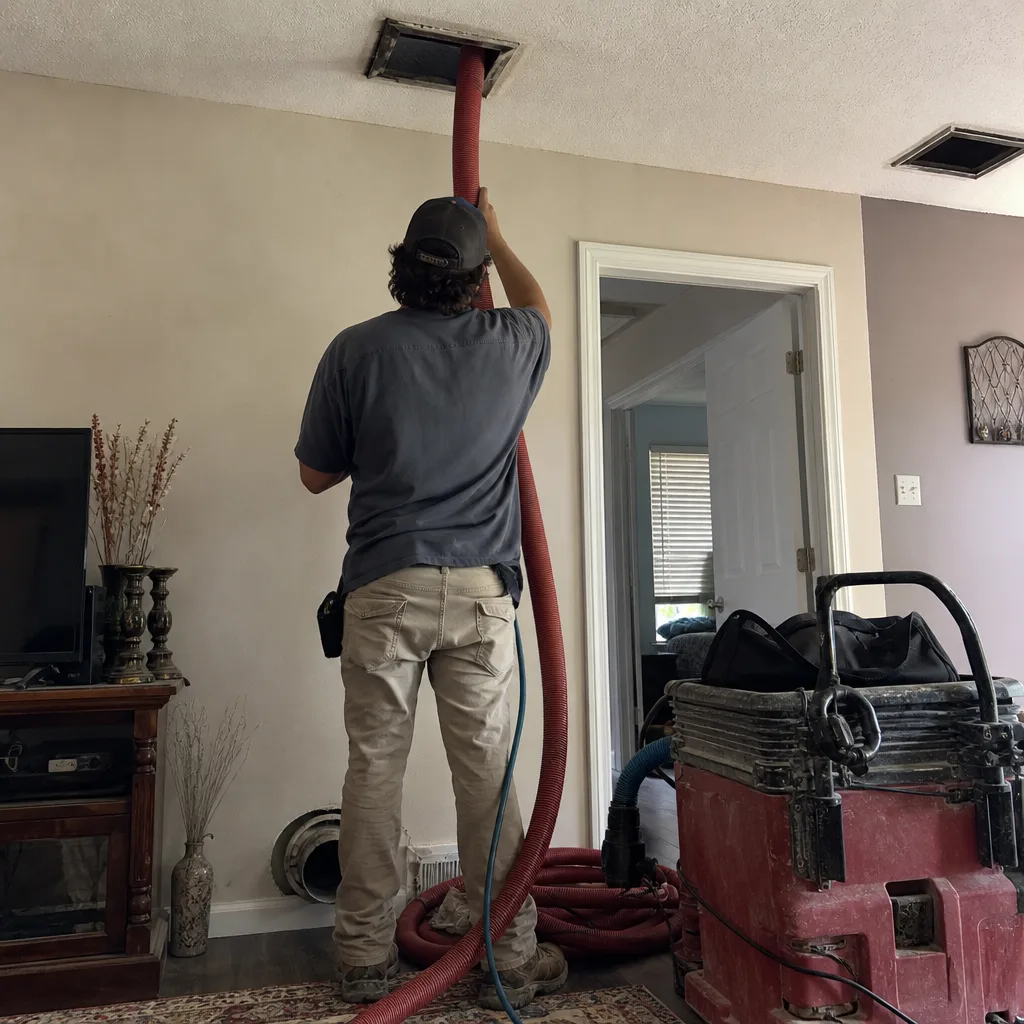 Before
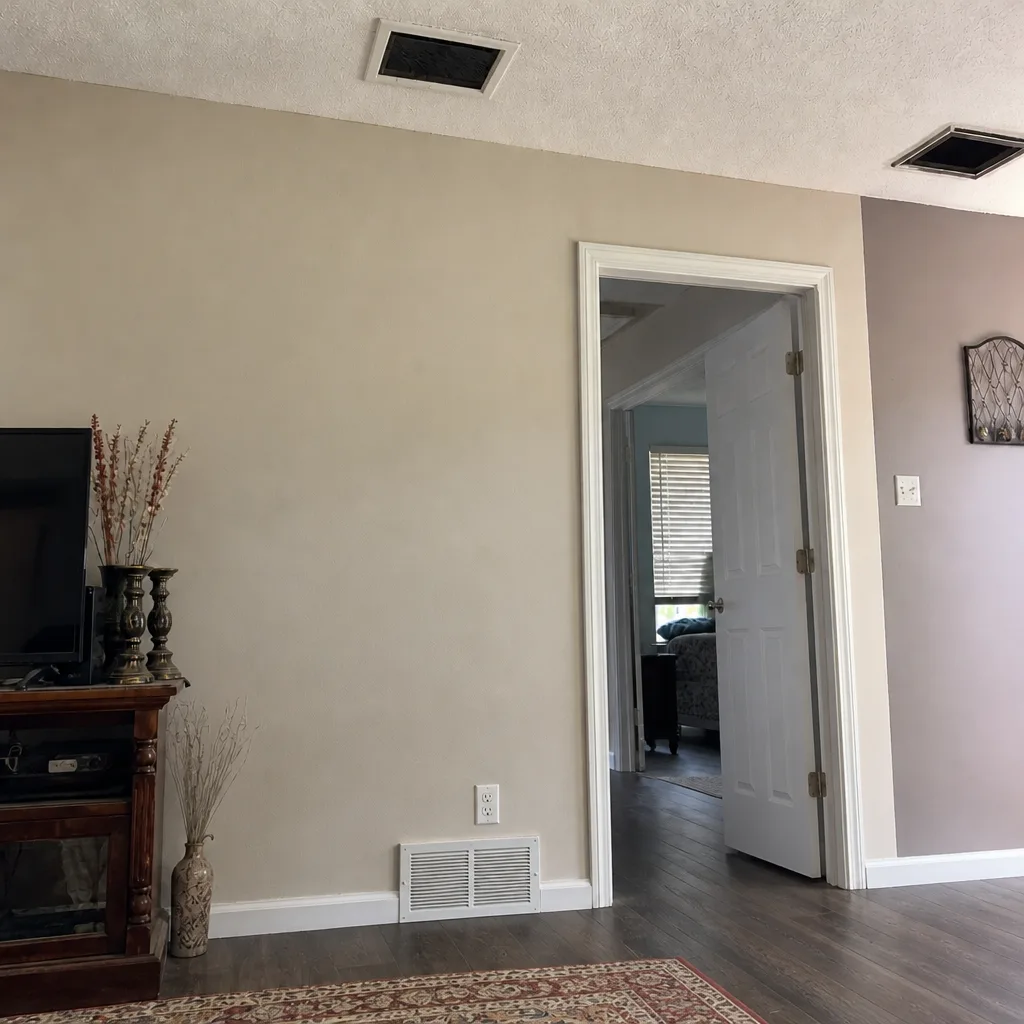 After
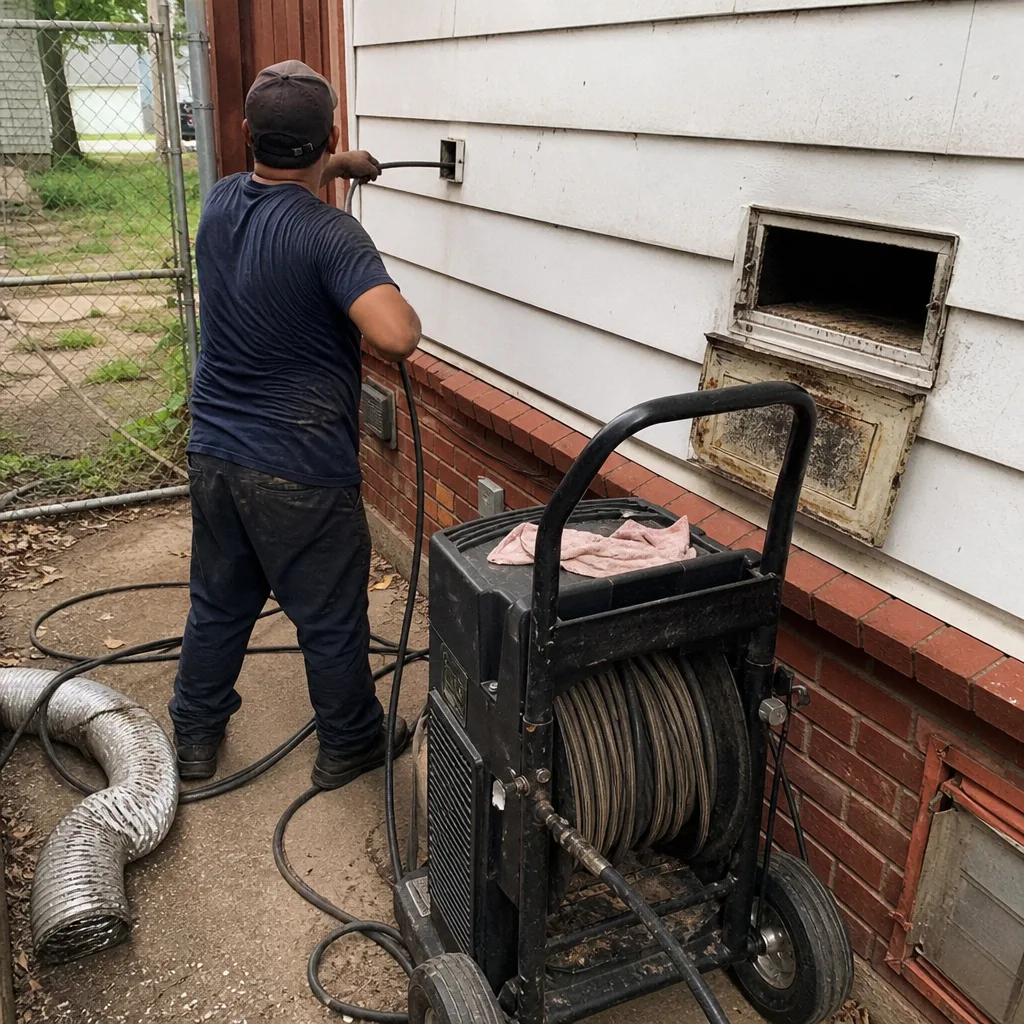 Before
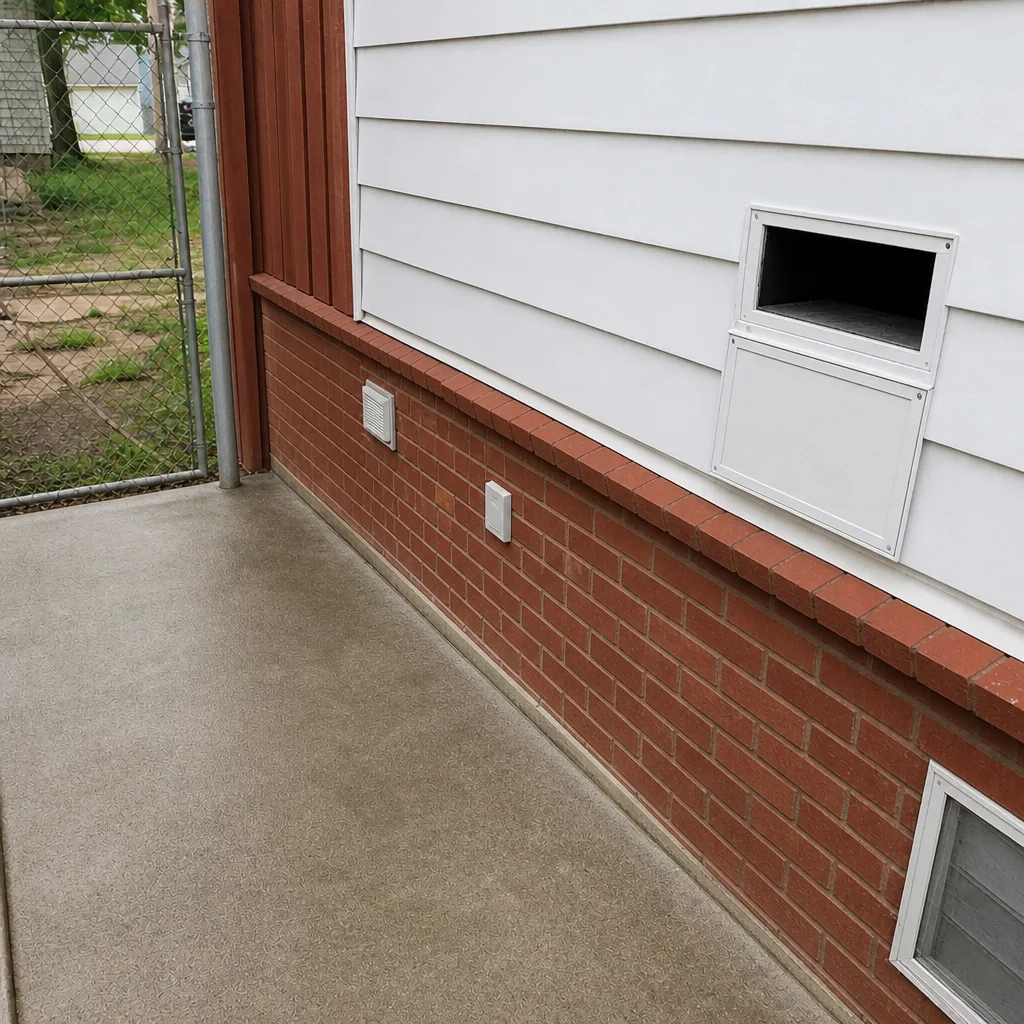 After
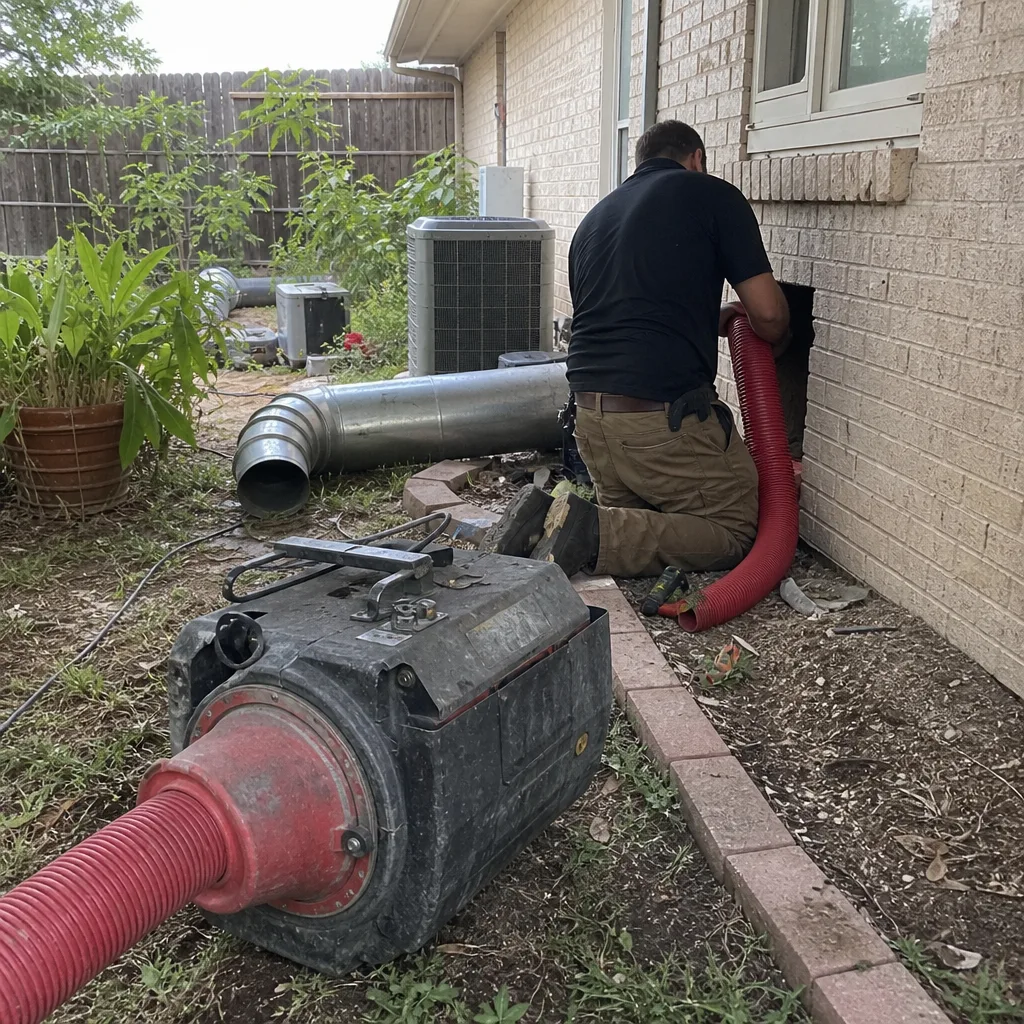 Before
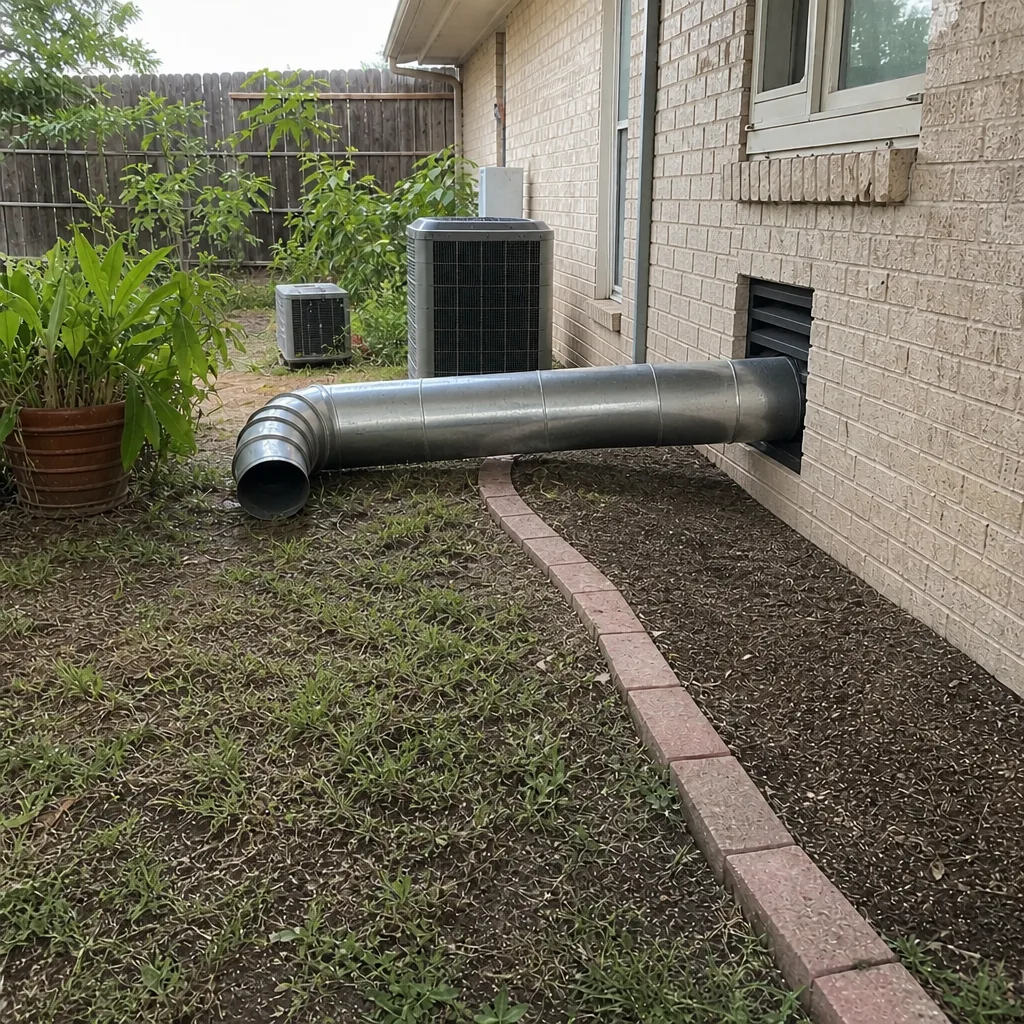 After
When to Call a Professional
Call a professional when you find a joint separated in the attic, a run that’s visibly sagging or crushed, a register that’s suddenly lost airflow compared to its neighbors, a room that smells musty when the system runs, visible dust fallout near a supply register, or a filter interval that keeps getting shorter. Schedule a professional cleaning if you haven’t had one in the three-to-five-year window, if you’ve remodeled recently, or if pets or health concerns shorten your interval. If a contractor ever starts cleaning before inspecting, that’s a reason to call someone else. Forge Duct Cleaning offers free estimates in Wichita Falls. Call (844) 230-0769. We answer 24/7. Fast dispatch from 7am to 7pm, Sunday through Friday.
Frequently Asked Questions
Every three to five years for most homes, with a shorter interval if you have pets, recent remodeling, asthma or allergies in the household, or a performance log that shows decline before the interval is up. In this climate, the biggest reason to clean sooner is the constant polling of dust and particulate that the system runs through in summer. If the log is showing a drop in temperature split or a load rate on your return grille that keeps shortening, the interval is up. Call (844) 230-0769 for a free estimate.
A duct cleaning removes debris from the inside of the duct system. A duct repair restores duct integrity: resealing separated joints, reconnecting boots, replacing crushed or collapsed flex runs. They’re different jobs performed for different reasons, and the right order is inspect, repair, then clean so the cleaning isn’t undone by the leak you left in place. Forge offers both under one call, which is why we differentiate on that point. Call (844) 230-0769 to talk through what your home actually needs.
Look for visible dust fallout near supply registers, a return grille that loads faster than it used to, a room that smells musty when the system runs, and any change in airflow from one register to the next. Combine that with the interval (three to five years for most homes), and you have a reasonable case to book an inspection. A technician walking the accessible runs will confirm it before cleaning begins. If the answer is “not yet”, we’ll say so. Call (844) 230-0769 for a free estimate.
Cut-rate estimates are usually priced to win the call, with the actual work quoted on-site once the technician arrives. That’s the industry’s bait-and-switch pattern, and it’s the right thing to be cautious about. The honest way to price a duct system is to quote per system after a walk-through, with the scope in writing before work starts. Ask any contractor upfront whether the estimate is the price. Call (844) 230-0769 and we’ll walk through the scope before a number is agreed.
Ask for before-and-after documentation of your own duct system, plus a written summary of what was found and what was repaired. A professional operation provides both without being asked. If a contractor can’t show you the state of your ducts before and after the visit, you have no way to verify the work, and that’s a reasonable deal-breaker. Call (844) 230-0769 for a free estimate and to see how we document the job.
Yes. Attic temperatures that reach triple digits repeatedly stress the adhesive and joints at every duct connection, and joints separate long before the ducts look dirty from inside. That’s why we recommend the pre-summer walk-through and the post-storm check, and why duct repair belongs in the maintenance plan rather than being treated as a separate emergency. Combined with the region’s wind-driven dust and pollen, that’s a specific set of local conditions that a generic checklist misses. Call (844) 230-0769 if you want a technician’s eyes on your runs.
The Bottom Line
Wichita Falls duct maintenance comes down to three habits: filter the system on the schedule your home actually needs, not the one on the box; walk the accessible runs twice a year before summer and after storm season; and keep a log that turns a vague “it seems off” into a diagnostic tool. Cleaning has to follow inspection and repair, and the repair is the part most maintenance plans skip. Our technicians have up to 15 years of experience, we use Rotobrush and Nikro equipment built for the trade, and we focus on air duct systems only. That way, when we tell you what your home needs, you can trust that’s what we know. Forge Duct Cleaning offers free estimates throughout Wichita Falls. Call (844) 230-0769. We answer 24/7. Fast dispatch from 7am to 7pm, Sunday through Friday.
Written by the team at Forge Duct Cleaning.