
Last updated November 15, 2026
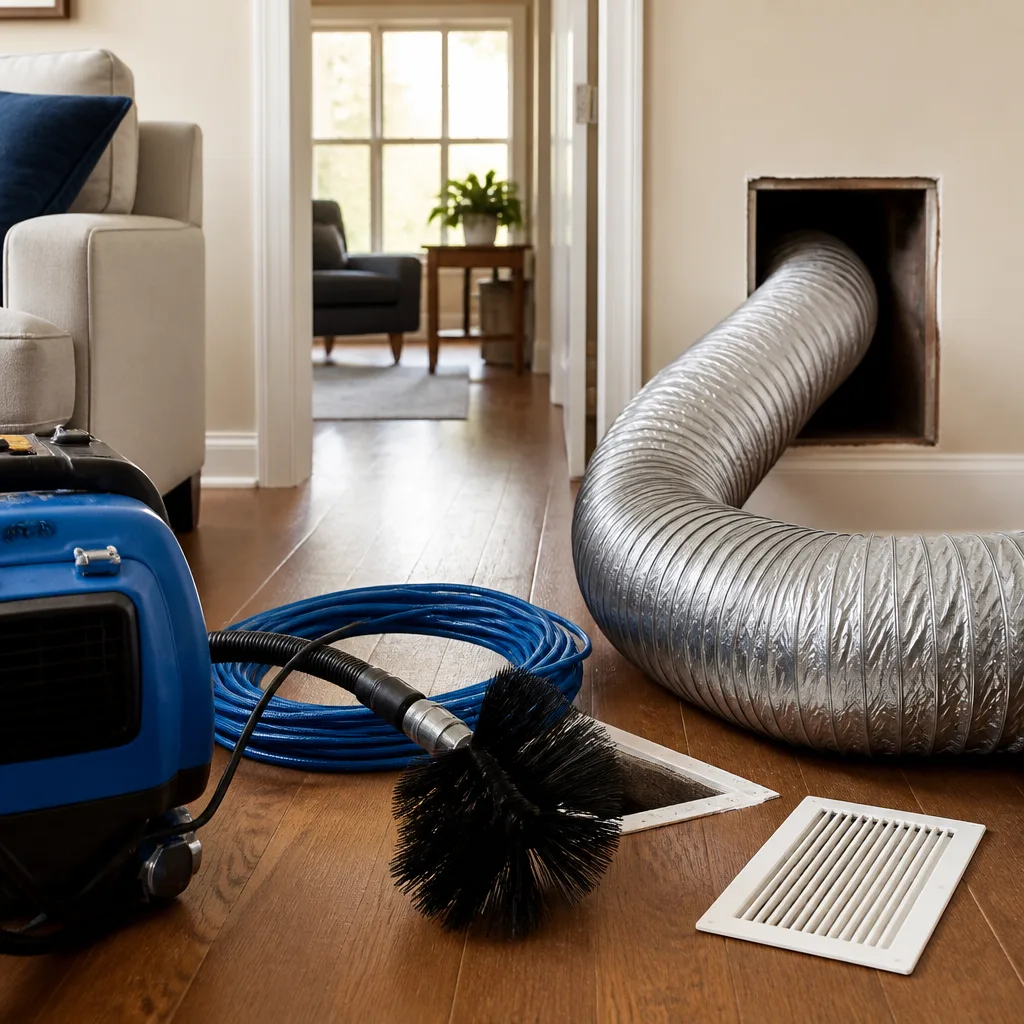 Whole-home duct cleaning
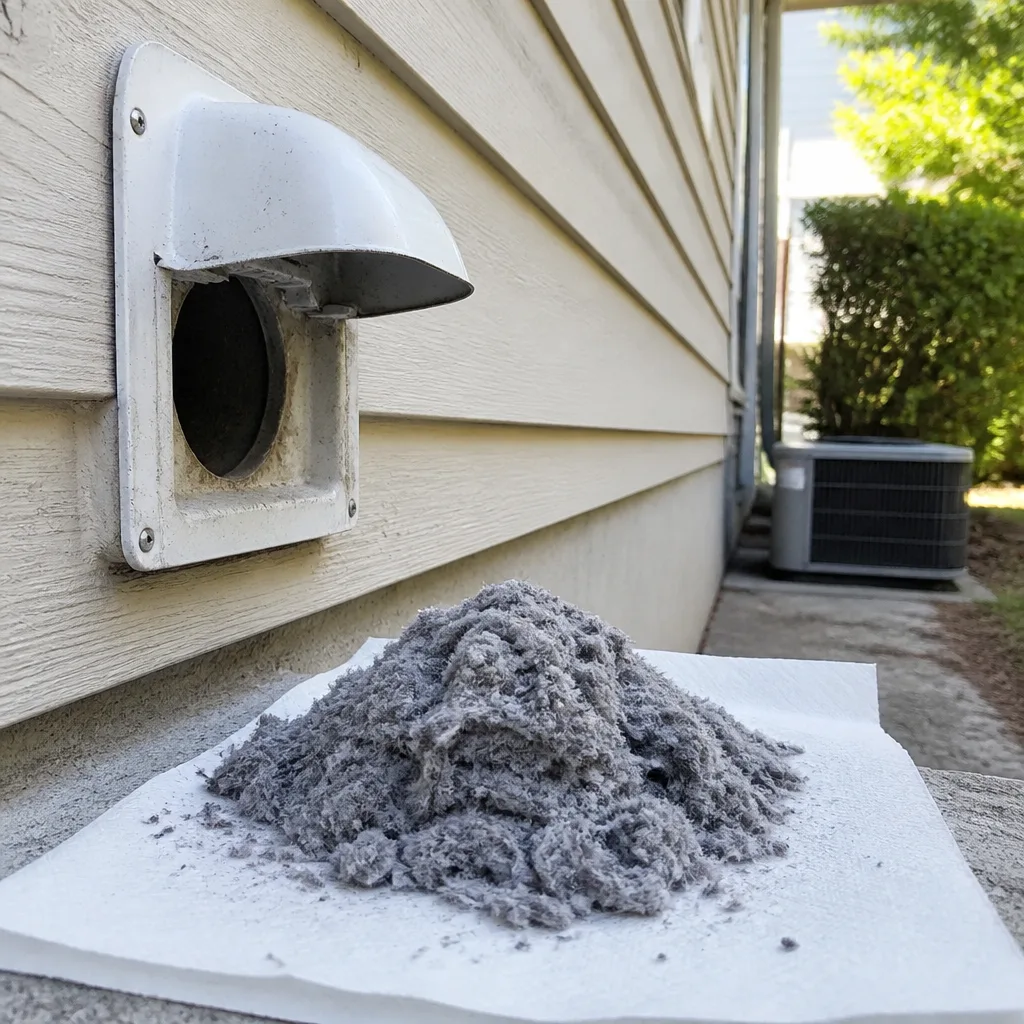 Dryer vent cleaning
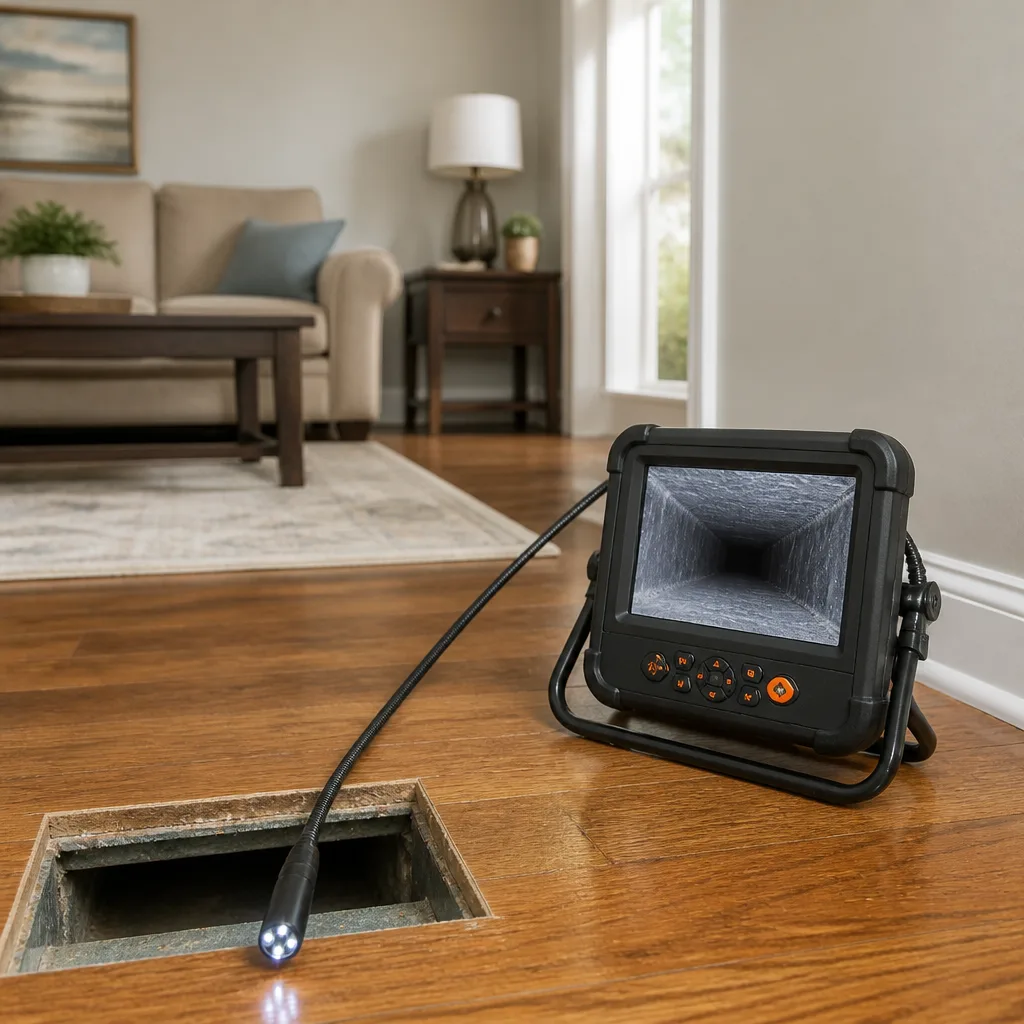 Camera inspection
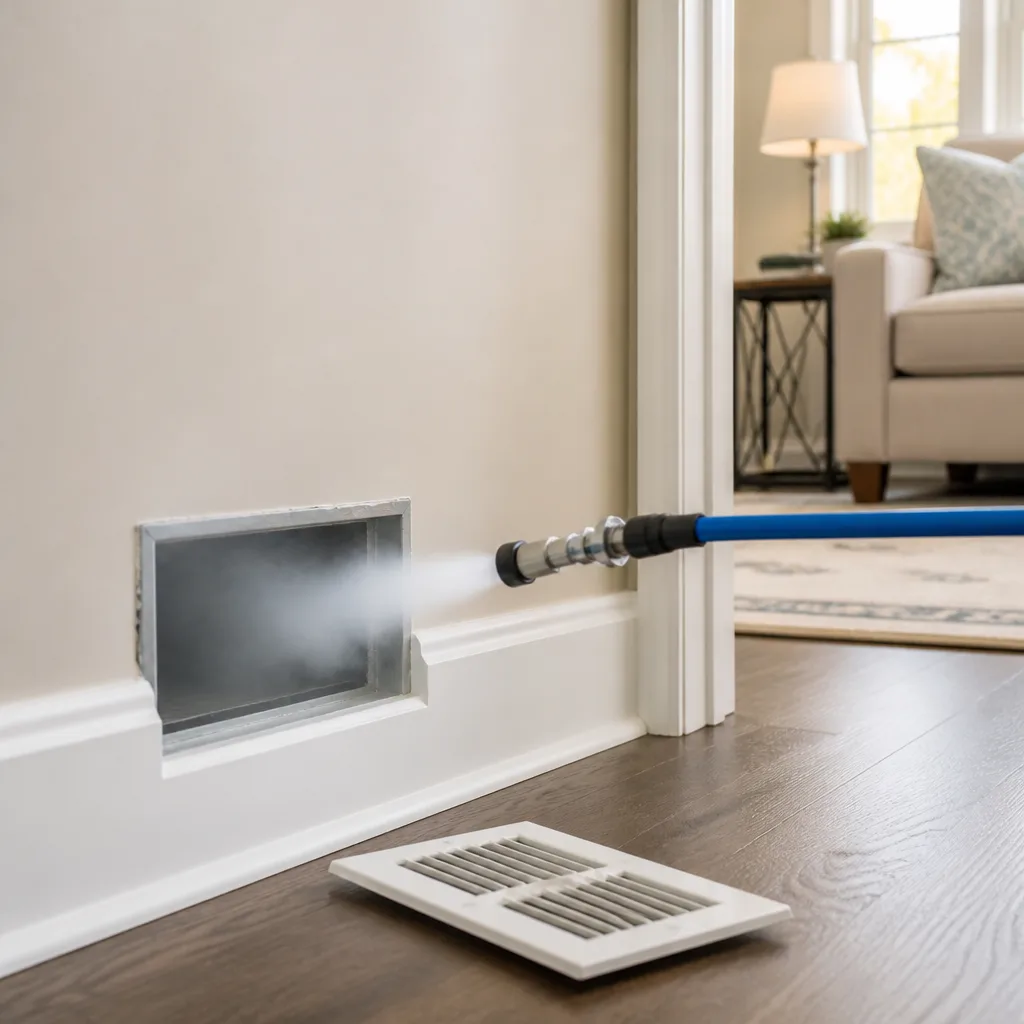 Sanitizing & deodorizing
Whole-system duct and dryer vent check with before-and-after photos - you see exactly what came out of your vents
That "$99 whole-house special" is a bait ad - the real number appears once they are in your hallway, or the "clean" is a shop-vac at the register. We photograph the inside of your ducts before and after instead.
How to Hire an Air Duct Cleaning Contractor in Wichita Falls: A Step-by-Step Guide
A portable shop-vac strapped to a flex hose is not duct cleaning equipment, but it’s what a surprising number of “contractors” show up with in Wichita Falls. Duct cleaning has become an easy add-on line for HVAC generalists, carpet cleaners and handymen who already own a vacuum and a ladder. That’s not the same trade. Choosing the wrong company costs you twice: once for work that never actually happened, and again when the dust you paid to remove settles back into the supply registers a few weeks later. This guide shows you how to tell a real duct specialist from a generalist with a logo, what to ask before anyone books the job, and what the finished work should look like in this part of North Texas.
Quick Answer
To hire a duct cleaning contractor in Wichita Falls, ask three things before booking: what equipment they run (professional brush systems and high-capacity negative pressure, not a shop-vac), whether they belong to a national duct-cleaning association you can verify independently, and whether they’ll put the full scope of work in writing first. A legitimate company shows before-and-after photos of your own ducts and offers camera inspection. If any answer is vague, keep calling.
Styles & brands we work with
- Whole-home duct cleaning
- Dryer vent cleaning
- Camera inspection
- Sanitizing & deodorizing
Table of Contents
- Why the Wichita Falls Duct Market Is Full of Generalists
- The Three Equipment Questions to Ask Before You Book
- How to Verify Certification Versus a Printed Logo
- Why You Need a Written Scope of Work First
- Red Flags Specific to the Wichita Falls Market
- What a Legitimate Post-Job Walkthrough Looks Like
- When Cleaning Isn’t Enough: Detecting Duct Repair Needs
- Common Mistakes to Avoid
- When to Call a Professional
- Frequently Asked Questions
Why the Wichita Falls Duct Market Is Full of Generalists
Wichita Falls sits in a climate that runs hot in summer and swings cold in winter, which means HVAC systems here work hard and homeowners think about air quality mostly when something goes wrong. That demand pattern attracts generalists. An HVAC installer who already owns a recovery machine and a set of hand tools adds “duct cleaning” to his service list, prints a business card and starts taking calls. A carpet-cleaning outfit adds duct work to the truck. It’s an easy upsell when a customer is already paying for another service.
The problem is that duct cleaning is a separate discipline with its own tools, its own training and its own failure modes. A generalist cleaning your ducts can do real damage without meaning to: crack a flex run, dislodge a joint, force dust into the blower housing, or leave the system dirtier than it started. A specialist does the opposite and puts eyes inside the system before touching anything.
“Specialist” here doesn’t mean a big company. It means the crew’s only job is duct work: cleaning, dryer vent cleaning and structural duct repair, not HVAC installation, not carpet, not general handyman work. When you start calling around Wichita Falls, ask what else the company does. If duct cleaning is one line item among fifteen, you’re talking to a generalist.
The Three Equipment Questions to Ask Before You Book
The equipment questions are the fastest filter in the whole hiring process. A real duct specialist answers them without hesitation because the answers describe the trucks and tools they run every day. A generalist fumbles them or gives a straight answer that disqualifies the job.
Ask these three questions on the phone, before anyone schedules a visit:
- Do you use a truck-mounted or portable system, and how much negative pressure does it generate? A high-capacity vacuum system pulls the loosened debris out of the ducts and keeps it from blowing into the room while you clean. Portable units vary widely, but a small shop-vac style unit cannot move enough air to lift settled dust from a long trunk line. Ask for the pressure rating in inches of water column.
- What kind of brush system do you run? A professional rotary brush system agitates the dust and debris off the duct walls so the vacuum can carry it away. Consumer-level brushes don’t reach into branch runs. Ask whether the brush system is rotary or stationary, and whether they have a whip and ball for flexible duct.
- Can I see the camera before and after? A real duct cleaning company uses an inspection camera and shows you the footage from your system. This is the easiest equipment question to ask and the hardest for a generalist to fake. No camera, no job.
We use Rotobrush and Nikro systems, and we carry Abatement Technologies equipment for jobs with contamination or air-quality concerns. Those brands are purpose-built for duct work, not repurposed from another trade. Whether you hire us or someone else in Wichita Falls, ask for the brand names. A specialist will say them out loud.
How to Verify Certification Versus a Printed Logo
NADCA certification leads the industry and is the credential most homeowners have heard of, but the printed logo on a business card means nothing until you check it. The National Air Duct Cleaners Association maintains an online member lookup tool, and a legitimate certified member will be listed there. Use the tool.
Here’s what to confirm:
- The company name matches exactly. A contractor’s son being certified doesn’t mean the company is a member. Look for the company, not a name on a certificate.
- The certification isn’t expired. Look at the date. A lapsed certification is not a current certification.
- Ask what the certification actually covers. NADCA offers different levels and the training is specific to duct systems. A photocopied certificate doesn’t tell you what was tested.
- Ask for proof of general liability insurance and, if the company has employees, workers’ compensation. Insurance is a separate credential from certification. You want both.
Certification is not an absolute requirement in Texas, and some genuinely good duct companies don’t hold NADCA membership. But certification plus verifiable insurance plus a real equipment list is a very different picture from a logo with no one behind it. If the company claims a certification but won’t give you a membership number or let you look it up, that’s a data point.
Why You Need a Written Scope of Work First
Bait-and-switch in this trade almost always starts with a missing scope of work. You book a job at one price. The technician arrives, walks the house, and declares that supplies are “worse than expected” or that you have “a run that needs a separate cleaning.” Your original price doubles and you’re on the spot. Without a written scope, you have no grounds to object.
Before anyone touches your system, ask for these in writing:
- Exactly what will be cleaned. Supply and return runs, both trunk lines and branches, the blower motor housing and the air handler, and any registers and grilles. “Ducts cleaned” is not a scope of work.
- How many systems or zones. A house with two units is two systems, and the price should reflect that, not be sprung on you on arrival.
- What equipment will be used. Brand and model. The scope should say so.
- What will be photographed. Before and after for every register, the trunk line, and the air handler. The photos belong to you; ask for copies.
- What happens if we find damage. Cracked flex runs and disconnected joints are common in Wichita Falls homes. The scope should say how the company will handle repair, and whether repair is a separate written estimate.
Once that document exists, the job has boundaries. Anything outside it needs your signature. That’s how a professional operates.
Red Flags Specific to the Wichita Falls Market
Some of the warning signs here are the same as anywhere. Others show up more in markets like this one, where the paperwork is thin and the neighborhood networks matter more than the review sites. Here’s what to watch for:
- Per-vent pricing. Quotes built around a per-vent price obscure what the job actually covers and invite surprise charges for runs the technician “found” once on site. Ask for whole-system pricing.
- No camera inspection offered. A real duct company shoulders an inspection camera on every job. If nobody mentions a camera, they can’t show you what was in the ducts before they cleaned, which means they can’t prove anything was removed.
- No before-and-after photos. Photos of your own ducts are the one clear proof the work happened. A refusal to show them is the single most reliable red flag in this trade.
- Pressure to sign today. A legitimate company will follow up without a countdown clock. High-pressure “while we’re here” pricing from a technician standing in your hallway is not a professional sales process.
- Vague answers about who does the work. Ask whether the crew is the company’s own or a subcontractor the company has never met. In Wichita Falls, a lot of cut-rate duct work gets handed to whoever answers the phone.
- No physical address to verify. Ask where the company operates from and check the address. A phone number and a website are not a business.
None of these flags on their own proves the company is dishonest. All of them together mean you should keep calling.
What a Legitimate Post-Job Walkthrough Looks Like
The walkthrough is where the job either finishes properly or fades into a text that says “all done.” A real duct cleaning company spends fifteen to thirty minutes walking the house with you after the work. Here’s what you should physically verify before you sign off.
- Look in the registers yourself. Open a register or two and look inside with a flashlight. You should see clean duct walls, intact flex, and no loose debris. If a register still shows a heavy coat of dust, that’s a conversation to have now.
- Watch the after-photos on the screen. The technician should show you the before and after side by side, register by register. If you cleaned the same duct twice, the images should prove the change.
- Confirm the blower and air handler housing. The blower wheel, the inside of the air handler and the coil area should be clean and dry. The blower should turn freely.
- Check every flex joint and connection. The crew that reinstalled your registers and reconnected any flex runs should walk you through the connections. Loose flex means leaks, and leaks mean dust in the house.
- Run the system. With the furnace or AC fan on, listen for rattles and check for any obvious air leaks around the registers and inside the air handler closet.
- Ask for the written service record. A professional company hands you a written summary of what was cleaned, what was found, and any damage that needs a follow-up repair. That record should include the photos.
If a technician won’t walk the house with you, or rushes the walkthrough with “yeah, it’s all clean,” the work probably wasn’t verified. Say so.
When Cleaning Isn’t Enough: Detecting Duct Repair Needs
Cleaning removes what’s inside the ducts, but it doesn’t fix the ducts. In the Wichita Falls area, duct damage is common: flexible runs that sag and pinch, joints that came loose from attic movement, and sections of flex that have been crushed or disconnected during earlier service. If the ducts are broken, cleaning them just makes them clean and broken.
Here’s how you know repair might be on the table:
- Higher-than-usual energy bills without a change in usage. Leaky or disconnected ducts dump conditioned air into the attic or crawlspace. The HVAC system runs longer to make up the difference.
- Hot or cold spots between rooms. Rooms that never quite cool down or heat up the same as the rest of the house often have a crushed or disconnected branch run.
- New dust settling fast after cleaning. If dust returns within a week or two, the cleaning may have addressed the symptom, not the leak.
- Visible damage during inspection. Camera footage shows crushed flex, tears, disconnected sections, or debris inside the run that cleaning can’t clear.
This is where a specialist beats a generalist outright. We repair what we find, not just clean around it. A company that cleans and then sends you to a separate contractor for the repair is a company that left the system in pieces.
Common Mistakes to Avoid
- Booking on price alone. A per-vent quote that looks low almost always turns into a bigger number once the technician is on site. Whole-system pricing in writing beats a teaser rate every time.
- Hiring a generalist who “handles duct work too.” Duct cleaning is a separate trade with separate equipment. Ask when the crew last ran a brush and camera system on a job, not when they painted their van.
- Skipping the before-and-after photos. The photos are your proof the work happened. Insist on them and keep copies.
- Not getting the scope of work in writing. Verbal promises disappear when the invoice arrives. Get the scope, the systems covered, and the equipment named in writing before the work begins.
- Ignoring the injury report after the cleaning. If the post-job walkthrough turns up a damaged or disconnected flex run, address it right away. Waiting a season lets the damage turn into a bigger HVAC repair.
- Cleaning the ducts but ignoring the dryer vent. The dryer vent is a separate duct system with its own fire risk. A duct specialist should be able to clean it at the same visit or clearly tell you who can.
- Choosing a company that also sells the repair and won’t separate the two estimates. Cleaning and repair are separate jobs with separate prices. Ask for them separately, even if you hire the same company for both.
When to Call a Professional
Call a professional when you notice dust building up on the grilles faster than usual, when there’s a musty or stale smell coming from the supply registers, or when a recent HVAC service flagged debris or damage inside the ductwork. Remodeling and new flooring work in an older Wichita Falls home also kicks up enough dust to justify an inspection. If your dryer is taking longer to dry clothes, that’s a separate call for dryer vent cleaning and it matters. Forge Duct Cleaning offers free estimates in Wichita Falls – call (844) 230-0769. We answer 24/7, with fast dispatch from 7am to 7pm, Sunday through Friday. Our technicians have up to 15 years of experience.
Frequently Asked Questions
Ask three questions: what equipment they run, whether they belong to a duct-cleaning association you can look up yourself (NADCA has an online member lookup), and whether they’ll put the scope of work in writing before anyone touches the system. Then ask for proof of insurance. A legitimate company in Wichita Falls answers all four without hesitation and gives you a camera inspection with before-and-after photos. Call (844) 230-0769 for a free estimate.
A real duct cleaning company uses a professional rotary brush system, a high-capacity negative pressure vacuum, and an inspection camera. They should name the brands. We use Rotobrush and Nikro systems and carry Abatement Technologies equipment for jobs with contamination or air-quality concerns. A shop-vac and a flex hose are not duct cleaning equipment. Call (844) 230-0769 if you want the equipment list up front.
The price depends on the number of systems, the length of the duct runs, and whether repair is needed. The right answer is to get a written whole-system estimate before anyone starts, not a per-vent quote. Ask for a flat price per system, in writing, with the equipment named. Call (844) 230-0769 for a free estimate – the written quote sets the final price.
Low quotes usually come from generalists without proper equipment, or from a per-vent price that grows once the technician is on site. A cheap quote often means no camera, no before-and-after photos, and a crew that never trained on duct systems. The lower price isn’t real once the add-on charges arrive. Call (844) 230-0769 for a written estimate per system.
Ask for before-and-after photos of your own ducts and registers, and walk the house with the technician when the job is done. Look inside a register with a flashlight. A professional company hands you a written service record with the photos attached. If the technician rushes the walkthrough or can’t produce photos, the work wasn’t verified. Call (844) 230-0769 to schedule a walkthrough you can check.
There is no single answer, but most homes in this climate benefit from an inspection every two to three years and a cleaning when the inspection shows heavy buildup, a musty smell, or debris after remodeling. Homes with pets, smokers or recent construction need it more often. If a company pushes a yearly cleaning plan without an inspection, ask why. Call (844) 230-0769 for a free inspection and estimate.
The Bottom Line
Hiring a duct cleaning contractor in Wichita Falls comes down to three filters. First, equipment: ask for the brand names and the negative pressure rating, and don’t accept a shop-vac and a flex hose. Second, verification: look up the certification yourself and ask for insurance. Third, the written scope and the walkthrough: no technician should start without a written scope, and no job should finish without before-and-after photos of your own ducts. A specialist-focused company handles cleaning, dryer work and repair under one roof. Forge Duct Cleaning offers all three. If your ducts are damaged, air duct cleaning fixes the dust and Forge Duct Cleaning can repair the leak – and both run off the same professional equipment. If you’re ready to check your own system, Wichita Falls homeowners can call us today.
Contact Forge Duct Cleaning at (844) 230-0769 for a free estimate on duct cleaning, dryer vent cleaning or duct repair in Wichita Falls. We answer 24/7. Fast dispatch from 7am to 7pm, Sunday through Friday. Ask us about the equipment, request the written scope, and get the before-and-after photos in writing, whoever you hire.
Written by the team at Forge Duct Cleaning.
See the difference
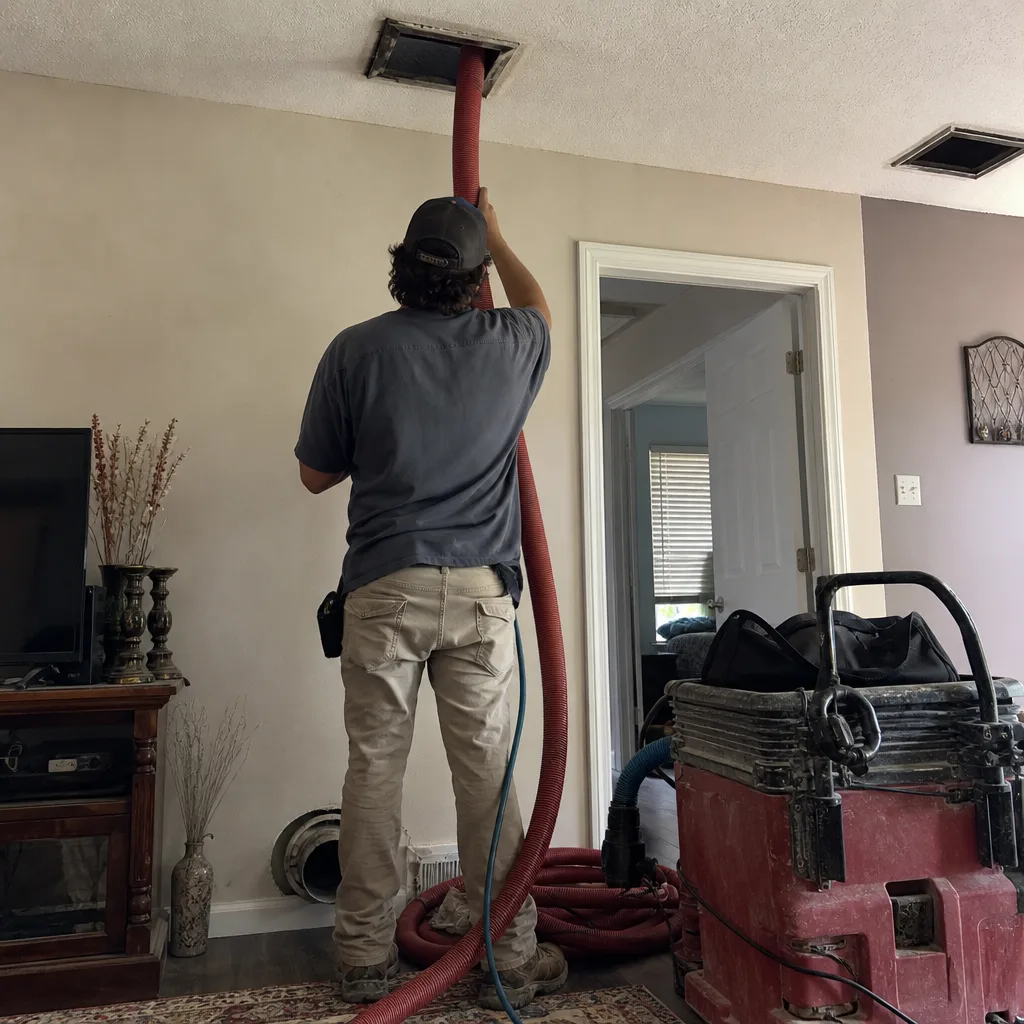 Before
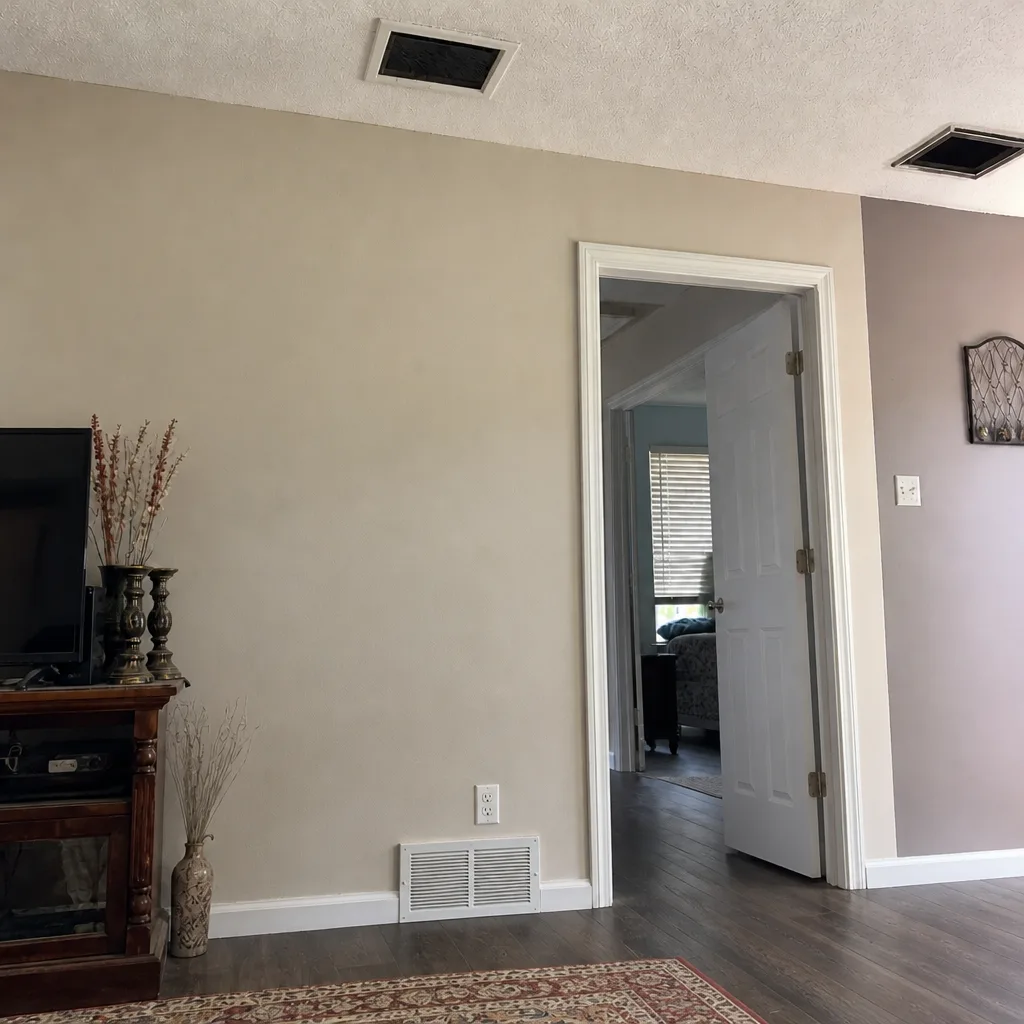 After
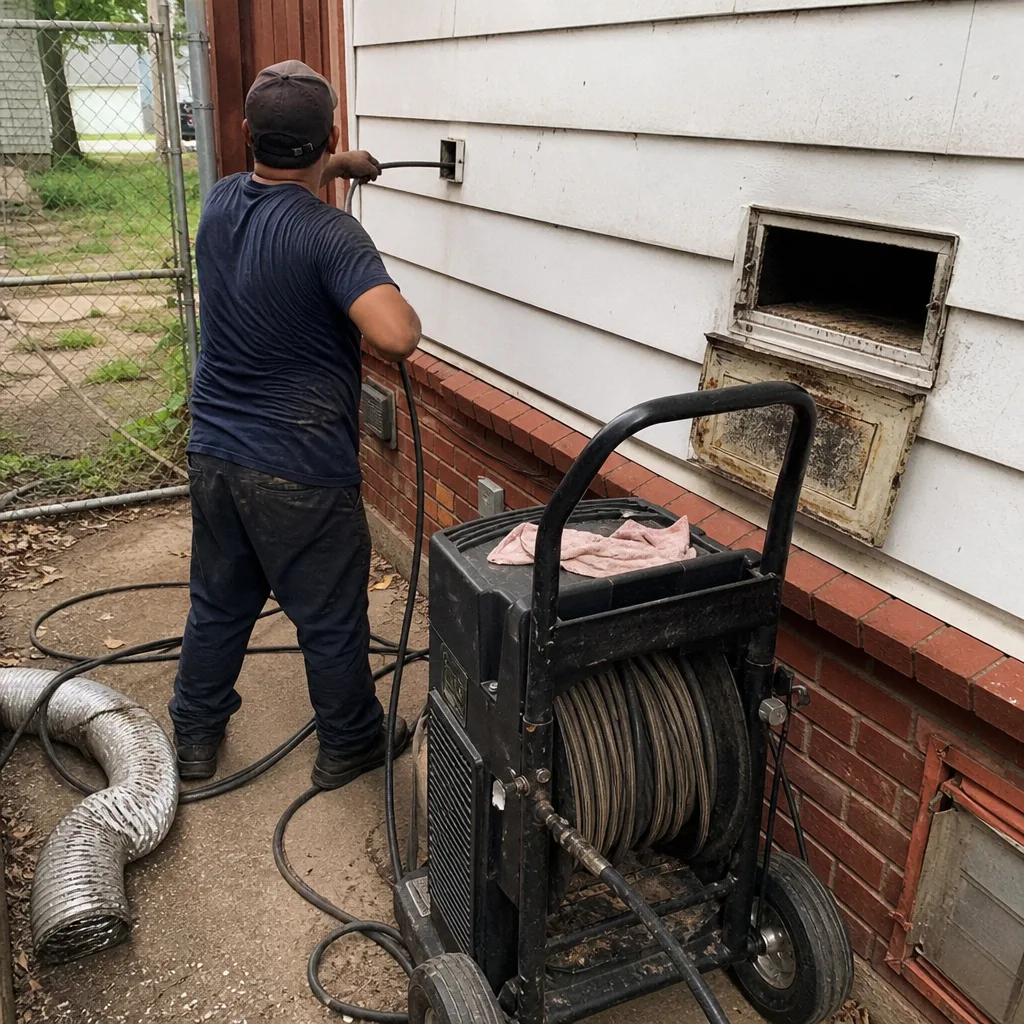 Before
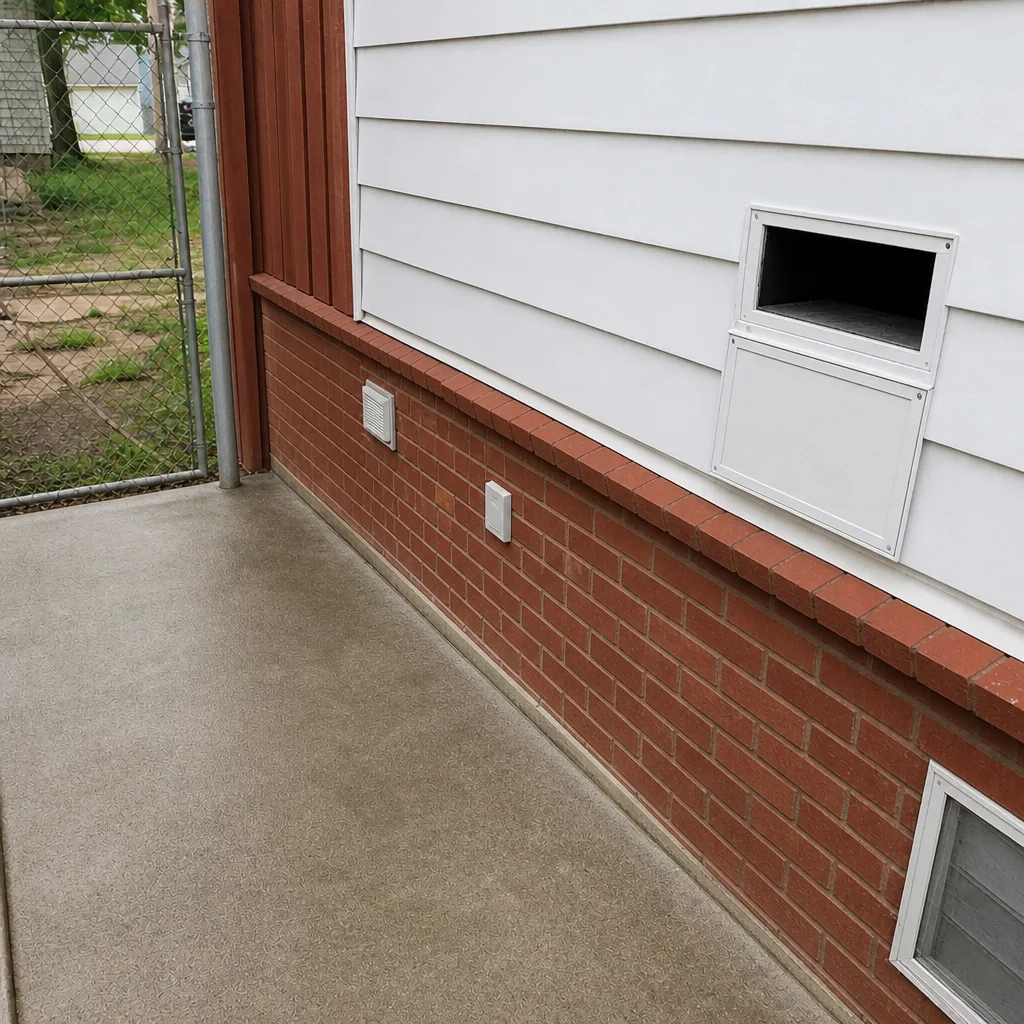 After
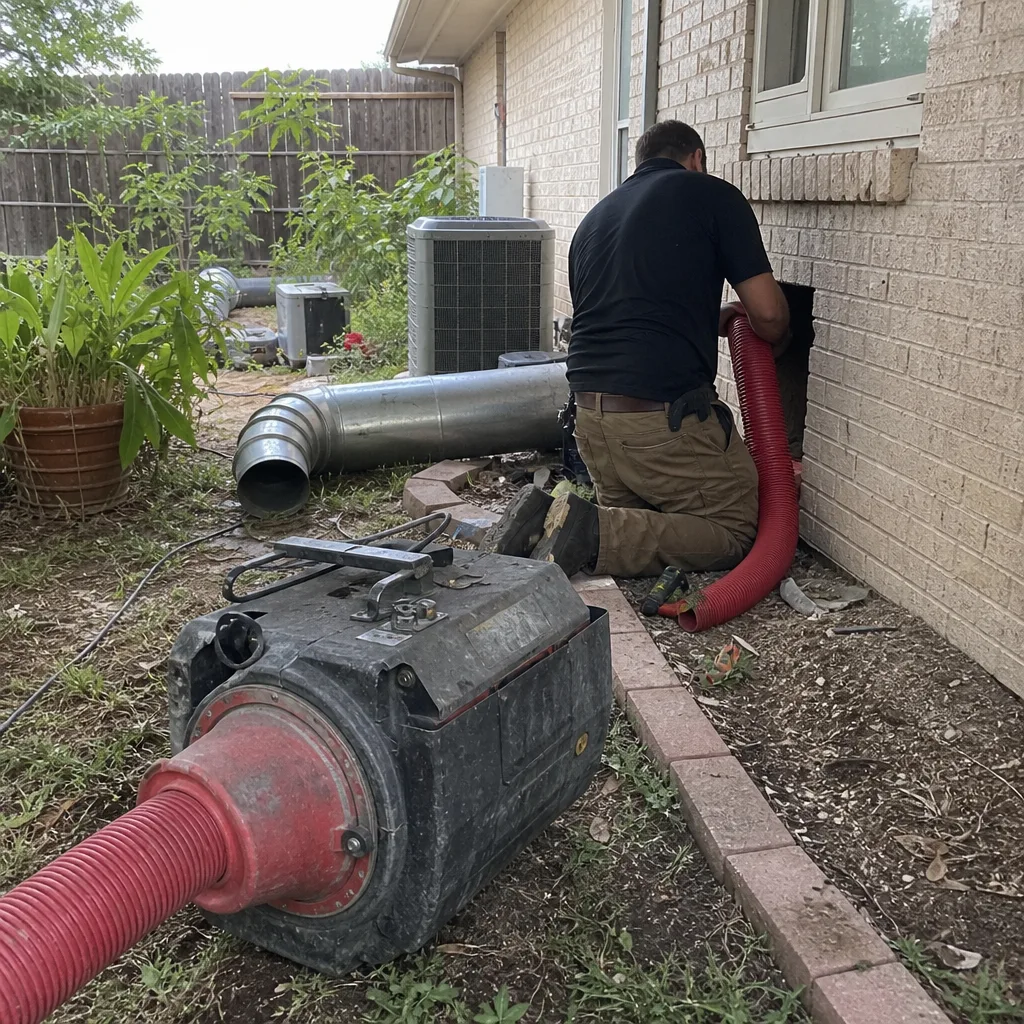 Before
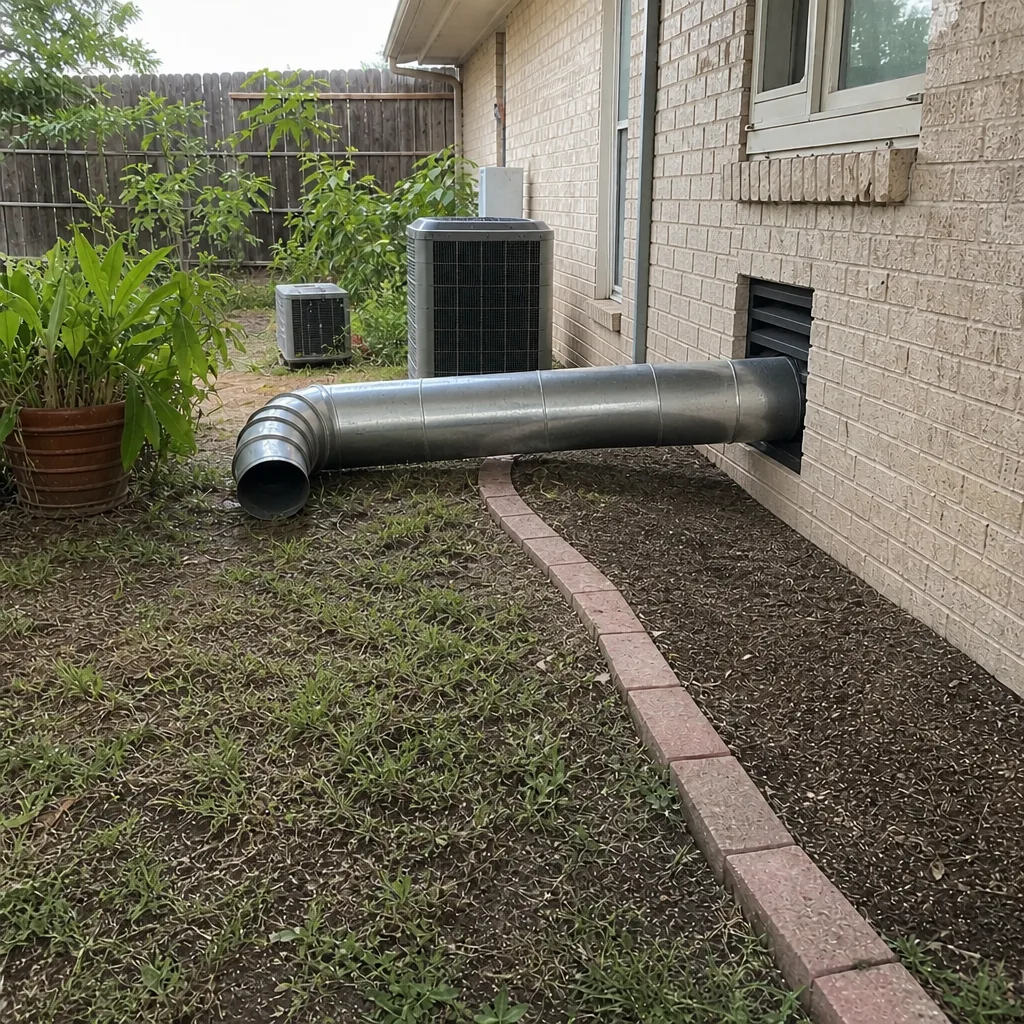 After